Why yacht propeller maintenance starts with what grows beneath you
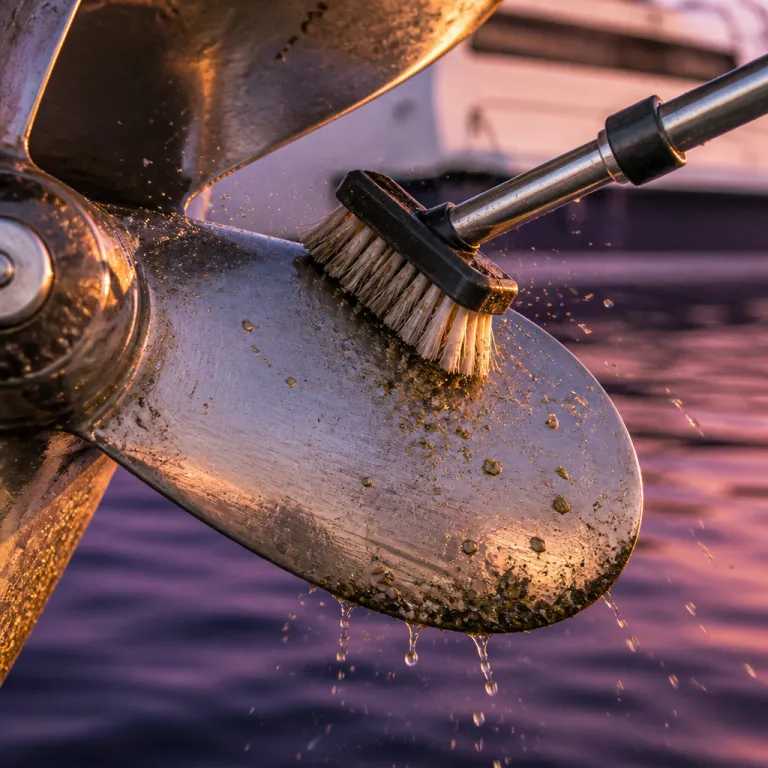
A serious yacht propeller maintenance routine begins with understanding what colonises metal underwater. Within days in warm water, a thin biofilm of slime forms on every propeller and on each prop shaft, and that film quickly attracts algae and the first calcareous tubeworms. Give it a few more weeks and you will see barnacles, hard shell colonies and tougher marine growth that grips the propeller blades like concrete.
On a performance focused boat, that early slime already disturbs flow over each blade and over the marine propeller hub, and industry data shows that even moderate fouling can raise fuel consumption by 10 to 20 percent before the owner notices the loss of speed. Left unchecked, barnacles on the boat propeller and on the propeller shaft create vibration, which stresses the shaft bearings, the engine mounts and the gearbox, turning simple propeller care into expensive repair work. The same marine growth also shelters pockets of oxygen poor water that accelerate corrosion on stainless steel, aluminum prop alloys and even on the sacrificial anodes meant to protect them.
Owners who treat propellers as part of serious boat maintenance rather than an afterthought will see the difference on every passage. A clean stainless prop with fair blades lets the engine reach rated rpm easily, while a fouled aluminum prop or folding feathering unit forces the engine to labour and masks true boat performance. Think of the prop, the propeller shaft, the sacrificial anodes and the surrounding running gear as one system that either works in harmony or quietly taxes your fuel efficiency and your patience.
The case for frequent gentle cleaning, not annual aggression
Many boats still endure a brutal once a year scrape where a yard hand attacks the boat propellers with a metal scraper and a pressure washer. That approach may leave the propeller looking shiny on the hard, but it often thins protective coatings, scars the blades and opens the door to galvanic corrosion that only shows as damage seasons later. A calmer yacht propeller maintenance philosophy favours frequent, gentle in water cleaning that respects both the metal and the coatings.
On a well run guide boat or private cruiser, the diver routine becomes almost ritual, and a good captain will brief the diver as carefully as they brief crew on dock lines. Ask the diver to start with a visual check of each marine propeller, the prop shaft and the sacrificial anodes, then to report any nicks on the blade edges, any pinkish de zincification on a bronze boat propeller and any missing anode material that suggests stray current or galvanic corrosion. While they are down there, they should also scan the rudder, trim tabs and the hull around the running gear, because uneven marine growth patterns often reveal electrical issues long before instruments do; pairing this underwater discipline with good line handling skills from resources such as mastering the art of dock lines keeps the whole manoeuvring package honest.
Gentle cleaning means soft pads, plastic scrapers and patience on both stainless and aluminum prop surfaces. Divers should work along the length of the propeller blades from hub to tip, following the hydrodynamic shape rather than scrubbing across it, and they should avoid grinding at stubborn barnacles that may be better left for a controlled propeller repair during the next haul out. Done every few weeks in warm water, this light touch keeps blade propellers smooth, preserves specialist propeller maintenance coatings and maintains predictable boat performance without turning every haul out into a rescue mission.
Coatings, metals and the quiet war against corrosion
Not all metals or coatings behave the same way beneath the surface, so thoughtful yacht propeller maintenance always starts with knowing what you actually have bolted to your shaft. A stainless steel prop on a fast planing boat in the Golfe de Saint Tropez faces different loads, corrosion risks and marine growth patterns than an aluminum prop on a displacement cruiser lying quietly in a Scandinavian fjord. The wrong assumption about metal or coating can turn well meant propeller care into long term damage.
Dedicated propeller and foul release coatings promise that marine growth will slide away more easily than on bare metal, and on many boats they deliver that benefit when paired with regular gentle cleaning rather than neglected between haul outs. These products are not the same as running gear paint or hull antifouling, and they interact differently with cathodic protection, so you must always check that your chosen system is compatible with your sacrificial anodes and with the stainless or aluminum alloys on your boat propellers. A mismatched system can undermine the protective role of the anodes, shift the galvanic series and leave the propeller blades or the propeller shaft as the most attractive target for corrosion currents.
On mixed metal installations, where a stainless shaft carries a bronze marine propeller and sits near aluminum trim tabs, the balance between coatings and anodes becomes even more delicate. Here, regular inspection of the sacrificial anodes during each in water clean is as central to propeller maintenance as wiping away slime, because uneven anode wear often signals galvanic corrosion that will eventually pit the blade surfaces or seize the prop. Protecting the running gear also means caring for topside fittings, and investing in robust hardware such as a high quality 316 stainless steel dock cleat helps ensure that the boat stays secure while you focus on the underwater work.
The diver’s checklist: from propeller shaft to fuel burn data
A professional diver approaching a serious yacht propeller maintenance job works to a checklist, not to a vague promise to “clean the bottom”. They start at the stern, confirm that the boat is safely moored and that the engine cannot be started, then slide down the transom to meet the propeller, the rudder and the prop shaft as a single system. Every pass of the hand or pad over the propeller blades tells them something about balance, vibration risk and the health of the metal.
Ask your diver to report on four specific areas after each visit, because this structure turns casual cleaning into actionable boat maintenance data. First, the state of marine growth on the boat propeller and nearby hull, since a sudden increase in barnacles or tubeworms may indicate that a coating has failed or that the boat has spent longer than usual in nutrient rich water; second, any visible damage such as bent blade tips, leading edge dings or fishing line wrapped around the propeller shaft that might call for prompt propeller repair. Third, the condition of the sacrificial anodes on the shaft, struts and rudder, because uneven wear patterns often point to galvanic corrosion or stray current issues; and fourth, any play in the shaft or cutless bearing that could affect long term boat performance and fuel efficiency.
Back on deck, match these underwater observations with your engine and fuel burn logs, because numbers rarely lie. If the engine now needs more throttle to reach the same cruising speed, or if fuel efficiency has slipped despite clean hull reports, the culprit is often subtle fouling on the prop or a slight bend in one of the blade propellers that only a propeller repair specialist can measure accurately. Pairing diver feedback with careful log keeping turns yacht propeller maintenance from reactive cleaning into a predictive tool that keeps fuel burn honest and protects the engine from the silent punishment of cavitation and imbalance.
Reading your wake: performance cues every owner should track
Out on open water, the boat itself tells you when the running gear needs attention, if you know how to listen. A clean, well matched marine propeller lets the hull rise smoothly onto the plane, holds a steady rpm at cruise and leaves a tidy wake that narrows quickly astern. When propellers foul or blades deform, the wake fattens, the engine note hardens and the helm feels just a little less precise.
Owners who log rpm, speed over ground and fuel burn on every passage build a personal baseline for their boat performance, and that baseline becomes the most honest referee of yacht propeller maintenance quality. If a familiar guide boat that once held 22 knots at 2 000 rpm now needs 2 150 rpm for the same speed, or if a displacement cruiser suddenly struggles to reach its traditional maximum, the first suspects should be marine growth on the boat propeller, minor damage to a blade edge or a folding feathering mechanism that no longer opens fully. These small changes rarely announce themselves with drama, but they quietly erode fuel efficiency and increase engine load, shortening the life of everything from mounts to exhaust components.
Between haul outs, treat every change in vibration, steering feel or fuel consumption as a prompt to check the underwater story rather than as a quirk to ignore. A quick dive to inspect the prop, the propeller shaft and the sacrificial anodes may reveal a simple cleaning job, or it may catch early galvanic corrosion before it scars the stainless steel or aluminum prop surfaces beyond economical repair. In the end, the yachts that age gracefully are not always the longest or the newest boats, but the ones whose owners treat propeller care as a quiet, regular ritual that keeps the wake clean and the numbers honest, because what defines a yacht is not the length overall, but the wake she leaves.
FAQ
How often should I schedule in water propeller cleaning between haul outs ?
In warm, nutrient rich water, many owners arrange gentle in water propeller cleaning every three to four weeks, while in cooler or less fertile areas a six to eight week interval often suffices. The right frequency depends on how quickly marine growth appears on your specific boat propeller and hull, so track fuel burn and speed to refine the schedule. If you see a noticeable drop in performance or fuel efficiency, shorten the interval until those metrics stabilise.
Is a stainless steel prop always better than an aluminum prop for yachts ?
A stainless steel prop offers greater strength, thinner blades and often better performance on fast boats, but it also transmits more impact load to the shaft and gearbox if it hits debris. An aluminum prop is lighter and usually cheaper to repair or replace, which can be attractive for smaller boats or for owners who cruise in shallow, debris filled water. The best choice depends on hull type, engine power, cruising grounds and how carefully you manage propeller maintenance and anode protection.
Can I clean my own propeller while swimming instead of hiring a diver ?
Strong swimmers sometimes clean their own propellers in clear, calm water, but this approach carries safety and quality risks. Without proper weights, tools and training, it is easy to miss marine growth on the back of the blades, to overlook damage on the propeller shaft or to injure yourself on sharp barnacles. A professional diver brings better visibility, more control and the experience to spot early signs of corrosion or mechanical issues that casual swimmers often miss.
When does fouling justify a full propeller repair rather than just cleaning ?
If cleaning reveals bent blade tips, deep nicks, uneven leading edges or vibration that persists after the propeller blades are smooth, a specialist propeller repair is usually warranted. These shops can measure pitch, balance and blade geometry precisely, restoring performance that casual grinding or filing might permanently compromise. Any time the engine struggles to reach rated rpm despite a clean hull and prop, have the propeller checked professionally before assuming the problem lies elsewhere.
Do propeller coatings interfere with sacrificial anodes and cathodic protection ?
Some foul release propeller coatings change the electrical characteristics of the metal surface, which can alter how sacrificial anodes behave in the water. High quality systems are designed to work with correctly sized anodes, but poor combinations may reduce anode effectiveness or shift galvanic currents toward unprotected components. Always follow the coating manufacturer’s guidance, and ask your surveyor or marine electrician to confirm that anode sizing and placement still provide full protection after any coating change.