
Hydrogen yacht propulsion starts with your mission profile
Your next yacht is not a manifesto; it is a mission profile on a hull. Before weighing hydrogen yacht propulsion, advanced hybrid diesel-electric arrangements or methanol-based fuel-cell solutions, you need ruthless clarity on how you actually operate the yacht. Mediterranean shuttles between Porto Cervo and Bonifacio are a different ship story from a high-latitude explorer quietly edging through ice floes on electric motors alone.
Range, hotel load and speed envelope define which fuel and which energy architecture make sense, long before any designer sketches a Feadship-style sheerline. If you mostly idle at 9 knots between Saint-Tropez and Antibes, a well-engineered diesel-electric hybrid with substantial battery storage will cut fuel burn, vibration and noise more reliably than a premature hydrogen propulsion experiment. If you chase weather windows across the Atlantic or run a car-ferry-style shuttle for guests and toys, the power profile shifts again and so should your propulsion brief, tankage plan and energy budget.
Hydrogen yacht propulsion only becomes rational when the fuel-cell system, hydrogen logistics and hydrogen storage volume align with that real-world brief. A hydrogen-powered superyacht that spends its life pinned to a quay in Monaco is a marketing project, not a marine innovation. Owners who start with their own data — days at sea, average speed, generator hours, typical anchorage time — quickly see whether hydrogen-based yachts, methanol or highly optimised diesel remain the honest answer.
Hybrid-electric systems have already earned their place on serious yachts, especially for low-speed coastal passages and long nights on the hook. Properly specified diesel-electric hybrids routinely cut fuel consumption by around a quarter in displacement cruising, a figure echoed in trials reported by the International Maritime Organization and European ferry operators, which is a tangible breakthrough rather than brochure poetry. That is why many new luxury yachts quietly adopt hybrid power, battery banks and energy-management software while the headlines chase the next hydrogen ship concept.
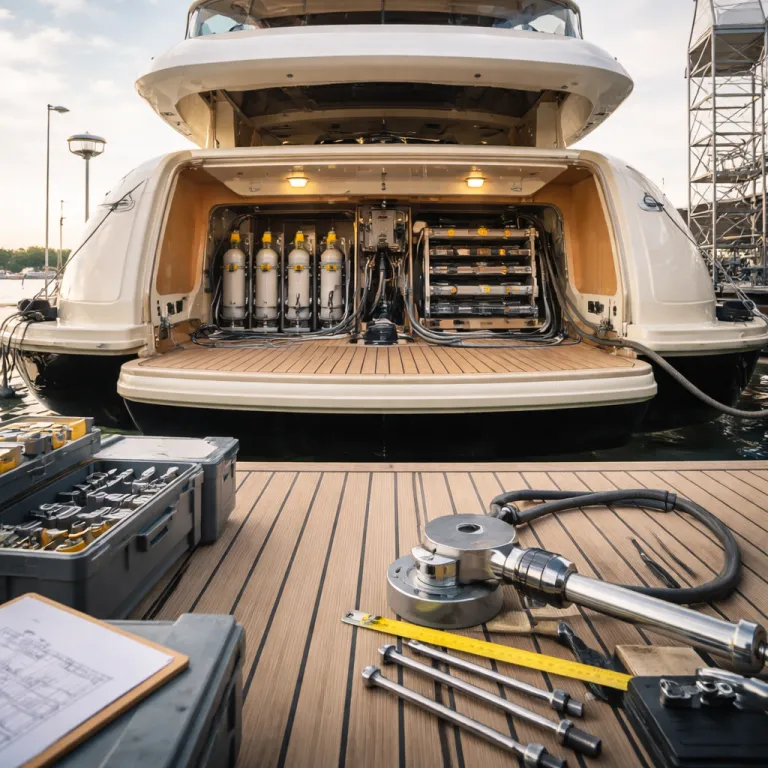
Hydrogen yacht propulsion sits further out on the curve, where ambition meets physics. Liquid hydrogen demands bulky cryogenic storage tanks and impeccable insulation, while compressed hydrogen gas requires high-pressure cylinders that eat into tender garages and beach clubs. On a 50-metre yacht, every cubic metre given to hydrogen storage is a cubic metre taken from wine cellars, crew cabins, technical spaces or toy lockers.
Mission profile also dictates how much redundancy you can accept in your fuel cells and battery banks. A world-roaming superyacht needs parallel fuel-cell stacks, conventional diesel generators and perhaps even a compact hydrogen fuel reformer if methanol enters the mix. A coastal cruiser that rarely leaves the Côte d’Azur can be bolder with a single large fuel cell, shore-based hydrogen supply contracts and a more compact battery installation.
Owners used to specifying rig plans for sailing yachts understand this trade-off instinctively. You would never choose a towering carbon rig for a yacht that only ghosts between bays, so why treat hydrogen propulsion as a one-size-fits-all badge. The same clear-eyed thinking that guides your choice of hull material, from steel to aluminium to advanced composites, should govern your choice of fuel, cell system, battery capacity and electric propulsion motors.
Maintenance planning must be baked into that early brief, not bolted on after the launch party. Hydrogen fuel cells, high-pressure valves and hydrogen gas sensors demand a different maintenance culture from conventional diesel engines and shaft lines. If your technical équipe is not ready to live with that complexity, hydrogen-powered dreams will quickly turn into yard time, troubleshooting and frustrated charter seasons.
Even the toys and handling systems feel the ripple effects of your propulsion choice. A yacht that leans heavily on battery banks and solar panels for quiet nights will also lean on ultra-low-stretch running rigging and mooring solutions to keep vibration down, which is where upgrading to advanced lines can transform both performance and safety. Thinking about propulsion in isolation from deck hardware, tenders, stabilisers and hotel systems is how you end up with a ship that looks visionary at the boat show and feels compromised in a swell.
Hybrid electric as the honest baseline, hydrogen as the frontier
For most owners today, hybrid electric is not a compromise; it is the baseline for responsible luxury. A well-designed diesel-electric architecture, with properly sized generators, batteries and electric motors, trims fuel burn in the low-speed band where yachts spend most of their lives. That is why many serious yards quietly steer clients toward hybrid power while the marketing departments talk loudly about the next hydrogen yacht or futuristic zero-emission concept.
In practice, hybrid systems shine when you are creeping into a tight harbour, running hotel loads overnight or loitering off a snorkelling hotspot in Hawaii. Silent running on batteries, topped up by generators and sometimes solar panels, turns a routine anchorage into a genuinely low-emission experience for guests and crew. The numbers matter here, because a 20 to 30 percent cut in diesel consumption over a season — consistent with data from hybrid ferry sea trials in Scandinavia and the North Sea — translates into fewer bunkering stops, lower maintenance, reduced exhaust and a smaller wake in your cruising grounds.
Hydrogen yacht propulsion sits beyond that, in a space where only a handful of projects currently operate. Feadship’s Project 821, often cited as a breakthrough hydrogen-powered superyacht, uses fuel cells to handle hotel loads and low-speed operation rather than full-speed sprints, according to Feadship’s published concept specifications. The hydrogen fuel is stored in high-pressure tanks, with hydrogen gas carefully monitored and hydrogen stored in dedicated compartments that would make any commercial hydrogen ship engineer nod in approval.
Those fuel cells are not magic boxes; they are marine machines with specific maintenance needs. Each fuel-cell stack has a defined service interval, a sensitivity to impurities in the hydrogen fuel and a cooling requirement that must be integrated into the yacht’s broader energy system. Treating a fuel cell like a black box is how you end up with unplanned downtime, warranty disputes and nervous guests when alarms sound at anchor.
Hybrid-electric systems, by contrast, are now a known quantity for most shipyards and classification societies. The combination of diesel generators, battery storage and electric propulsion motors has matured in commercial ferry fleets and offshore support vessels, then migrated into luxury yachts with relatively few surprises. When a yard quotes you a fuel-saving figure for a hybrid yacht, you can usually trace it back to real-world marine data, sea-trial reports and operational logs rather than pure marketing.
Hydrogen yacht propulsion is still in the prototype phase for most builders, which is why owners must treat it as a frontier, not a checkbox. Bunkering hydrogen fuel safely, whether as liquid hydrogen or compressed hydrogen gas, requires shore-side infrastructure that only exists in a limited number of industrial and pilot ports identified in International Energy Agency and national hydrogen roadmaps. Insurance underwriters and flag states are still writing the rulebook for hydrogen ships, which means your project may become the test case rather than the beneficiary of settled practice.
Methanol fuel cells sit somewhere between these two worlds, offering a pragmatic path for some superyacht projects. Converting green methanol into hydrogen on board, then feeding that hydrogen into a fuel cell, allows you to use existing liquid fuel logistics while still moving toward renewable energy. Lürssen’s Project Cosmos, for example, explores this methanol-based cell system as a way to blend long-term sustainability with operational practicality, as outlined in the yard’s public project brief and technical presentations.
When you sit down with your naval architect and yard, the propulsion conversation should feel more like specifying a rig than choosing a paint colour. Ask for performance guarantees on fuel consumption, battery endurance and fuel-cell output, written into the contract with clear test protocols. A typical clause might state that at 10 knots in calm water the yacht will not exceed a specified litres-per-hour fuel burn and will sustain a defined number of hours on battery-only hotel loads, to be verified during sea trials witnessed by the owner’s representative.
Owners who treat green propulsion as a specification choice, not a moral halo, end up with better yachts. Hybrid electric becomes the honest workhorse, hydrogen propulsion becomes a carefully chosen experiment and methanol becomes a bridge where supply chains allow. In that hierarchy, you are not chasing virtue; you are commissioning a ship that will still make sense, commercially and operationally, a decade from now.
Hydrogen’s hard edges: bunkering, safety and where you can actually cruise
Once you move beyond the renderings, hydrogen yacht propulsion runs into three hard realities, and the first is bunkering. Hydrogen fuel is not yet available like marine diesel, which you can take on in almost any serious harbour from Palma to Piraeus. Today, only a few dozen ports worldwide are identified in IEA and national hydrogen infrastructure surveys as capable of supplying either liquid hydrogen or compressed hydrogen gas at the scale a large yacht requires.
That scarcity shapes your cruising map before you even choose fabrics for the sky lounge. A hydrogen-powered yacht that relies entirely on shore-based hydrogen stored in high-pressure tanks will be effectively tied to a small network of hubs, which may rule out the more remote snorkelling escapes you dream of in the Pacific. Owners who imagine near-zero-emission passages to the far corners of the world on hydrogen alone are, for now, ahead of the infrastructure curve and dependent on careful logistics.
Safety is the second hard edge, and it is non-negotiable. Hydrogen gas is light and disperses quickly, but it is also highly flammable, which is why hydrogen storage spaces on a yacht resemble miniature laboratories more than traditional fuel tanks. Every valve, sensor and cell-system component must be designed to handle high-pressure hydrogen stored safely, with double-walled piping, forced ventilation and constant monitoring.
Classification societies and flag states are still refining the rules for hydrogen ships, which means your naval architect will spend as much time in regulatory meetings as in design reviews. Insurance underwriters, too, are scrutinising hydrogen yacht propulsion projects with a caution born from the aviation and industrial gas sectors. That scrutiny is healthy, but it adds time, cost and complexity to any hydrogen yacht project and can influence resale value.
Weight and volume form the third constraint, and they are brutal. Liquid hydrogen has an energy density by volume roughly four times lower than marine diesel, according to international hydrogen energy agencies, so equivalent range requires substantially larger tanks and more complex insulation systems. Compressed hydrogen gas requires thick-walled cylinders to contain the high pressure, so either way hydrogen storage eats into your interior. On a 60-metre superyacht, dedicating a full deck to hydrogen tanks and fuel cells may be acceptable; on a 35-metre yacht, it is a different calculation with sharper compromises.
Designers are experimenting with clever layouts to hide this machinery, sometimes integrating hydrogen storage into the double bottom or using side tanks that once held diesel. Yet every cubic metre given to hydrogen fuel is a cubic metre taken from guest suites, crew messes or tender bays, and that trade-off must be faced honestly. No amount of marketing about emission-free cruising can change the geometry of a finite hull or the physics of energy density.
For now, the most rational hydrogen yacht propulsion concepts use fuel cells for hotel loads and low-speed operation, backed by conventional diesel or methanol engines for long passages. This hybridised approach allows you to enjoy quiet, low-emission nights at anchor while still having the range and refuelling flexibility of traditional marine fuels. It also gives your crew time to build competence with fuel cells and hydrogen handling without betting the entire ship on unproven systems.
Owners who want to push further into renewable energy can layer in solar panels, wind assistance and even hydrogeneration from the propellers under sail or tow. A parallel concept that combines wind, solar, hydrogen and hydrogeneration is already being tested in the superyacht world, pointing toward a future where multiple energy sources share the load. In that future, hydrogen propulsion is one instrument in an orchestra, not a soloist trying to carry the entire score.
The ethical dimension sits quietly behind all these technical choices. A yacht that cuts its fuel burn by a third through hybridisation, optimised hull forms and disciplined operations may have a smaller real-world footprint than a headline-grabbing hydrogen project that rarely leaves port. The question is not whether you can claim near-zero-emission status in a brochure, but whether your wake — literal and metaphorical — feels proportionate to the joy you take from the sea.
Refit, tech upgrades and contract language for a hydrogen curious owner
If you already own a yacht, the smartest path into cleaner propulsion is usually refit, not a ground-up hydrogen yacht. Start with the unglamorous wins; hull cleaning schedules, propeller polishing and smart routing software can trim fuel burn before you touch the engine room. Then look at hotel loads, where upgrading to LED lighting, variable-speed pumps and modern HVAC can free capacity for batteries and, eventually, fuel cells.
From there, the tech upgrades become more visible and more interesting. Adding solar panels to hardtops and biminis will not turn your yacht into a zero-emission ship, but it will meaningfully support hotel loads at anchor and reduce generator hours. Swapping out older generators for units optimised to feed battery banks and electric motors, rather than running constant mechanical loads, is another step toward a hybrid-ready platform and a more flexible energy architecture.
Only once that groundwork is laid does it make sense to talk about hydrogen yacht propulsion in a refit context. Retrofitting hydrogen storage, high-pressure piping and fuel cells into an existing hull is complex, but not impossible on larger yachts with generous volume. The most realistic early moves involve installing a modest fuel cell to handle night-time hotel loads, using hydrogen stored in removable tanks that can be swapped or refilled in specialised ports identified in national hydrogen corridor plans.
Contract language becomes critical as you move into this territory. Any yard promising a certain level of fuel savings, emission reductions or fuel-cell output should be willing to back those claims with performance guarantees and sea-trial protocols. A practical example is a clause requiring that, during acceptance trials, the yacht must demonstrate a specified reduction in fuel consumption compared with a conventional sister ship at defined speeds and that the fuel-cell system must sustain a minimum continuous kilowatt output for a set number of hours without alarms.
Owners commissioning new builds with hydrogen propulsion elements should push for clear responsibilities around future regulatory changes. If flag state rules for hydrogen ships tighten, who pays for the retrofit of additional safety systems or changes to hydrogen storage arrangements. These questions belong in the build contract, not in a tense meeting after a surveyor raises a red flag.
Maintenance planning for hydrogen yachts must also be written down, not left to good intentions. Your technical équipe needs training on hydrogen gas handling, high-pressure systems and fuel-cell diagnostics, ideally with support from the original equipment manufacturers. Scheduled inspections of hydrogen storage spaces, leak detection systems and emergency shutdown procedures should sit alongside traditional diesel engine services in the maintenance calendar.
For many owners, the most elegant path will be a layered approach; hybrid diesel-electric as the backbone, solar panels and efficiency upgrades as the first wave, then selective adoption of fuel cells where the mission profile justifies it. Hydrogen yacht propulsion, in that context, becomes a targeted tool rather than an all-or-nothing gamble. You are not trying to win a sustainability prize; you are trying to build or refit a ship that will still feel relevant, reliable and responsible in the long term.
In the end, propulsion is just another expression of how seriously you take the sea. A yacht that uses energy thoughtfully, treats crew as partners in innovation and respects the limits of current technology will age gracefully, whether it burns diesel, methanol or hydrogen. Because what defines a yacht is not the length overall, but the wake she leaves.
Key figures shaping hydrogen yacht propulsion
- Diesel-electric hybrid propulsion can reduce fuel consumption by roughly 20 to 30 percent in low-speed cruising, which translates into fewer generator hours and lower emissions over a typical Mediterranean season (figures consistent with hybrid ferry and offshore vessel trials reported to the International Maritime Organization and European research programmes).
- Early hydrogen-powered superyacht concepts allocate a significant portion of below-deck volume — often more than 10 percent of gross tonnage — to hydrogen storage, fuel cells and safety systems, reducing available space for guest and crew areas (based on published concept specifications from leading Northern European yards, including Feadship and Lürssen).
- Liquid hydrogen has an energy density by volume that is around four times lower than marine diesel, meaning that equivalent range requires substantially larger tanks and more complex insulation systems (data summarised in international hydrogen energy agency reports and maritime fuel studies).
- Commercial ferry and offshore support vessel trials with hydrogen fuel cells typically target partial power coverage, using fuel cells for hotel loads and low-speed operation while retaining conventional engines for peak power and redundancy (documented in European Union maritime pilot projects and national demonstration programmes).
- Global availability of hydrogen bunkering suitable for large yachts remains limited to a relatively small number of industrial ports, with only a few dozen facilities worldwide capable of supplying liquid or high-pressure hydrogen at scale (compiled from public infrastructure maps and hydrogen corridor plans published by major energy providers and government agencies).
Further reading and trusted sources
- Yachting Magazine – coverage of Feadship’s Project 821 and hydrogen fuel-cell integration in large yachts.
- Impact Wealth – analysis of Lürssen’s Project Cosmos and methanol-based fuel-cell systems in superyachts.
- Beyond the Sea – technical overviews of hybrid diesel-electric propulsion and expected fuel savings in modern yachts.