
Summary
Editor's rating
Value for money: fair price if your expectations are realistic
Design: functional, but you feel the budget corners
Comfort in use: stable enough, but not for big guys in rough seas
Materials and build: light aluminium, decent but not pro-grade
Durability and long-term feel: should last if you don’t abuse it
Performance on the water and in an RV mock-up
What you actually get for your money
Pros
- Good feature set for the price: height adjustment, 360° rotation, and 80 mm slide
- Aluminium construction with decent corrosion resistance if rinsed and maintained
- Detachable seat plate makes it easy to remove the seat for storage or weather protection
Cons
- Noticeable play and flex at maximum height, especially for heavier users or in rough water
- Knobs and small parts feel cheap and are likely the first things to wear or break
- No serious mounting hardware included, and installation quality heavily affects stability

Specifications
View full product page →| Brand | Torvex |
An adjustable seat base that looked better on paper than in the box
I picked up this Torvex adjustable seat pedestal because I wanted a simple way to upgrade the helm seat on a small fishing boat and maybe reuse it in an RV project later. On paper it ticks all the boxes: adjustable height from about 33 to 48 cm, 360° rotation, sliding rail, detachable top plate, aluminium construction, mirror-polished finish. Basically, the usual generic marine pedestal you see all over Amazon, just under a brand name I’d never heard of.
When it arrived, my first reaction was that it looks decent, but you can tell it’s not high-end marine gear. The metal is fine, but some edges and holes needed a quick deburr, and the knobs feel more “DIY store” than “pro boat hardware”. Nothing dramatic, but it doesn’t scream premium when you take it out of the box. If you’re used to Springfield or Garelick pedestals, you’ll immediately see the difference.
I tested it mainly on a small aluminium boat with a basic helm chair, and I also mocked it up in a camper van layout to see how it behaves on a wooden floor. So this is not a lab test; it’s just normal use: some choppy water, a couple of heavier friends sitting on it, and me moving it around to find a comfortable driving position. My main goal was simple: does it hold up, and does it feel safe when you’re actually sitting on it?
Overall, it does the job if you install it carefully and don’t expect miracles. It’s not perfect, there are a few things that annoyed me, and I definitely wouldn’t use it for very heavy people or hardcore offshore use. But for a small boat or RV lounge where you want a basic height-adjustable swivel base without spending a fortune, it can work, as long as you respect its limits and take installation seriously.
Value for money: fair price if your expectations are realistic
Value-wise, this Torvex pedestal sits in that awkward middle ground: cheaper than big-name marine brands, but not bargain-basement either. For the price, you’re getting real aluminium construction, height adjustment, 360° rotation, an 80 mm slide, and a detachable seat plate. That’s a decent feature set. If you compare it to some fixed pedestals that cost almost as much but don’t adjust at all, this one looks attractive on paper.
In practice, though, you feel where the money was saved: the knobs, the finishing, the lack of proper mounting hardware, and the slightly light-duty feel at maximum height. If you only need a basic, fixed-height, rock-solid post, you might be happier spending the same money on a simpler but beefier fixed pedestal. On the other hand, if you want the flexibility to adjust height and rotate the seat to face different directions (especially in an RV or small cabin), then this one gives you that flexibility without spending what the big brands charge.
Compared to known marine brands, I’d say this is good value for occasional and light use but not a steal for heavy-duty applications. You’ll probably want to budget a bit extra for proper stainless bolts, backing plates, and maybe some lubricant and anti-corrosion spray. Once you factor that in, you’re still under the price of a premium pedestal with similar features, but the gap isn’t huge.
So if your use case is a small fishing boat, a lake cruiser, or an RV lounge seat where it won’t be hammered every single day, the price feels reasonable and the product gets the job done. If you’re outfitting a serious offshore boat, charter vessel, or anything that sees rough water and heavy people all the time, I’d say spend more upfront on a known heavy-duty pedestal and skip this one. It’s basically decent value for casual users, average at best for demanding ones.
Design: functional, but you feel the budget corners
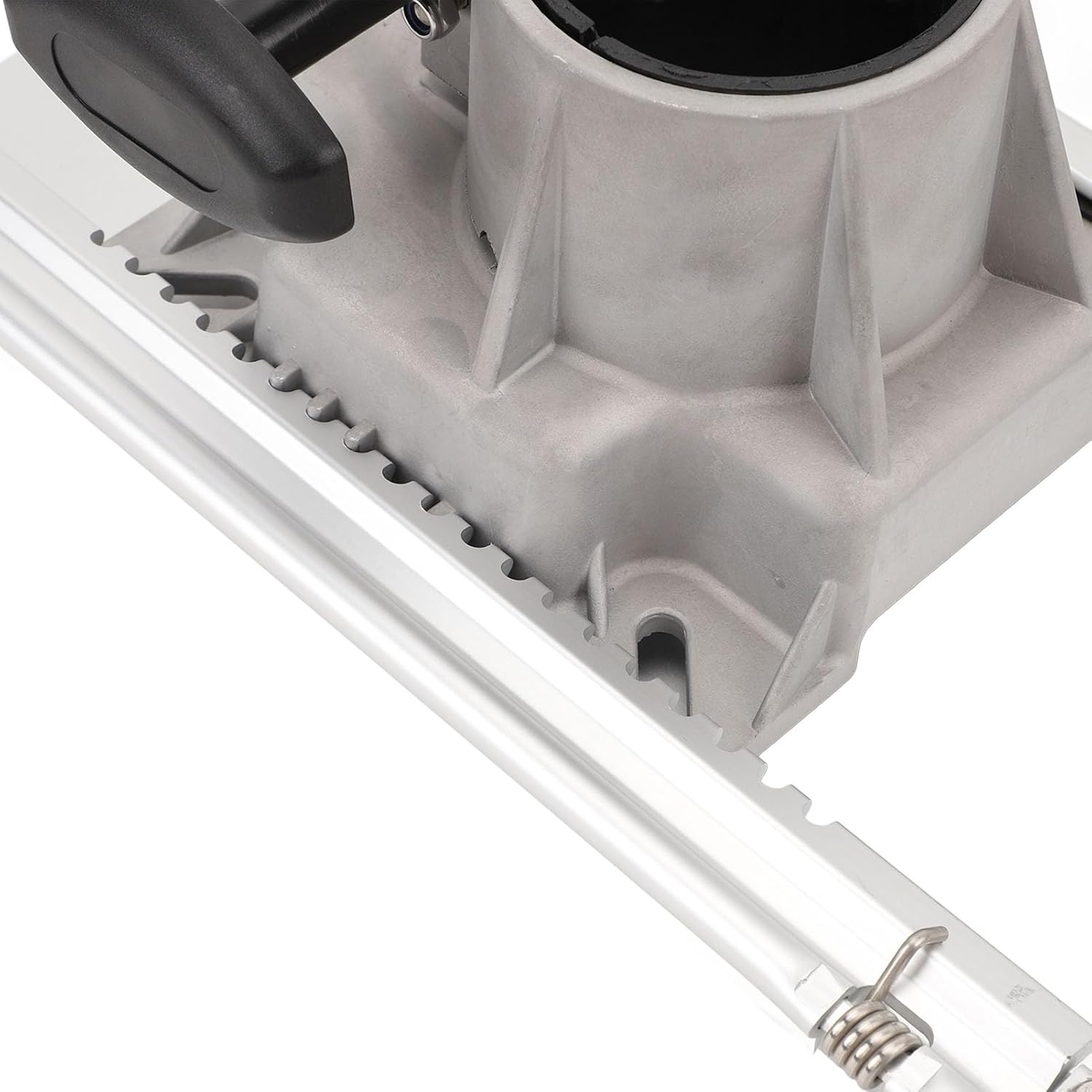
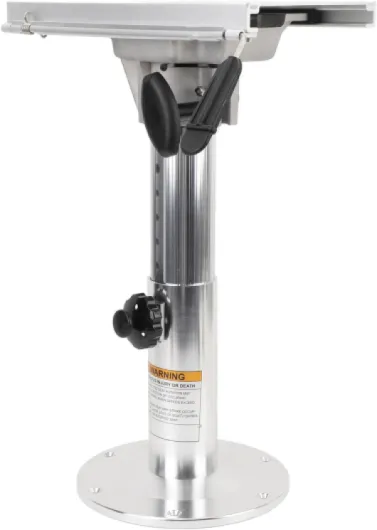
The overall design is pretty classic: round base with six mounting holes, vertical tube, and a top assembly that combines height adjustment, sliding, rotation, and a detachable plate. The good point is that it’s not overcomplicated. Fewer moving parts usually means fewer things to rattle loose or corrode. The detachable plate is held by a knob, so you can pull the whole seat off when you leave the boat or when it’s parked outside, which I actually used more than I expected.
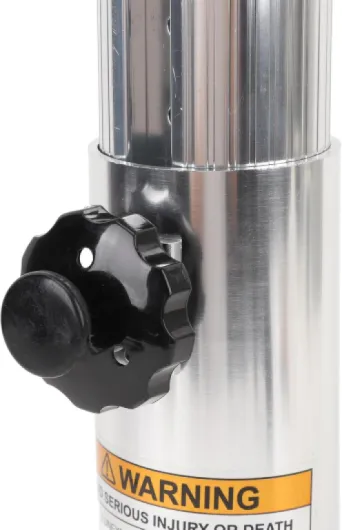
That said, you can clearly see where they saved money. The knobs are small and feel a bit plasticky. They work, but when you’re tightening the rotation lock with wet hands, you’d like a bigger grip or a more positive click. The sliding mechanism is just a basic rail; it doesn’t glide like a car seat track. Out of the box mine was a bit stiff and slightly gritty, so I had to clean it and add a bit of grease. After that it was smoother, but you can still feel some play side-to-side when the seat is fully extended and you lean hard on it.
One thing to mention: the 7 height positions are fine if you’re average height, but they’re not super granular. On my boat, I ended up using only two positions: lowest when seated normally, and one step higher when I wanted a more upright, almost leaning stance. If you’re very tall or very short, you might wish you had a bit more range or smaller steps. Also, changing the height isn’t something you do constantly; it’s a bit of a process, so it’s more “set and forget” than “adjust every five minutes.”
In terms of footprint, the base isn’t huge, which is good for small decks but means you really need a solid floor underneath. The design doesn’t hide that: all the forces are going through that small base, and you feel it when someone heavier plops down on the seat. So from a design point of view, I’d call it functional but clearly light-duty. It’s fine for smaller boats and casual RV use, but I wouldn’t design a heavy captain’s chair setup around this if you’re constantly in rough water.
Comfort in use: stable enough, but not for big guys in rough seas
Comfort here is mostly about how stable and adjustable the pedestal feels when you’re actually sitting and moving around. With my own helm seat mounted, at the lower height settings, it felt pretty solid. There’s a tiny bit of flex if you rock side to side, but nothing scary. For calm to moderate water, it’s fine. When I raised it toward the top of the 480 mm range, I started to feel more movement. Not that the tube itself bends, but you get more leverage, so any play in the joints is amplified. If you’re over 90–95 kg and like to stand/sit hard, you’ll notice it more.
The 360° rotation is nice in theory, but in practice I didn’t spin the seat all the time. What I actually used more was being able to slightly angle the seat to reach gear or talk to someone. When locked, there’s a tiny bit of rotational play – not huge, but enough that you feel a slight wiggle if you twist your hips. For me it was acceptable, but one heavier friend commented that it felt a bit “loose” compared to the fixed pedestal he’s used to. So comfort-wise, it’s good for casual cruising and fishing, but not ideal if you’re very sensitive to movement.
The 80 mm slide adjustment is honestly the most useful feature. On the boat, I set the pedestal slightly off where I thought it should be, then used the slide to dial in the distance to the wheel and throttle. It’s not a long slide, but enough so you don’t feel cramped. It locks reasonably well; I didn’t have it slipping on me mid-ride, which was a concern at first. On the downside, you do feel a bit of front-back play if you’re at the very end of the slide and slam your weight backward or forward. It’s not dramatic, just something to be aware of.
In short, from a comfort perspective: it’s decent but nothing more. For a light-to-average build person using it in normal conditions, it does the job and doesn’t feel scary. For heavier users or very choppy water, I’d either keep it at the lowest height or look for a beefier pedestal. Don’t expect the rock-solid feel of a welded fixed post; this is a compromise between adjustability and rigidity, and you can feel that compromise when you push it.
Materials and build: light aluminium, decent but not pro-grade
The pedestal is made from aluminium alloy with a mirror-polished finish. Visually, it looks nice when new: shiny, smooth, and it gives a bit of that “marine hardware” vibe. But if you look closely, you’ll see small machining marks and some slightly rough edges around a couple of holes. Nothing that cuts you, but it’s not the most careful finishing job I’ve seen. I took a small file and sandpaper to a few spots just to clean them up before mounting.
After a few trips on the water, including some salt spray, the aluminium itself held up fine. I rinsed it with fresh water after outings, and I didn’t see any immediate corrosion or pitting. The polished finish does show scratches quickly, though. Sliding a seat with a metal base on and off the detachable plate left visible marks. It’s cosmetic, but if you’re picky about looks, just know it will lose that “new” look pretty fast. Functionally it’s not a problem, but it’s one of those little things you only notice once you use it for real.
The weak point, in my opinion, is the smaller parts: the knobs and some of the hardware. The knobs are basic and feel like generic plastic. They haven’t broken on me, but I wouldn’t abuse them. If you overtighten constantly, I can see them cracking over time. Also, the included small accessories are not clearly marked as stainless, and they don’t give any real spec, so I just didn’t trust them for a salty environment and used my own stainless bolts and washers for anything structural.
Overall, the material quality is okay for the price range, but you clearly don’t get the same confidence as with known marine brands. For occasional use, freshwater, or an indoor RV setup, I’m not worried. For a permanently exposed saltwater helm position, I’d baby it a bit: regular rinsing, maybe a bit of corrosion protection spray on moving parts, and definitely upgrading the fasteners to real marine-grade stainless. If you treat it as light-to-medium duty gear, the materials are fine. If you expect it to live on a commercial workboat, you’re asking too much of it.
Durability and long-term feel: should last if you don’t abuse it
I haven’t owned it for years obviously, but after several weeks of use and a few trips in salty conditions, I have a decent idea of how it will age. The aluminium tube and plates seem sturdy enough. No bending, no obvious deformation, and no early corrosion spots as long as you rinse after saltwater use. The mirror finish will get scratched and dull, that’s inevitable. For me that’s cosmetic and I don’t really care, but if you’re picky about looks, expect it to look “used” fairly quickly.
The real durability question is the moving parts and knobs. After some repeated adjustments, the knobs still grip, but you can feel that they’re the weak link. If something fails first, it will probably be one of those, either cracking or the threads getting sloppy. Also, the slide mechanism can collect grit and sand if you’re barefoot and bringing debris onto the deck. I noticed some crunchiness after a sandy day; a quick clean and a bit of lube fixed it, but it’s something you’ll need to maintain if you want smooth sliding over time.
Another point: because the base isn’t huge, the long-term durability also depends heavily on how well you mount it. If you just screw it into thin fiberglass or soft wood without backing plates, the floor will likely fail before the pedestal does. On my aluminium boat, I used large stainless washers underneath and marine sealant in the holes. After that, no signs of loosening or flex around the base. If you cut corners here, don’t blame the pedestal when it starts wobbling after a season.
So in terms of durability, I’d call it good enough for weekend and seasonal use, especially in freshwater or light saltwater use with proper rinsing. I wouldn’t rely on it as the main seat mount on a boat that lives outdoors year-round in harsh salt environments without regular checks and maintenance. Treat it as mid-range hardware: it’ll last if you respect it, but it’s not built like the more expensive marine brands that are designed to be abused daily.
Performance on the water and in an RV mock-up
In terms of raw performance, I looked at three things: how well it holds its set height and rotation, how much it flexes under load, and how it behaves over a few outings. On the boat, once I set the height and tightened the knob, it stayed there. I didn’t have it slowly sliding down or anything like that. Same for rotation: if I actually took a second to crank the knob firmly, the seat stayed pointing forward, even when hitting small wakes. If I only half-tightened it, then yes, there was some small unwanted movement. So the mechanism works, but you can’t be lazy with the knobs.
Under load, with my ~80 kg and a friend around 95 kg, the pedestal handled normal sitting and light bouncing fine. When we deliberately tried to rock it hard side to side at full height, we could feel noticeable movement but didn’t feel like it was about to fail. For a typical day out fishing or cruising on a small lake or river, that’s enough. I wouldn’t want to be standing on the seat using it as a lookout platform in rough offshore chop, but that’s not what this thing is meant for anyway.
In the RV mock-up, performance was actually better because the loads are lighter and there’s no wave impact. Rotating the seat to face the living area worked well, and the height range was enough to match a simple table setup. On a wooden floor with proper backing plates underneath, flex was minimal. There, the only real limit is the pedestal’s overall height; 480 mm isn’t super tall, so depending on your van layout you might need a spacer or a different base height to get the ergonomics right.
Overall, I’d say performance is pretty solid for light to medium duty use. It does what the listing says: adjusts, slides, rotates, and holds the seat in place if you install it correctly and actually tighten the knobs. Just don’t misinterpret the polished aluminium look as a sign that it’s heavy-duty commercial gear. Respect its limits, keep it a bit lower rather than fully extended if you’re on rough water, and it will do its job without drama.
What you actually get for your money
The pedestal is pretty straightforward: one aluminium column with a base plate at the bottom and a sliding/rotating mechanism at the top. The height range is listed as 330 to 480 mm, and that’s about right once installed. You get 7 fixed height holes, so you’re not doing infinite micro-adjustments; you’re basically moving a pin or aligning holes and locking it with the knob. It’s more like stair steps than a smooth elevator, but it’s enough to find something workable if you’re not ultra picky.
The top has a sliding plate that can move about 80 mm front to back, and it also rotates 360 degrees with a side knob to lock it. That part is actually handy: on the boat I could slide the seat a bit closer to the wheel or away when I wanted more space, and in the RV mock-up I could turn the seat to face the interior. Just know that the slide is short; it’s more for fine-tuning than turning a rear bench into a front seat.
In the box, you get the pedestal and a few basic accessories, but no mounting hardware for your specific floor or seat. You’ll need your own bolts and, for a boat, proper stainless hardware and backing plates or at least large washers. The instructions are very minimal: wipe, drill six holes, screw, mount seat, done. Anyone who’s actually drilled into a boat deck knows it’s not that casual. On a thin aluminium or fiberglass floor, you really need to think about reinforcement, sealant, and where the screws will bite.
So in terms of presentation, it’s a pretty simple kit: no fancy manual, no templates, no torque specs. It’s clearly aimed at people who already know how to install a seat pedestal or are ready to figure it out. If you’re expecting a plug-and-play solution with everything included, you’ll be a bit disappointed. But if you just want a basic adjustable pedestal and you’re comfortable sourcing your own fasteners, what you get in the box is basically what you see in the listing photos – nothing more, nothing less.
Pros
- Good feature set for the price: height adjustment, 360° rotation, and 80 mm slide
- Aluminium construction with decent corrosion resistance if rinsed and maintained
- Detachable seat plate makes it easy to remove the seat for storage or weather protection
Cons
- Noticeable play and flex at maximum height, especially for heavier users or in rough water
- Knobs and small parts feel cheap and are likely the first things to wear or break
- No serious mounting hardware included, and installation quality heavily affects stability
Conclusion
Editor's rating
Overall, this Torvex adjustable seat pedestal is a decent, no-frills option if you need height adjustment, rotation, and a bit of slide without blowing your budget. The aluminium construction is light but reasonably sturdy, the 330–480 mm height range covers most casual setups, and the detachable plate is genuinely useful if you want to remove the seat to protect it from weather or to gain space. Installed properly on a solid floor, it feels safe enough for small boats and RV seating, as long as you keep expectations in check.
On the downside, the finishing and knobs clearly show it’s not premium gear. At full height, you feel more flex and play, especially with heavier users or in choppy conditions. You also need to supply your own serious mounting hardware and take installation seriously; if you just screw it into a flimsy deck, you’ll end up blaming the pedestal for problems that are really about the floor. For frequent offshore use, heavy captains’ chairs, or commercial setups, I’d look elsewhere and pay more for a stronger brand.
If you’re a casual boater, weekend fisherman, or van/RV DIYer looking for an adjustable swivel base that gets the job done for light-to-medium duty use, this one is worth considering. If you’re heavy, ride in rough water a lot, or want something that feels rock-solid and polished in every detail, you’ll probably be happier investing in a higher-end pedestal.