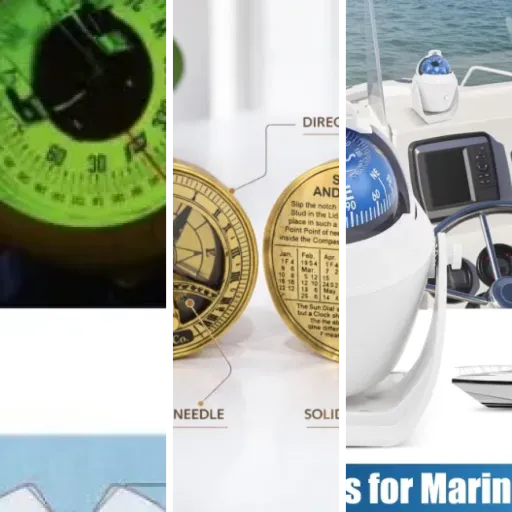

Summary
Editor's rating
Value for money: cheap, functional, with clear compromises
Design: bulky plastic but readable and simple
Materials and build: solid enough for the price, but nothing fancy
Durability and daily use: holds up, with some limits
Performance and accuracy: decent if you set it up properly
What you actually get and how it’s supposed to work
Pros
- Cheap and generally accurate enough after proper adjustment
- Large, easy-to-read dial with useful red LED lighting for night use
- Surprisingly robust ABS housing and dome for casual car and small-boat use
Cons
- Requires careful placement and calibration; out-of-the-box accuracy can be off
- Short, basic LED wiring with no switch makes installation a bit of a hassle
- Not suitable for serious marine navigation or precise outdoor navigation work

Specifications
View full product page →| Brand | MASO |
A budget compass that I threw on my dashboard
I picked up this MASO navigation compass because I wanted something simple for my old car and for the occasional small boat outing. My phone GPS is fine, but sometimes I just want a quick sense of direction without fiddling with apps or worrying about battery. This one was cheap, has an LED light, and says it’s for cars and boats, so I figured why not give it a try and see if it’s actually usable in real life.
Right out of the box, you can tell it’s not a professional marine instrument. It’s clearly a budget plastic compass meant for casual use, not for serious offshore navigation. That said, I didn’t buy it to cross the Atlantic. I wanted something that shows roughly where north is while I’m driving or puttering around on a lake, and the product description seemed to match that kind of usage.
I’ve used it for a mix of short car trips and a few hours on a small boat, plus some basic orientation when hiking near the car. I didn’t treat it gently on purpose; it sat on a hot dashboard, got a bit of spray on the boat, and got bumped around in a backpack. So my opinion is based on normal, slightly rough everyday use, not lab conditions.
Overall, it’s not perfect, but it’s not trash either. It’s one of those items where you feel the low price in the details, but it still more or less does what it’s supposed to do. If you expect absolute precision and top-end build, you’ll be disappointed. If you just want a simple directional guide and you’re ready to fiddle with the mounting and adjustment a bit, it can work.
Value for money: cheap, functional, with clear compromises
In terms of value, this MASO compass sits in that "cheap but functional" category. You’re not paying a lot, and you’re getting a working compass with LED lighting that you can mount in a car or small boat. If you compare it to proper marine compasses that cost several times more, of course it feels basic. But those pro models are built for heavy use and rough conditions, which most casual users don’t actually need.
What I liked from a value standpoint is that it does the core job: it points in the right direction once you set it up, it’s readable, and it handles everyday conditions. For someone who just wants a quick visual sense of north/south/east/west while driving or on calm water, it’s enough. You don’t get fancy features, but at this price, I’m not expecting more. The Amazon rating around 4.1/5 matches my feeling: people see the limitations but also see that it’s not junk.
On the downside, you pay with your time and a bit of hassle. The mounting and calibration are not plug-and-play. The short LED wire means extra work if you want a clean, permanent installation. And if you plan to use it for serious navigation, you’ll quickly hit the limits of this compass. In that case, it’s better to skip this and go straight for a higher-end model rather than buying twice.
So, from a buddy-at-the-bar perspective: if you just want a cheap compass to throw in your car or on a small boat, and you’re okay spending 20 minutes fiddling with it to get it right, it’s good value for money. If you’re picky about precision, build quality, and long-term marine use, you’ll probably be happier spending more on a recognized marine brand and treating this MASO option as too basic for your needs.
Design: bulky plastic but readable and simple
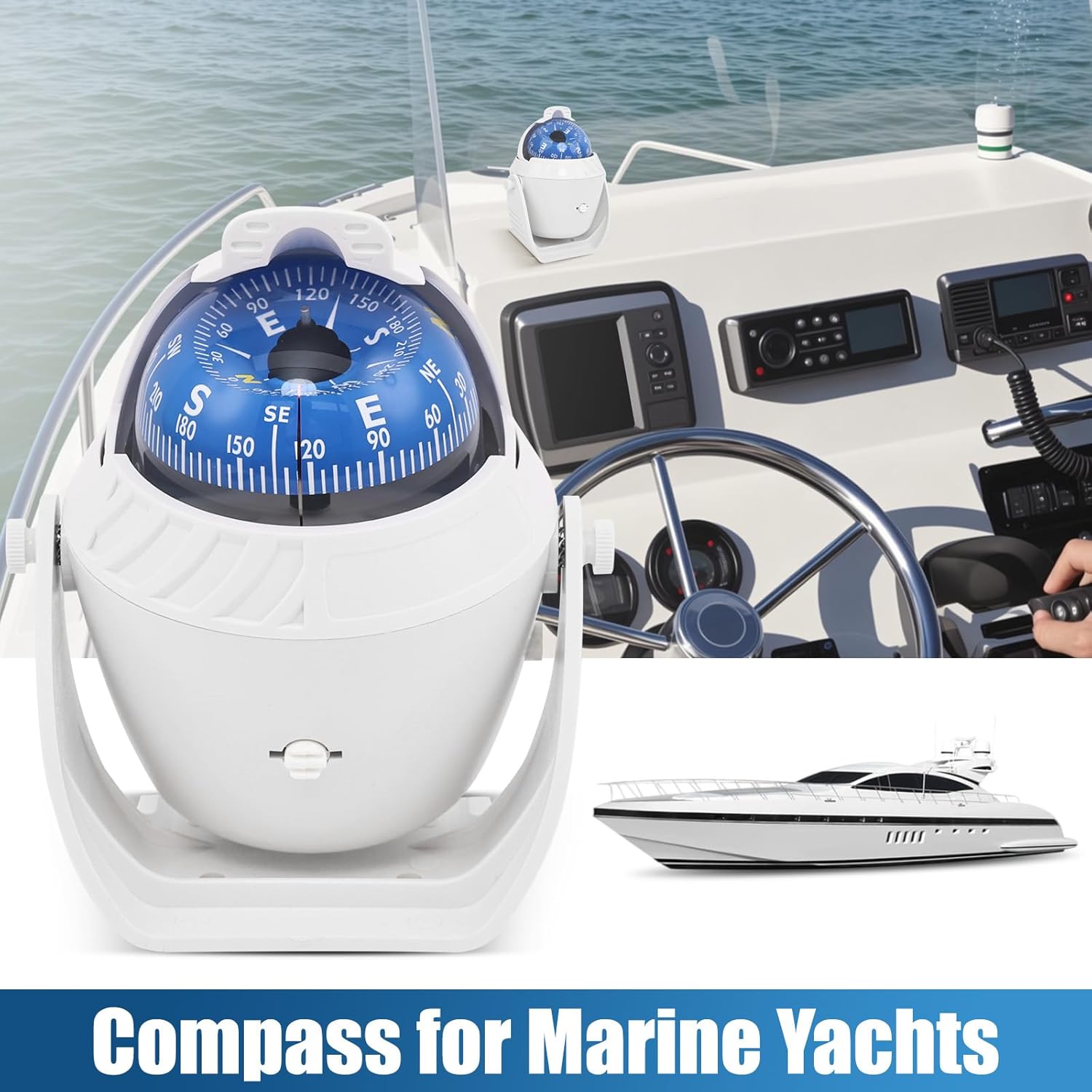
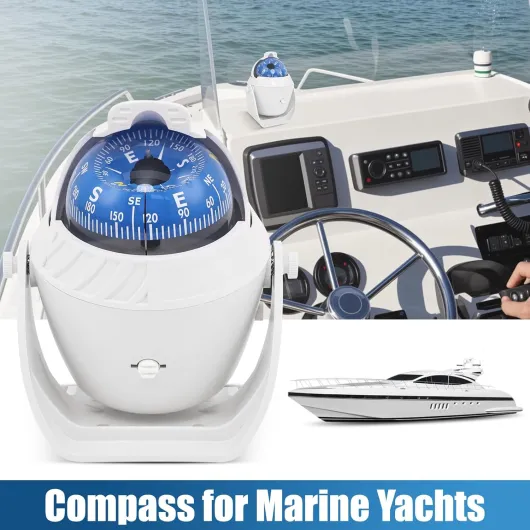
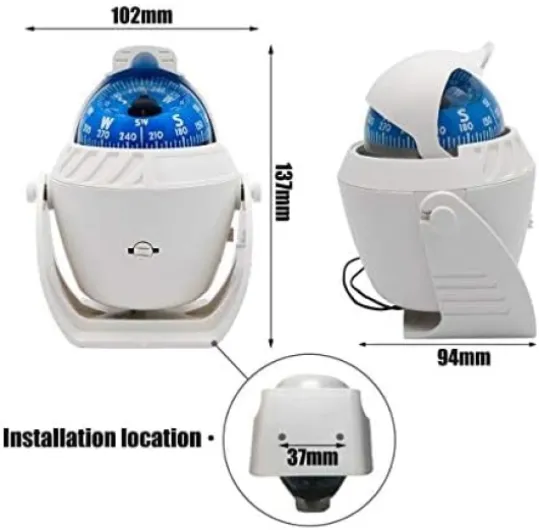
Design-wise, it’s pretty basic: a white ABS plastic base with a domed compass on top. It’s not pretty or stylish; it looks like old-school marine gear shrunk down for a car dashboard. Personally, I don’t care about looks for this kind of thing, but if you’re picky about your car interior, this will stand out as a chunky plastic gadget. The footprint is roughly 13.7 x 10.2 cm and about 9.4 cm high, so it’s not small. On a compact car dashboard, it takes a noticeable amount of space.
The good point is the dial is big and easy to read. The core diameter is around 6.2 cm, and the markings are clear enough. You can see the main cardinal points (N, S, E, W) and degrees. It’s not super detailed like professional compasses, but for car and casual boat use, it’s fine. The pivoting mechanism lets you adjust the viewing angle, which is useful depending on how high or low your dashboard is. Once you set it, it stays in place decently well.
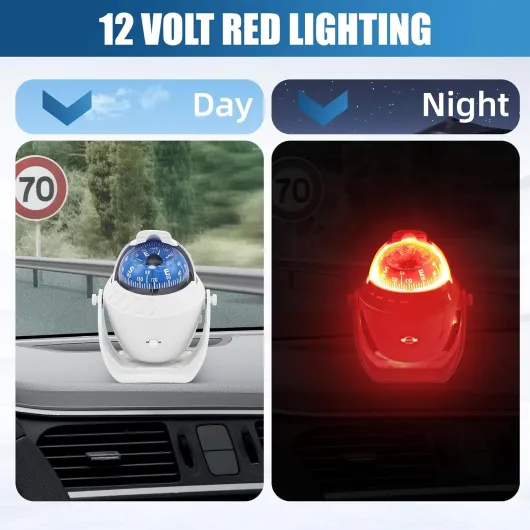
The integrated LED for night use is a nice idea. The red light is softer on the eyes than white, and it makes the dial readable in the dark without being blinding. The downside is the cable is quite short, so you’re limited in where you can place it unless you’re ready to do some DIY wiring. Also, there’s no dedicated switch on the unit itself, so you need to wire it to something you can control (ignition, separate switch, etc.), which is a bit of a hassle if you’re not into car electrics.
In terms of controls, there’s basically just the adjustment screw for declination and alignment. That’s fine; fewer parts to break. But the adjustment process is a bit fiddly: you have to slowly tweak it and compare with a known reference (like your phone compass) until it lines up. Once done, you don’t touch it much, but the first setup takes a bit of patience. Overall, the design is functional and readable but clearly built to a budget, and you can tell when you handle it.
Materials and build: solid enough for the price, but nothing fancy
The main material is ABS plastic, and you feel it right away. The housing is light, around 360 grams total, and doesn’t give a premium impression. The plastic is fairly thick though, so it doesn’t feel like it will crack at the first bump. I tossed it in a backpack a couple of times, it fell off the dashboard once during a hard brake (my fault for not fixing it properly), and it survived without any cracks or major scratches. So in terms of basic robustness, it’s pretty solid for a cheap compass.
The dome itself is clear enough, but not crystal clear like high-end marine compasses. You can see some small imperfections when light hits it at certain angles. It doesn’t stop you from reading the dial, but it’s a reminder that this is an entry-level product. Over a few weeks in the sun, I didn’t notice any yellowing or warping, but I can’t say how it will look after a couple of summers on a very hot dashboard. I’d avoid leaving it permanently under a windshield in a car parked in full sun in very hot climates.
MASO says it’s waterproof for daily use. I’d call it splash-resistant rather than something you’d submerge. On the boat, it caught some water spray and a bit of rain, and it handled that fine. No fogging inside the dome, no water intrusion that I could see. I would not leave it outside on deck full-time or expect it to handle a wave crashing directly on it. For a small open boat used on a lake, it’s okay. For serious marine use, I’d buy a proper marine compass with better sealing.
The LED wiring is basic: thin wires, no protection, no connector. It’s clearly meant for someone who is comfortable stripping wires and connecting them to a 12V system. The wire insulation seems fine for inside a car, but I wouldn’t run it naked in a wet area on a boat without adding some protection. Overall, the materials match the price: functional, a bit cheap, but not flimsy to the point of being useless.
Durability and daily use: holds up, with some limits
After a few weeks of use, including some light abuse, the compass is holding up fine. The housing hasn’t cracked, the dome hasn’t fogged, and the dial still moves smoothly. I’ve had it on the dashboard in sun and cold mornings, and I haven’t noticed any warping or sticking of the card. That’s a good sign for a low-cost product. The pivot still feels free, no grinding or weird noises when the card rotates.
The "daily waterproof" claim is mostly accurate in my experience. It took splashes and a bit of rain on the boat and kept working normally. I did wipe it dry after each outing, and I wouldn’t leave it outside permanently. If you think of it as a device that can handle occasional wet conditions but still prefers a somewhat protected spot, that’s about right. I wouldn’t trust it for long-term exposure on an open deck or in a place where it will constantly get drenched.
The weak point in terms of durability is probably the LED wiring. The cable is thin and has no strain relief at the base of the compass. If you pull it sharply or bend it too often, I can see it breaking internally over time. For a fixed installation in a car where you set it once and leave it, that’s not a big issue. On a boat, with more movement and chances of people catching the wire, I’d secure the cable properly and maybe add some protective sleeve.
Overall, for the price and the plastic build, durability seems pretty solid. It’s not built like a tank, but it doesn’t feel like a disposable toy either. If you treat it with normal care and don’t expect it to survive full-on marine abuse, it should last a while. I’d be comfortable saying it’s good for casual users who need a compass now and then rather than for professionals who rely on it every single day.
Performance and accuracy: decent if you set it up properly
On the performance side, it’s not a precision instrument, but it’s usable if you take the time to install and adjust it correctly. Out of the box, when I just placed it on the dashboard without fixing or adjusting it, the reading was off by a good 15–20 degrees compared to my phone compass. That’s obviously not great. Once I moved it away from the radio and metal parts and used the adjustment screw with the little plectrum tool, I managed to get it within about 5 degrees of my phone reading, which for car use is fine for me.
In the car, once fixed and aligned, it stays reasonably stable. It does wobble a bit when you accelerate or brake hard, but the dial settles quickly. On twisty roads, the reading lags a bit when you turn, but that’s normal for this style of compass. As long as you use it as a general direction guide ("I’m heading roughly north-west"), it’s okay. If you expect it to give you precise bearings for navigation with a map, you’ll be disappointed. This is more for orientation than for exact navigation work.
On the boat, it was a bit more sensitive. Small waves and vibration made the card move more, and slight changes in boat heading took a moment to show clearly. Still, for basic lake cruising, it did the job: I could keep a rough heading across the water and check that I wasn’t drifting off course too much. Again, I wouldn’t use this as the only navigation tool in tricky waters or at night offshore, but for daytime casual boating, it helps.
The LED lighting works as expected. At night in the car, the red light makes the dial clearly readable without blinding you. In a very dark environment, you might find it a touch dim, but I prefer that to a bright glare. There’s no brightness adjustment, so what you see is what you get. Overall, I’d say performance is decent but nothing more: it gets the job done for casual use if you’re ready to spend 15–20 minutes on proper placement and calibration.
What you actually get and how it’s supposed to work
In the box, it’s very barebones: you get the compass unit and that’s basically it. No fancy extras, no pouch, no big manual. There’s a small instruction sheet that explains the basic mounting and the magnetic declination adjustment using the small plectrum tool. It’s enough to get started, but don’t expect long explanations or navigation lessons. This is clearly meant to be plug-and-play for casual users.
The compass itself is a plastic housing with a big dome and a dial inside. It’s meant to be fixed on a flat surface in your car or boat, and the idea is that the front of the compass points the same way as your vehicle. There’s an LED light inside (red) that you can wire to a 12V source, typically your car’s electrical system, so you can read the dial at night. The wire is short, around 17 cm, so you’ll probably need to extend it or mount the compass close to an existing power point if you want the light.
On paper, MASO sells it as a multi-purpose compass: car, boat, outdoor travel, hiking, mountaineering. Realistically, it’s mainly designed as a dashboard or console compass. You can throw it in a backpack if you want, but it’s bulky and not really practical as a handheld hiking compass. It’s more of a fixed indicator than something you’ll use with a map on a trail.
From a pure function standpoint, the concept is straightforward: fix it, adjust it so it gives a correct north, and then use it as a rough heading reference. In practice, you do have to play a bit with the positioning and adjustment because it’s sensitive to metal parts and electronics around it. So yes, it works, but it’s not just “stick and forget” if you want it to be reasonably accurate.
Pros
- Cheap and generally accurate enough after proper adjustment
- Large, easy-to-read dial with useful red LED lighting for night use
- Surprisingly robust ABS housing and dome for casual car and small-boat use
Cons
- Requires careful placement and calibration; out-of-the-box accuracy can be off
- Short, basic LED wiring with no switch makes installation a bit of a hassle
- Not suitable for serious marine navigation or precise outdoor navigation work
Conclusion
Editor's rating
For what it is, the MASO Navigation Compass is a decent budget option. It’s not a professional tool, but it gives you a clear, readable indication of direction in a car or on a small boat once you’ve taken the time to mount and adjust it properly. The ABS plastic build feels cheap but holds up better than it looks, and the LED lighting is handy at night even if the wiring setup is a bit basic.
I’d recommend it to people who want a simple, low-cost directional reference: drivers of older cars without built-in compasses, casual boaters on lakes or calm waters, or anyone who likes having a fixed compass visible without relying only on a phone. If you’re okay with "roughly accurate" and don’t mind doing a bit of calibration, you’ll probably be satisfied. The user reviews around 4.1/5 line up with that: it’s not perfect, but it works for most casual users.
On the other hand, if you need precise navigation for serious boating, off-road trips, or mountaineering, this isn’t the right tool. The materials, adjustment system, and waterproofing are all more "hobby" than "professional". In that case, better to skip this and invest in a proper marine or hiking compass. Overall, I’d say it’s pretty solid for the price if you keep your expectations realistic and use it in the right context.