
Summary
Editor's rating
Value for money: solid deal for casual snorkellers
Design: compact, travel‑friendly, with a few compromises
Comfort: good overall, but watch the fins on longer sessions
Durability: fine for holiday use, but not indestructible
Performance in the water: mask solid, snorkel reliable, fins just okay
What you actually get in the Cressi Tino Adventure Set
Pros
- Comfortable, well‑sealing tempered glass mask with good field of view
- Dry‑top snorkel with purge valve reduces water intake and is easy to clear
- Compact short fins and carry bag make it very travel‑friendly
Cons
- Fins are only average in power and can rub on longer sessions, especially barefoot
- Construction, especially fin straps, feels more holiday‑grade than heavy‑duty

Specifications
View full product page →| Brand | Cressi |
A complete snorkel kit that actually fits in a suitcase
I took the Cressi Tino Adventure Set mainly because I was tired of renting scratched masks and leaky snorkels every time I went on holiday. I’m not a pro diver, just someone who likes spending a lot of time in the water on trips, so I wanted something decent without going into dive-shop prices. This set caught my eye because it’s a full kit (mask, snorkel, short fins) from a known brand and it looked compact enough for hand luggage.
I used it over one warm‑water trip, roughly 10 days, with daily sessions of 30 minutes to 1.5 hours. Mostly surface snorkelling with a bit of duck diving to 2–3 metres. I’ve also tried rental sets in places like the Med and the Caribbean, and I own a cheaper supermarket mask at home, so I have a fair idea of what bad gear feels like. With this Cressi set, I was mostly focused on three things: does the mask leak, does the snorkel keep water out, and do the fins actually help instead of just flopping around.
Overall, the kit does what it’s supposed to do: you can jump in, see fish clearly, and not spend the whole time adjusting straps or spitting out seawater. It’s not perfect and it’s not high‑end, but for holiday use it’s pretty solid. The mask was the part I trusted the most, the snorkel was better than I expected, and the fins were the weak point, but still usable.
If you’re thinking about buying a full snorkel kit instead of renting, this set sits in that middle zone: more serious than the cheap beach-shop stuff, but not at the level of dedicated freediving or scuba gear. In practice, for casual travel and a few trips a year, it feels like a sensible compromise rather than a big investment.
Value for money: solid deal for casual snorkellers
In terms of value, this set sits in a pretty reasonable spot. You’re getting a full kit from a recognised brand – mask, snorkel, fins, and a usable carry bag – for the price of what some standalone masks cost. If you compare it to renting gear on a typical resort trip, it pays for itself pretty quickly, especially if you snorkel every day. Plus, you avoid the usual rental downsides: scratched lenses, worn‑out skirts that leak, and snorkels that taste like they’ve been chewed by half the planet.
Compared to cheaper, no‑name snorkel sets you see online or in beach shops, the main difference is in the mask and snorkel quality. The tempered glass lens and proper silicone skirt alone make it feel more trustworthy, and the dry‑top snorkel is a step up from the basic tubes you usually get in bargain kits. The fins are the least impressive part in terms of value, but they’re still better than the ultra‑flimsy ones that bend like cardboard. So you’re basically paying for a decent mask and snorkel, with the fins and bag as a practical bonus.
There are better options if you’re willing to spend more and mix brands, like buying a higher‑end mask separately, picking a specific snorkel you like, and adding sturdier fins. But that’s another budget and another level of interest in the hobby. For someone who wants one purchase, throws it in the suitcase, and doesn’t think about it too much, this kit hits a nice balance of price and performance. The Amazon rating around 4.2/5 matches my feeling: generally positive, with a few caveats around durability and long‑session comfort.
So, is it good value? For casual snorkelling, holiday trips, and people who don’t want to overthink their gear: yes, it’s good value for money. If you’re already into freediving or serious underwater photography and spend hours in the water, you’ll probably outgrow this set pretty quickly and should invest in higher‑end, separate pieces instead.
Design: compact, travel‑friendly, with a few compromises
The overall design leans clearly towards travel and ease of use. The fins are short‑bladed, which means they fit in a normal suitcase and don’t draw too much attention at the airport. Short fins don’t give you the same power as long freediving fins, but for surface snorkelling near the shore they’re enough. The open heel with adjustable straps is a good call for a shared family kit or if your foot size is between two usual sizes. You can tighten or loosen quickly in the water without taking them off.
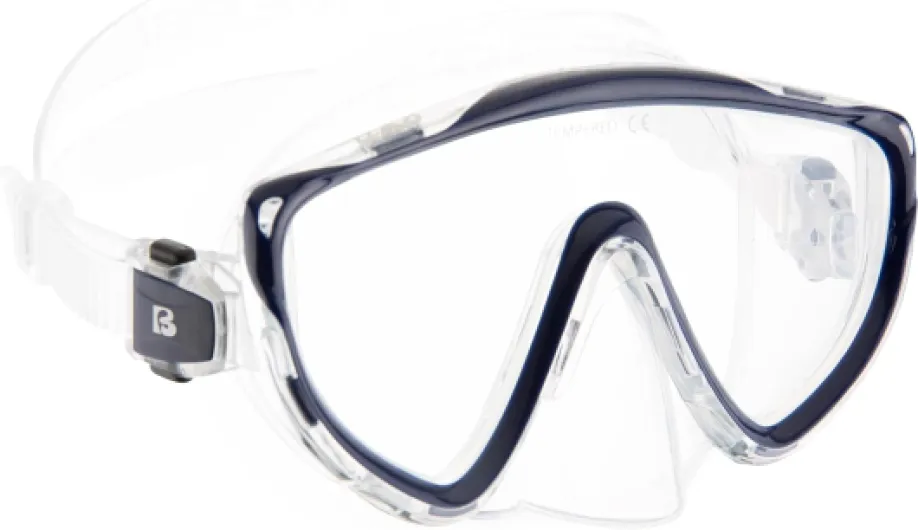
The mask has a drop‑shaped, single tempered‑glass lens. That shape gives you a wider vertical field of view than the old‑school round masks. In practice, I could look down at the reef and still see a decent amount on the sides without having to turn my whole head. The skirt is transparent, which I personally like because it lets more light in and reduces that tunnel vision feeling. Some people prefer black skirts to cut reflections, but for casual snorkelling in clear water the transparent one feels more open and less claustrophobic.
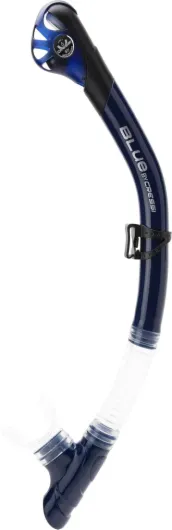
The snorkel design is pretty straightforward: a dry‑top valve at the top, a purge valve at the bottom, and a curved tube that sits comfortably by the head. The dry top is the main feature; when a wave hits or you dip underwater briefly, a float mechanism blocks the top. When you surface, it opens again. It’s not perfect – if you dive deeper or at an angle, a bit of water can still sneak in – but for normal surface use it reduces the amount of seawater you end up tasting.
One thing I liked is that the whole set is visually consistent: transparent and blue navy, nothing too flashy but still easy to spot in the water or on the beach. The bag design is simple but functional, with mesh areas so the gear can dry a bit between sessions. If I had to nitpick, the buckles on the fins feel like the most fragile point of the whole design; they’re fine now, but they don’t give the same confidence as more robust scuba fins. Overall, the design choices make sense for someone who wants a practical, easy‑to‑pack snorkel kit rather than a performance‑focused setup.
Comfort: good overall, but watch the fins on longer sessions
On the comfort side, the mask was the clear winner for me. Once I adjusted the strap properly, it sat on my face without digging into the bridge of my nose or leaving painful marks on my forehead. I wore it for sessions of over an hour, and apart from the usual mask line around the eyes, I didn’t feel any real discomfort. The skirt seals well without needing to crank the strap super tight, which is usually where headaches and pressure points start. If you’ve used really cheap masks before, you’ll notice the difference: this one feels more stable and less fussy.
The snorkel is also decent in terms of comfort. The silicone mouthpiece is soft enough that my jaw didn’t ache, even after several days in a row. I’m pretty sensitive to hard mouthpieces – I end up clenching – and here I could keep a relaxed bite. The tube sits at a natural angle, so I didn’t have to twist my head or fight to keep it in place. The dry‑top adds a tiny bit of weight at the top, but I didn’t really notice it once I was in the water and moving.
The fins are where comfort drops a notch. With bare feet, they were okay for short swims, but after repeated long sessions I started to feel rubbing on the top of my right foot, similar to what one of the Amazon reviewers mentioned. It wasn’t immediate – it showed up after several days of heavy use – but it’s worth noting. With thin neoprene socks or even simple swim socks, the problem mostly disappeared, so if you know you have sensitive feet or bony insteps, I’d plan to wear something under the straps.
In practice, for a typical holiday where you snorkel once or twice a day, the comfort level is acceptable to good, especially for the mask and snorkel. The fins are fine for casual use but not the kind of thing I’d choose for all‑day excursions or strong currents. If comfort is your absolute top priority and you snorkel for hours every single day, there are better, more padded fin options, but you’ll pay more and lose some of the compactness this set offers.
Durability: fine for holiday use, but not indestructible
Durability is always a bit tricky to judge after just one trip, but I can at least say how it behaved with regular use and what looks like potential weak spots. After around 10 days of almost daily snorkelling, being tossed in and out of the bag, left in the sun a bit (not ideal, I know), and rinsed quickly in fresh water, the set still looks in good shape. No cracks in the lens, no obvious wear on the mask skirt, and the snorkel valves still move freely when you blow and suck through it.
The plastic on the snorkel and fins doesn’t feel ultra‑robust like top‑tier scuba gear, but it’s also not the brittle kind you get in cheap supermarket kits. The mouthpiece hasn’t started to tear, and the dry‑top mechanism didn’t jam with sand, which I was half expecting after a few beach entries. I was careful to rinse the moving parts, though, so if you just chuck it in a bucket and forget it, you might have a different experience over time.
The main area that worries me a bit is the fin construction, especially around the straps and where the blade meets the foot pocket. One Amazon review mentioned a cracked fin after a trip, and I can see how that might happen if you’re rough when putting them on or if you walk on rocks with them. The plastic isn’t paper‑thin, but it’s also not built for abuse. I didn’t have any cracks myself, but I treated them reasonably gently: put them on in the water, avoided stomping around on hard surfaces, and didn’t yank the straps like crazy.
For someone who uses this set a couple of weeks a year on holiday, I’d expect it to last several seasons if you rinse it after saltwater use and don’t leave it baking in the sun all day. If you’re planning weekly use all year round, especially in rougher conditions, I’d be less confident and might look at more robust fins at least. The two‑year manufacturer warranty is a small reassurance, but I’d still handle the fins with a bit of care.
Performance in the water: mask solid, snorkel reliable, fins just okay
In actual use, the mask performed better than I expected for this price bracket. Once I did a proper initial clean (burned off the factory film on the glass and then used anti‑fog), fogging was minimal. Without any treatment, it behaved like most new masks: it fogs. With spray or the burn‑and‑rinse trick, it stayed clear for full sessions. The seal around my face was consistent – I only had to clear it occasionally after duck dives, and even then it was more from me bumping it than from a real leak. Compared to random rental masks I’ve had in the Maldives and the Med, this one is miles ahead in clarity and stability.
The snorkel’s dry‑top system does what it says, up to a point. On the surface with small waves, it blocked most of the splashes. When I dove down a few metres, I still got a bit of water inside, but thanks to the purge valve at the bottom, clearing it was easy: one strong blow and it was empty again. I never had that annoying full‑tube gulp of water that you get with basic snorkels. For relaxed surface snorkelling it’s more than enough; if you’re into deeper, repeated duck dives, you might eventually prefer a simpler J‑tube, but that’s another use case.
The fins are where performance is clearly “good enough” rather than impressive. The short blades give you decent manoeuvrability and are fine for calm lagoons or sheltered bays. You can cover some distance, but you’re not going to win any races or push comfortably against strong current. I noticed that in light current they were okay, but when the water picked up, I had to work harder and my legs got tired faster compared to longer fins I’ve used. For most holiday snorkelling spots, they’ll be fine; just don’t expect the power of proper diving fins.
Over five straight days of daily use in warm water, the whole setup stayed functional: no sudden leaks from the mask, no stuck valves on the snorkel, and no floppy fin blades. Performance wise, I’d summarise it like this: mask: solid, snorkel: reliable for casual use, fins: acceptable but not for strong currents or very long swims. If you keep that in mind, you won’t be surprised in the water.
What you actually get in the Cressi Tino Adventure Set
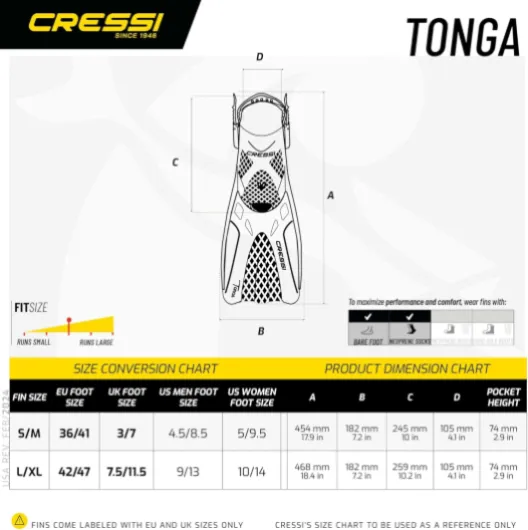
The set includes three main pieces: the Tonga short fins, the Tino single‑lens mask, and the Scilla dry‑top snorkel. Everything comes in a compact, water‑resistant bag with a zip. The bag sounds like a small detail, but for travel it matters: I could throw the whole kit, still wet, into my suitcase without soaking my clothes. It also fits easily in a beach backpack, which is handy if you’re walking a bit to get to decent water.
The size I used was S/M, meant for adults, and I’d say it suits small to medium feet best. On me (roughly EU 41), the fins were at the upper end of comfortable; they’d be happier on someone slightly smaller or with narrower feet. The mask strap is a split strap type and adjusts like any normal dive mask. The snorkel clips onto the strap with a simple retainer that actually holds – I didn’t have it popping off when I duck dived, which is something I’ve had with cheaper sets.
On paper, the specs are nothing fancy: plastic body, tempered glass lens, silicone mouthpiece, and a dry‑top snorkel head that’s supposed to reduce water coming in from waves or brief submersions. In practice, this spec sheet matches what you’d expect from a mid‑range snorkel kit, not a toy. The tempered glass lens is important; it’s safer and clearer than plastic and can handle the usual anti‑fog treatment (burning off the factory film, or using anti‑fog spray).
The first impression out of the box is: this feels like proper snorkel gear, not those flimsy beach store sets hanging next to inflatable mattresses. The mask has some weight, the snorkel doesn’t feel brittle, and the fins, while basic, don’t look like they’ll fold in half at the first kick. Still, you can tell it’s designed for holiday use and convenience rather than hardcore diving – and honestly, that matches the price and the target user pretty well.
Pros
- Comfortable, well‑sealing tempered glass mask with good field of view
- Dry‑top snorkel with purge valve reduces water intake and is easy to clear
- Compact short fins and carry bag make it very travel‑friendly
Cons
- Fins are only average in power and can rub on longer sessions, especially barefoot
- Construction, especially fin straps, feels more holiday‑grade than heavy‑duty
Conclusion
Editor's rating
After using the Cressi Tino Adventure Set on a real trip, my feeling is simple: it gets the job done for casual snorkelling, without being anything fancy. The mask is the strongest part: good seal, clear tempered glass, and comfortable enough for long sessions once you treat it properly for fogging. The snorkel is reliable, the dry‑top reduces unwanted seawater, and the purge valve makes clearing easy. Together, those two pieces already justify most of the purchase for a normal holiday user.
The fins and overall durability are where the compromises show. The short fins are convenient and fine for calm waters, but they’re not ideal for strong currents or very long swims, and they can cause rubbing on bare feet after several days of heavy use. The construction is okay but not bombproof, so you need to treat the fins and buckles with a bit of care. For a couple of trips a year and normal use, I think they’ll hold up; for heavy, year‑round use, I’d look at more robust fins.
Who is this set for? People who go on beach or island holidays, want their own clean, decent‑quality gear, and don’t want to spend ages choosing separate components. It’s also good for beginners who just want something straightforward that works. Who should skip it? Regular divers, strong swimmers who often deal with current, or anyone very picky about fin performance – in those cases, building your own setup with better fins and maybe a higher‑end mask makes more sense. Overall, as a grab‑and‑go travel snorkel kit, it’s a pretty solid, no‑nonsense option.