
Summary
Editor's rating
Value for money: is it worth it?
Design: simple, sturdy, but with a couple of quirks
Materials & build: heavy steel and hot black paint
Durability and long-term feel
Performance at the ramp: does it actually make boarding easier?
What you actually get when you open the box
Pros
- Very stable and sturdy once bolted on, supports 300–350 lbs without noticeable flex
- Tall handrail makes boarding much safer and easier, especially for kids or older users
- Simple no-drill installation on most 3"–4" wide, 3"–5" high trailer tongues
Cons
- Too low for larger 26–30 ft boats with high bows, limited to smaller rigs
- Black metal gets very hot in direct sun and step grip could be better without added tape

Specifications
View full product page →| Brand | Toplamper |
Finally stop doing circus moves at the boat ramp
I’ve been using this Toplamper 2-step boat trailer ladder for a few weekends now, and honestly, it solves a very basic but annoying problem: getting on and off the boat without climbing the trailer like a monkey. Before this, I was either stepping on the tongue, the winch post, or the fender, and every time it was a bit of a gamble, especially when things were wet or covered in slime at the ramp.
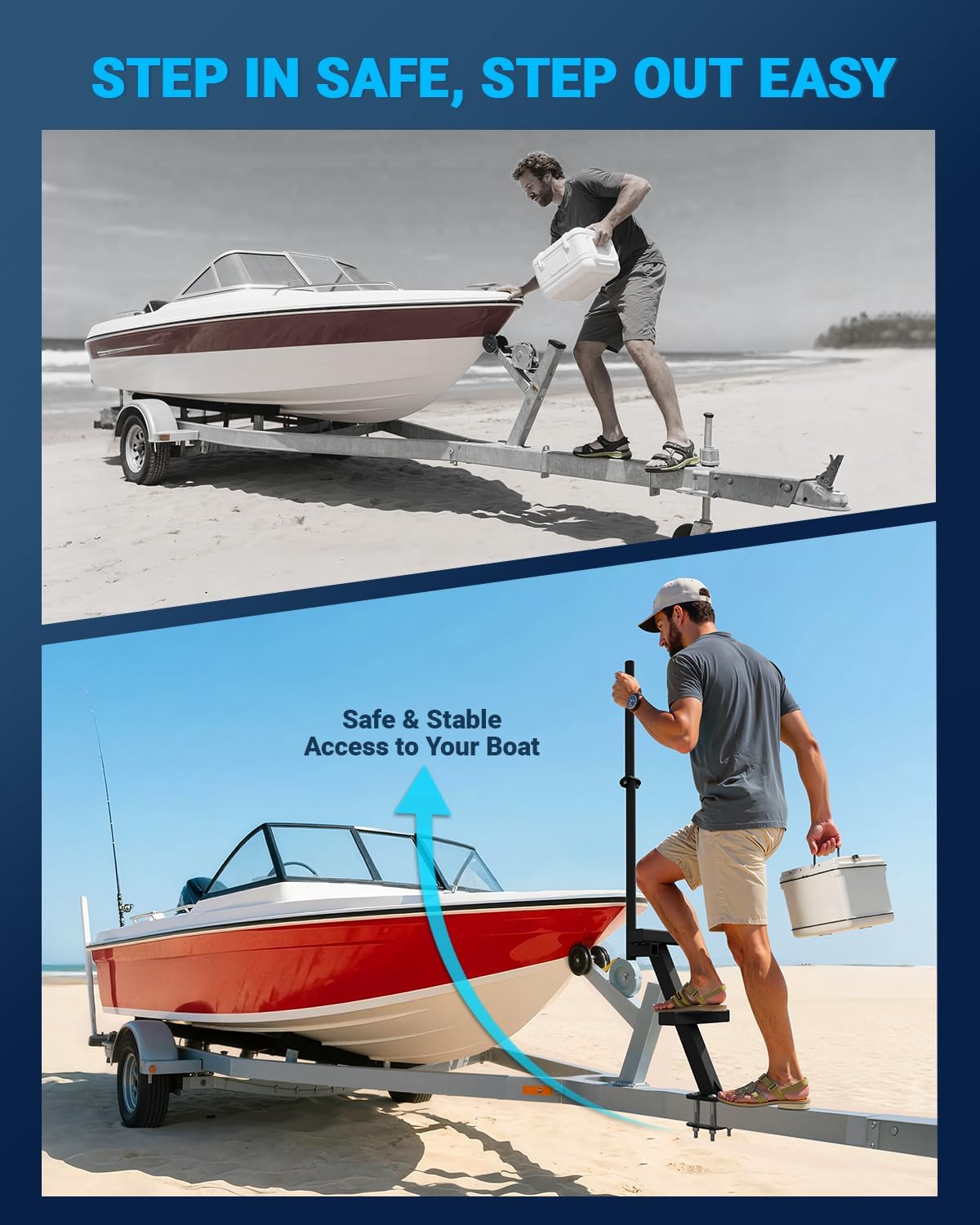
With this thing bolted to the trailer tongue, boarding is just more controlled. You walk up, grab the handrail, and step up instead of doing a half jump, half stretch. It’s not fancy, it’s just a solid metal step with a tall handle, but in practice that’s exactly what you want here. You feel safer, and you’re a lot less likely to slip or tweak a knee.
I mounted it on a mid-size bass boat trailer, roughly in the 20–21 ft range, which seems to be its sweet spot. If you’re running a smaller bass boat or pontoon, you’re in the target zone. If you’ve got a big 28–30 ft boat with a tall bow, this is probably going to feel too short, and you’ll still have to climb that last bit. One of the Amazon reviews says exactly that, and I can see why.
Overall, my first impression was: decent, sturdy, and way more useful than half the boat accessories people buy. It’s not perfect, there are a couple of details that bug me, especially the heat it builds up in direct sun and the grip on the steps, but for basic safety and convenience at the ramp, it gets the job done.
Value for money: is it worth it?
From a value perspective, I’d put this in the “good but not mind-blowing” category. It’s not dirt cheap, but you’re getting a heavy steel structure that actually makes your life easier every single time you launch or load the boat. Compared to the price of a lot of boat accessories that barely change your routine, this one at least earns its spot. The Amazon rating around 4.7/5 with multiple positive reviews matches my feeling: people who buy it for the right type of boat are generally happy.
Where it shines is for typical bass boat and smaller pontoon owners who are tired of climbing the trailer tongue or the winch post. For that crowd, the money you spend translates directly into fewer awkward jumps and fewer chances of slipping. If you’ve ever watched an older family member or a kid struggle to get on the boat at the ramp, you know what I mean. In that sense, the value isn’t just convenience; it’s also a bit of safety and peace of mind.
On the flip side, if you’ve got a big 26–30 ft deep-V with a tall bow, the value drops quickly because the step is simply too low. You’ll still need to climb that last part, and you might end up feeling like you paid for half a solution. In that case, I’d either look for a taller multi-step bow ladder or a different setup entirely. Also, factor in that you might want to add your own grip tape or traction pads to the steps, which is a small extra cost but still something the manufacturer could have handled better out of the box.
Overall, for the right boat and trailer size, I think the value is solid. You get a sturdy, simple step system that you install once and then basically forget about, except when you appreciate not having to do gymnastics at the ramp. It’s not some fancy premium product, but it’s practical, does what it’s supposed to, and doesn’t feel overpriced for what you’re getting.
Design: simple, sturdy, but with a couple of quirks
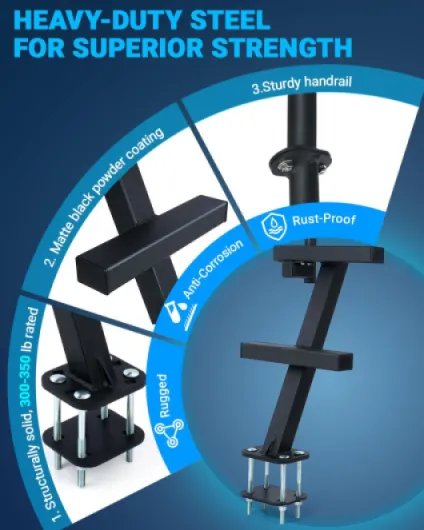
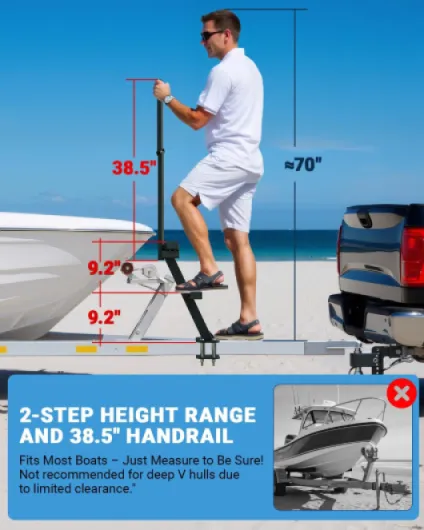
The design is pretty no-nonsense: two steps welded to a vertical support, with a tall handrail that sticks up about 38.5 inches from the tongue area. The good part is the handrail height. When you’re climbing up or down, you’ve got something to grab that actually feels high enough, even if you’re taller. I’m around 6 feet and the handle comes up to a comfortable spot, so I don’t have to hunch or reach awkwardly. That alone makes boarding feel a lot more controlled, especially when you’re standing on wet concrete or in current at the ramp.
One design detail I liked is that you can flip the top handle section around, like one of the reviewers mentioned. I tried it angled slightly back toward the boat, and it does make access easier in some setups because you’re not leaning forward over the tongue as much. It’s not spelled out in big letters in the listing, but in practice you can tweak the orientation a bit to suit your trailer and bow shape. That flexibility is handy if your winch post or bow stop are a little tight on space.
On the downside, the steps themselves could use a more aggressive non-slip surface. There’s some texture, but when they’re wet and you’ve got sand or slime from the ramp, they feel a bit too smooth for my taste. One of the reviewers also pointed this out. I ended up adding some stick-on grip tape, which honestly should not be necessary on a product made for wet environments. It’s not a deal-breaker, but it’s something you should probably plan to do if you use it in rain or saltwater regularly.
Another design point: this is clearly aimed at low to mid-height boats. If you’ve got a big deep-V with a tall bow, it’s just not tall enough. One guy with a 29 ft boat said exactly that, and I believe him. You’ll step up onto the top step and still have a big climb or awkward stretch to get onto the bow. For my 21 ft bass boat, it lines up well: step, step, then straight onto the front deck. So the design works, but only if your boat fits that category. Overall, I’d call the design functional and pretty solid, with the main misses being the grip on the steps and limited use for taller boats.
Materials & build: heavy steel and hot black paint
The ladder is made from heavy-duty steel, and you feel that as soon as you pick it up. It’s not some hollow flimsy tubing. The manufacturer claims a 300–350 lb rating, and based on how little it flexes when I’m on it (I’m around 195 lbs), that rating feels realistic. There’s no noticeable wobble once it’s bolted down tight. The mounting hardware is also decent – standard steel bolts and plates, nothing fancy, but they clamp firmly around the trailer tongue when you torque them properly.
The whole thing is powder coated in a matte black finish. That’s good for rust resistance, especially if you’re dunking the trailer in freshwater regularly. I haven’t had it long enough to talk about multi-year rust, but after a few dunkings and some hose-downs, there’s no peeling or bubbling. The coating feels thick enough that it should last a while unless you scrape it hard on something. It’s marketed as anti-corrosion and suitable for salt, but if you’re in saltwater a lot, I’d still rinse it religiously and maybe keep an eye on the bolt threads.
One downside of that matte black coating: it gets hot. Really hot in direct sun. One Amazon reviewer mentioned this, and I had the same experience. After a couple of hours in summer sun, the steps and the handrail are basically a metal radiator. It’s not going to burn your skin instantly, but you definitely notice it, and if you’ve got kids climbing up barefoot, they won’t like it. This isn’t unique to this brand – black metal plus sun is always like that – but it’s worth knowing. If you usually boat in hot climates, you might end up throwing a towel over it or adding some lighter-colored grip tape.
Overall, the materials feel pretty solid for the price range. Thick steel, decent welds, and a proper powder coat are all reassuring for something that takes your full body weight. I would have liked stainless hardware by default, especially for saltwater users, but for a budget-friendly step system this is fairly standard. Just plan on maybe swapping bolts down the line if you see rust, and consider some extra grip tape to improve traction and reduce how much bare black metal your feet and hands actually touch.
Durability and long-term feel
I haven’t had this ladder for years, so I can’t pretend I know exactly how it will look in five seasons, but based on the first weeks of use and the way it’s built, it feels like it’ll hold up pretty well. The steel is thick and the welds don’t look half-baked. I’ve stepped on it a bunch of times, bounced a little, and checked for any cracking or flexing around the welds and mounting points – so far, nothing worrying. The handrail doesn’t twist, and the steps don’t feel like they’re sagging under load.
The powder coat seems decent. After some ramp use, road grime, and a few rinses, the finish still looks good. No rust bleeding through around the welds yet, which is usually where cheaper coatings fail first. That said, if you use it in saltwater a lot, I’d expect some rust eventually, especially on the hardware and around edges where the coating might get chipped. This is just the reality of steel on a boat trailer. If that bothers you, you’re probably looking at a much more expensive stainless solution, which this is not.
One small thing I noticed is that the hardware will need periodic checking. After a couple of uses, I went back with a wrench and snugged up the bolts again. They weren’t loose, but they had settled a bit. That’s normal for something that clamps onto a frame and gets bounced around on the road. I’d just make it a habit to check the bolts once in a while, especially after the first few trips or if you tow long distances on rough roads.
Given the weight, the build, and the early signs, I’d say durability is pretty solid for the price point. It’s not indestructible, but it feels like it’ll handle a few seasons of regular weekend use without falling apart. If you treat your trailer reasonably well – rinse after salt, avoid slamming the step into curbs, and touch up any big chips in the coating – I don’t see it failing anytime soon. For a budget-friendly steel step system, that’s about as good as you can realistically expect.
Performance at the ramp: does it actually make boarding easier?
In day-to-day use, the performance is pretty straightforward: it makes getting on and off the boat less sketchy. Before, my routine was to step on the trailer tongue, grab the bow rail, and kind of haul myself up. With wet shoes or if there was slime from the ramp, that always felt a bit risky. With this step installed, I walk up like a normal set of stairs, one hand on the rail, and step onto the bow. It feels more controlled, and I’m not constantly thinking about slipping or twisting an ankle.
Stability-wise, once it’s tightened properly, it doesn’t budge. I tried bouncing a bit on the top step, and there was no weird flex or rattling. I’ve had a couple of heavier buddies use it, both around 230–250 lbs, and they didn’t make it complain either. The rated 300–350 lb capacity seems realistic. The only time you’ll feel any flex is if your trailer tongue itself is a bit on the light side, but that’s not the ladder’s fault. On my trailer, which is fairly stout, the whole thing feels like part of the frame once clamped down.
Where it struggles is with boat height. On my 21 ft bass boat, it’s spot on. Two steps, grab the handle, step onto the front deck, done. But if your bow sits higher, you’ll end up with a big step from the top of the ladder to the boat. The guy with the 29 ft high-bow boat who said it was too low is a good example. The ladder doesn’t magically grow; it just tops out at that 2-step height. So performance is great if your boat fits the profile it was designed for, and a bit underwhelming if you’re on the larger, taller side.
In terms of daily practicality, I like that it’s fixed and doesn’t fold. No moving parts means less crap to rattle or corrode. It’s always there, ready to use, and it doesn’t add any real hassle when towing or parking. The downside is you can’t just fold it out of the way if you want more access at the front, but on my setup it never really gets in the way. Overall, in real-world use, it does what it’s supposed to do: makes boarding and launching safer and less of a balancing act. Nothing more, nothing less.
What you actually get when you open the box
Out of the box, you’re looking at a pretty straightforward setup: a welded 2-step ladder with a tall handrail, finished in matte black, plus the hardware to bolt it onto your trailer tongue. No moving parts, no hinges, nothing to fold. It’s a permanent bolt-on piece. The whole thing weighs a bit over 9 kg, so it feels substantial when you pick it up, not like thin stamped metal that’s going to bend the first time a heavier person uses it.
The brand is Toplamper, which isn’t exactly a big name in boating, but the product itself doesn’t feel cheap. The welds on my unit are clean enough, no big blobs or gaps, and the paint coverage looked uniform. It’s meant to fit on trailer tongues that are 3–4 inches wide and 3–5 inches high, so basically most standard small-boat and bass-boat trailers. If your tongue is way bigger or some weird custom profile, you’ll have to measure before buying.
They advertise it as no-drill, which in my case was accurate. The mounting plates clamp around the tongue with bolts, so you don’t have to start punching holes in your trailer. I had it loosely mocked up in a couple of minutes and fully tightened in maybe 10. The only thing you need is basic hand tools and a bit of patience to position it so it doesn’t interfere with your winch or bow stop. On my trailer, I had enough space to mount it slightly to the side of the winch post so I can step up and then step straight onto the bow area.
If you’re expecting a full-on ladder that goes halfway up the bow of a 30 ft boat, this isn’t that. It’s two steps and a handrail, nothing more. Think of it as making the first part of the climb easier and safer. For my 21 ft bass-style boat, that’s exactly what I needed. For someone with a 29 ft high-bow rig, as one reviewer said, it’s going to feel too low and a bit pointless. So the presentation is simple: solid steel, matte black, no gimmicks, just a fixed step system for typical small to mid-size boat trailers.
Pros
- Very stable and sturdy once bolted on, supports 300–350 lbs without noticeable flex
- Tall handrail makes boarding much safer and easier, especially for kids or older users
- Simple no-drill installation on most 3"–4" wide, 3"–5" high trailer tongues
Cons
- Too low for larger 26–30 ft boats with high bows, limited to smaller rigs
- Black metal gets very hot in direct sun and step grip could be better without added tape
Conclusion
Editor's rating
After using the Toplamper 2-step boat trailer ladder for a bit, my take is pretty clear: for small to mid-size boats with a reasonably low bow, it’s a solid, practical upgrade. It bolts onto the tongue in a few minutes, feels sturdy underfoot, and the tall handrail gives you real support when you’re climbing up or down. You stop doing sketchy moves on the trailer frame, and boarding just feels calmer and safer. The steel construction and powder coat look up to the job for regular weekend use, and the thing doesn’t wobble if you install it properly.
It’s not perfect, though. The steps could use better non-slip treatment, especially for wet conditions, and the matte black finish turns into a hot plate under strong sun. Also, if you’ve got a big 28–30 ft boat with a high bow, this is likely too short to be truly useful, which a few reviewers and my own testing agree on. In that case, you should look for a taller or more specialized bow ladder. But if you’re running something like a 18–21 ft bass boat or a similar low-side rig, this hits a good balance of price, sturdiness, and simplicity.
So, who is it for? Boaters with smaller trailers who want a straightforward way to get on and off the boat without risking a slip, and who don’t care about fancy features. Who should skip it? Owners of tall deep-V hulls and anyone expecting a full multi-step ladder up the entire bow. For the right setup, it’s a pretty solid piece of kit that just quietly does its job every time you hit the ramp.