
Summary
Editor's rating
Value for money: decent if you’re handy, less so if you expect perfection
Design: looks nice at first glance, but details are average
Comfort and ease of use: okay once installed right, but not perfect
Materials: decent stainless and real teak, but not premium grade
Durability: should hold up if you maintain it, but not bulletproof
Performance on the water: does the job, but with some quirks
What you actually get in the box
Pros
- Real teak platform and stainless steel construction at a relatively low price
- 3-step ladder length is comfortable to climb, with two rails for extra support
- Works fine if installed with proper backing and maintained with basic cleaning and teak oil
Cons
- Finishing is average: rougher teak edges, basic welds, and not-so-smooth telescoping
- Requires extra work (oiling, possibly upgrading hardware, adding non-slip) to feel really dialed in
- 304 stainless, not 316, so it needs more care in harsh saltwater environments

Specifications
View full product page →| Brand | YaeMarine |
A budget swim ladder that looks nicer than it feels
I put this YaeMarine 3-step inboard teak swim platform ladder on a small cruiser to see if a cheaper ladder with teak could actually be a good deal. On paper, it ticks a lot of boxes: stainless steel, real teak platform, telescopic 3-step ladder, and two grab rails. The price is lower than most big-name marine brands, which is what pushed me to try it instead of going with something like Garelick or Windline right away.
In real use, it’s a mixed bag. The ladder does the basic job: you can climb in and out of the water without feeling like you’re doing a pull-up contest on a tiny step. But you can also feel that it’s not from a premium brand. Some details are a bit rough: hardware, finishing on the teak, and the way the ladder retracts. It’s not junk, but it’s not top tier either.
I used it for a few weekends on a freshwater lake, with adults and kids using it regularly. No one got hurt, nothing broke, but I did have to tweak a few things during installation and I can see where some of the low Amazon ratings are coming from. If you’re expecting high-end fit and finish, you’ll be disappointed. If you just want something functional and you’re handy with tools, it can work.
So overall, I’d say this ladder is decent but not more than that. It looks nice from a distance, works fine once installed correctly, but you have to accept some compromises: average finishing, some alignment issues, and probably more maintenance than the product page suggests. Whether it’s worth it depends mostly on your budget and how picky you are about build quality.
Value for money: decent if you’re handy, less so if you expect perfection
Given the features—stainless steel, real teak platform, 3-step telescopic ladder, and rails—the price is clearly lower than what you’d pay for a big-brand equivalent. That’s the main argument for this product. If you compare it to premium models, you might be saving quite a bit. For a casual boater who just wants a usable swim ladder without dropping a lot of cash, that’s attractive.
But you have to factor in the hidden costs: time and maybe extra hardware. In my case, I spent some time sanding and oiling the teak, checking and replacing a few screws with better marine-grade ones, and carefully installing with backing plates. If you’re handy and you enjoy tinkering, that’s not a big deal. For someone who wants a perfect, plug-and-play solution right out of the box, the value is less impressive because you’ll be annoyed by the rough edges and minor adjustments needed.
The Amazon rating around 3.9/5 matches what I felt: not a disaster, but not flawless either. Some people will be happy because it’s cheap and it works. Others will be disappointed because they expected a more polished product. I think the fairest way to see it is: it’s good value if you treat it like a budget kit that you’ll finish and install properly yourself, not like a premium finished part.
So in terms of value, I’d give it a solid but not outstanding score. If you’re on a tight budget and comfortable doing a bit of work, it’s worth considering. If you can afford a better-known marine brand and want something smoother and more refined with less fuss, spending more upfront will probably make you happier in the long run.
Design: looks nice at first glance, but details are average
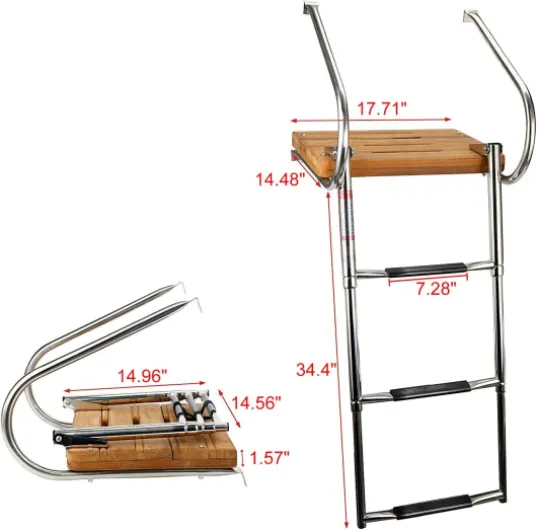
From a distance, the design looks pretty good. The combination of silver stainless steel and teak always looks nicer than straight plastic or bare metal. Mounted on the transom, it gives the boat a slightly upgraded look compared to the tiny fold-down metal ladders many boats come with. The rails give a bit of visual balance and also make it look more serious than a single bar ladder.
Up close, you start to see where they cut corners. The teak platform is a simple board, not a carefully finished piece. On mine, the edges were a bit sharp, and there were a couple of spots where the sanding wasn’t very consistent. I ended up lightly sanding and oiling it myself before installing. The ladder mechanism works, but the telescopic action is not super smooth. You can feel a little play in the joints, and you sometimes have to wiggle the steps to get them to slide in or out properly.
The rails are functional but not very tall. For an average adult, they’re enough to grab and steady yourself, but if you’re taller or have mobility issues, you might want something with higher or angled grab handles. Also, the spacing of the mounting points might not line up perfectly with existing holes or brackets on your boat, so be ready to drill and seal new holes in the transom or platform. That’s not a design failure, but it shows they went for a generic layout rather than something super adjustable.
Overall, I’d call the design practical but basic. It does what it needs to do: 3 steps into the water, a teak platform to stand on, and two rails. Nothing more, nothing less. If you’re okay with a simple, slightly rough-around-the-edges look, you’ll be fine. If you’re fussy about alignments, smooth operation, and polished details, you’ll probably find it a bit frustrating.
Comfort and ease of use: okay once installed right, but not perfect
Comfort-wise, the ladder is usable and safe enough, but it’s not the most comfortable setup I’ve tried. The 3 steps give you a decent depth into the water. I’m around 1.80 m (5'11") and when the ladder is fully extended, I can get my feet on the bottom step easily, even when the boat is rocking a bit. That’s important because short ladders are a pain to climb; this one is fine in that sense.
The steps themselves are metal, and on bare feet they’re okay but not super grippy. When they’re wet, you need to pay attention, especially if there’s a bit of algae or sunscreen slick on them. Compared to some ladders that have thick rubber treads, this one is more basic. After a couple of slippery climbs, I added some non-slip tape to the steps, which helped a lot. It’s a small DIY fix, but it tells you the original design could have used better traction.
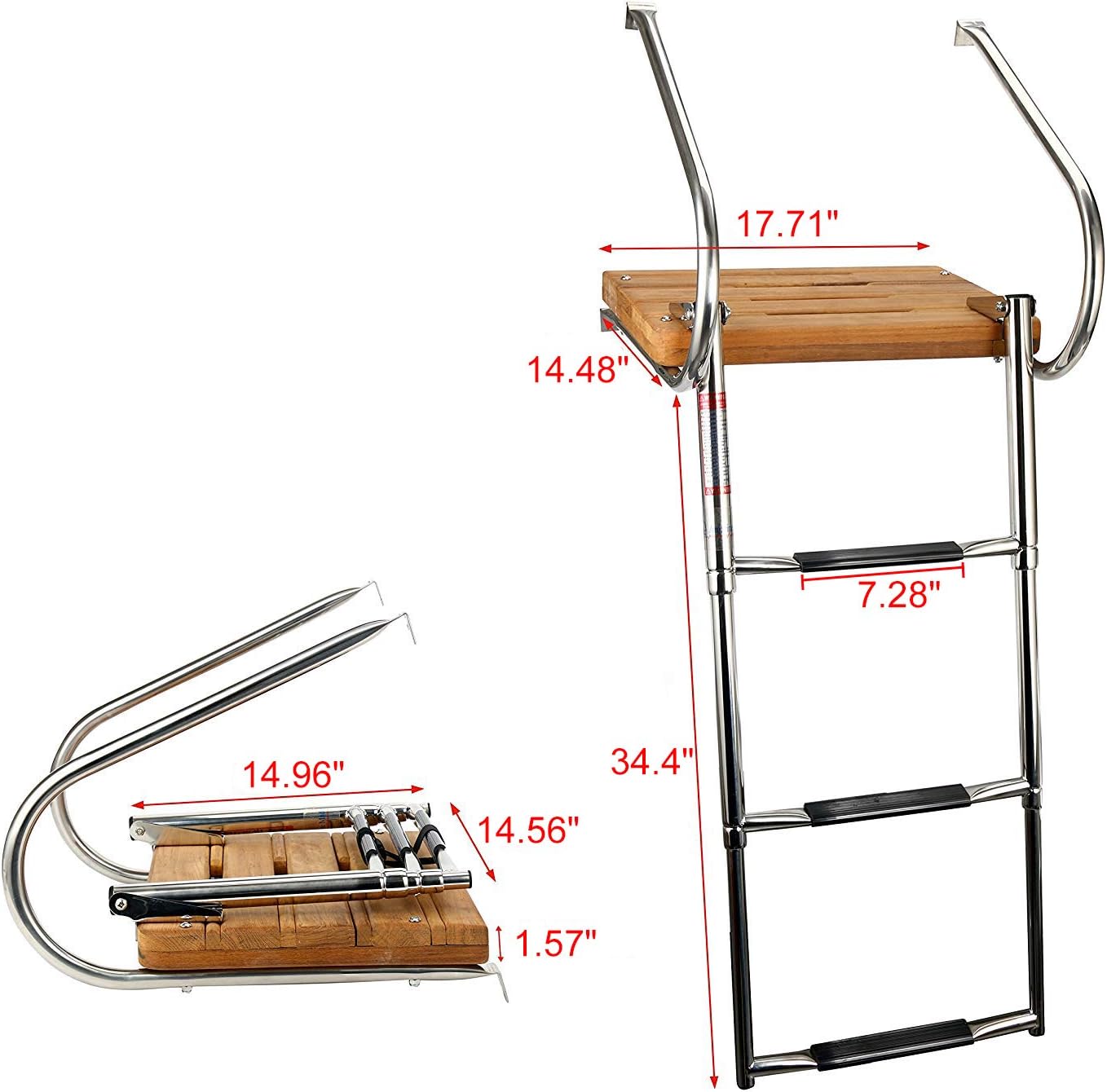
The teak platform feels nice underfoot, especially once it’s oiled. Standing on it to rinse off or take off fins is comfortable, and the 18" width is enough for one person to stand without feeling cramped. The 3/4" thickness is fine; it doesn’t flex under a normal adult weight. The rails are helpful but a bit short for my taste. They’re better than nothing, and my kids used them a lot to pull themselves up, but taller users might wish they were a bit higher or angled differently.
In day-to-day use, the main minor annoyance is the telescoping action: sometimes the steps don’t slide perfectly and you have to tug at them. It’s not a massive problem, but when you’re in cold water and just want to get back on board quickly, those extra few seconds of fiddling are annoying. Overall, I’d say comfort is acceptable but not great. It works, you can use it barefoot, and you feel reasonably secure, but it’s not as smooth or ergonomic as some pricier ladders.
Materials: decent stainless and real teak, but not premium grade
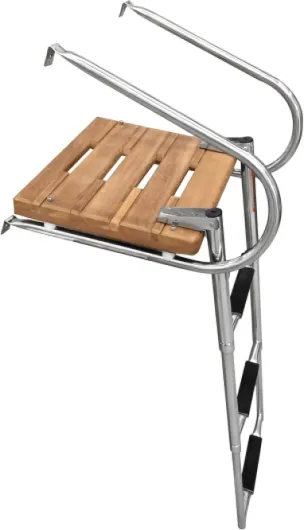
The main selling points here are 304 stainless steel and a marine-grade teak platform. On paper, that’s solid for the price. 304 stainless is common on boats, especially for parts that aren’t constantly submerged. It’s not as corrosion-resistant as 316, but if you rinse the ladder after saltwater use and you’re in freshwater most of the time, it should hold up. After a few weekends and leaving it outside, I didn’t see rust spots, but I did notice a couple of tiny areas where tea staining could appear over time if you don’t maintain it.
The teak board is real wood, not fake plastic. It comes pretty dry out of the box, with no heavy oil finish. If you leave it like that, it will gray out and weather. The product page says you can leave it out all year with a yearly teak oil or sealer, and I’d say that’s realistic if you actually do it. I gave it one coat of teak oil before installation, and it soaked it up fast, which tells me it wasn’t heavily treated at the factory. That’s not a problem, but it means you should plan to finish it yourself if you care about the look.
The hardware included is okay but not great. The screws and bolts feel like generic stainless, and I personally swapped some of them for better quality marine fasteners with proper backing washers. On a part that people will stand and jump on, I don’t like to trust the cheapest hardware. The welds on the ladder and rails are functional: no cracks or sharp burrs on mine, but you can see they weren’t done with aesthetics in mind. They do the job; they just don’t look high-end.
So, materials-wise, I’d say pretty solid for a budget product, but not the kind of stuff you’d pick for a high-end yacht. If you’re okay with doing a bit of oiling and maybe upgrading some bolts, it’s fine. If you want 316 stainless everywhere and perfectly finished teak out of the box, you should look at more expensive brands.
Durability: should hold up if you maintain it, but not bulletproof
I haven’t had this ladder for years obviously, but after a few weeks of real use and looking closely at how it’s built, I have a pretty clear idea of its likely durability. The 304 stainless is fine for freshwater and occasional saltwater, but you’ll want to rinse it and maybe wipe it down after each saltwater trip. If you ignore it completely, expect some tea staining or light surface rust around welds and joints over time. That’s typical for 304, especially on cheaper products.
The teak should last a long time structurally. It’s thick enough and feels solid. The question is more about looks than strength. If you don’t treat it, it will weather to a gray color and might get a bit rough. If you oil or seal it once or twice a year, it should stay in decent shape. After one coat of teak oil and a few weekends, mine still looked good, with no cracks or splinters. Just don’t expect it to stay golden and smooth forever without some attention.
Mounting is a big part of durability. If you just screw this into a thin fiberglass wall without backing plates, you’re asking for trouble, no matter what ladder you buy. With proper backing, large washers, and sealant in the holes, it should stay put. I bounced and jumped on it a bit during testing and didn’t hear any worrying noises. But I’ve seen some Amazon reviews mention issues, and I’d bet many of those come from weak installs rather than the ladder snapping by itself.
Overall, I’d rate durability as okay to good for the price, provided you:
- Rinse after saltwater use
- Oil or seal the teak at least once a year
- Use proper mounting hardware and backing plates
Performance on the water: does the job, but with some quirks
In real use on the water, the ladder gets the job done. It supports adult weight without bending or creaking, and the 3-step length is enough so you don’t have to haul yourself up with just your arms. I had people around 90 kg using it several times over a few weekends and there were no structural issues. Once deployed, it feels stable, and the platform doesn’t flex or feel sketchy under normal use.
Deployment and retraction are where you feel the budget side. The telescopic mechanism works, but it’s not super smooth. Sometimes a step catches a bit, and you have to give it a shake or line it up with your foot. After a bit of use, I cleaned and lightly lubricated the sliding parts, which helped, but it’s still not as fluid as higher-end models I’ve used. It’s a small annoyance, but if you’re hopping in and out of the water all day, you definitely notice it.
In terms of stability, the combination of the teak platform and the two rails is decent. When you climb out, you can put one foot on the lower step, one on the platform, and grab the rails. That feels safe enough even with a bit of wake. Where you need to be careful is in rougher conditions: because the rails aren’t super tall, you don’t have a lot of leverage if the boat rocks suddenly. It’s fine for lakes and calmer seas; in choppier water I’d prefer a beefier setup.
Compared to branded ladders I’ve tried, I’d say performance is average. It works, but it doesn’t feel as refined. If you just want something functional for summer swimming and you’re not hammering it every weekend in heavy saltwater, it should be okay. If your use is intense or you’re in harsh marine environments all the time, I’d look at something more robust and smoother in operation.
What you actually get in the box
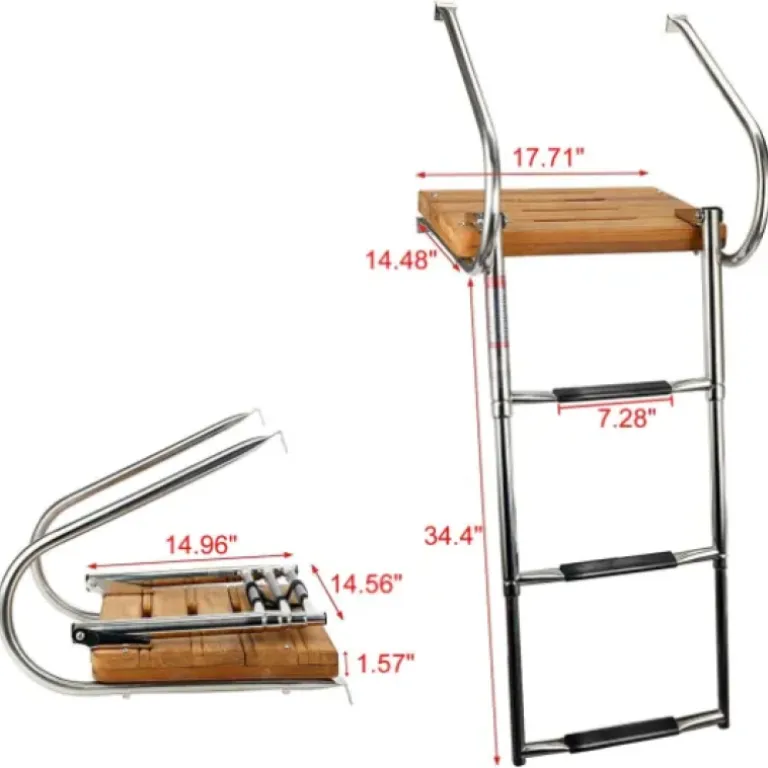
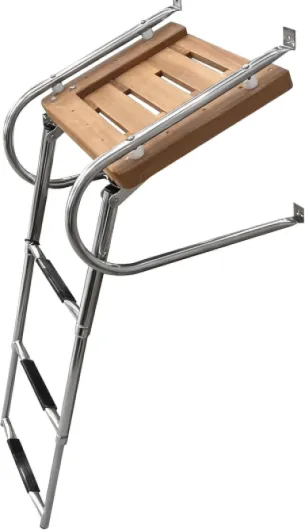
Out of the box, you get the main teak platform, the telescopic 3-step stainless ladder already attached underneath, and the two stainless rails that mount on top. Mine also came with basic mounting hardware, but I wouldn’t rely on it for every install type. If you’re putting this on an older boat or a non-standard platform, plan on buying your own stainless bolts and backing plates. The platform is advertised as 18" wide by 14" long and about 3/4" thick, which matches fairly well with what I measured.
The ladder itself folds and telescopes under the platform. You pull it out when you need it and slide it back in when you’re done. The two rails are meant to give you something to grab as you climb out of the water. They’re not huge, but they’re better than nothing, especially for kids or older people who need a bit more support. The manufacturer calls the steel "304 stainless", which is pretty standard for marine stuff in freshwater and light saltwater use, as long as you rinse it.
In practice, the general layout is classic: teak board on top, metal bits below, two vertical-ish rails. No surprises if you’ve seen similar ladders on other boats. What stands out is that this is clearly built to hit a price point. The cuts on the teak are a bit rough in spots, the edges aren’t super smooth, and the welds on the ladder are functional but not pretty. It’s not falling apart, but you can tell it’s not from a high-end marine catalog.
So in terms of presentation, you get what’s advertised, but not much more. The product page doesn’t really oversell any fancy features, and that’s accurate: it’s a basic swim ladder with a teak platform. If you’re expecting clever folding mechanisms, super grippy treads, or perfectly machined hardware, this isn’t it. If you just want a simple ladder and you’re okay with doing a bit of cleanup and adjustment, it’s fine.
Pros
- Real teak platform and stainless steel construction at a relatively low price
- 3-step ladder length is comfortable to climb, with two rails for extra support
- Works fine if installed with proper backing and maintained with basic cleaning and teak oil
Cons
- Finishing is average: rougher teak edges, basic welds, and not-so-smooth telescoping
- Requires extra work (oiling, possibly upgrading hardware, adding non-slip) to feel really dialed in
- 304 stainless, not 316, so it needs more care in harsh saltwater environments
Conclusion
Editor's rating
The YaeMarine 3-step inboard teak swim platform ladder is a functional budget option that looks nicer than a plain metal ladder but doesn’t feel like a premium marine product. It does the basic job: you can climb in and out of the water without too much effort, the teak platform is comfortable enough underfoot, and the stainless structure feels solid once installed with proper backing. If you’re on a budget and you’re okay with doing some sanding, oiling, and maybe swapping a bit of hardware, it can be a reasonable choice.
On the other hand, it’s not perfect. The telescoping action is a bit rough, the finishing on the teak and welds is average, and you’ll probably want to add non-slip tape to the steps for better grip. Long-term durability will depend a lot on how you install and maintain it, especially in saltwater. I’d recommend it mainly for freshwater or light saltwater users who want a decent ladder without spending big, and who don’t mind a bit of DIY. If you’re picky about fit and finish, or if you want something you can just bolt on and forget, a more expensive ladder from a known marine brand will likely suit you better.