
Summary
Editor's rating
Value for money: decent deal if your expectations are realistic
Design: nice to look at, but not the beefiest layout
Materials and finish: looks like 316, but you’re taking their word for it
Durability and corrosion: so far so good, but long-term is still a question mark
Performance on the dock: fine for everyday use, not for serious abuse
What you actually get in the box (and what you don’t)
Pros
- Nice mirror-polished stainless finish that looks clean on the deck
- Feels solid and works well for light to medium duty on small to mid-size boats
- Reasonable price compared to big-name marine brands
Cons
- Base is relatively small, so it’s not as “heavy duty” as advertised
- No mounting hardware, backing plate, or clear technical specs included
- No visible 316 marking, so long-term corrosion resistance is basically taken on trust

Specifications
View full product page →| Brand | Keenso |
A decent 8" cleat if you know what you’re getting into
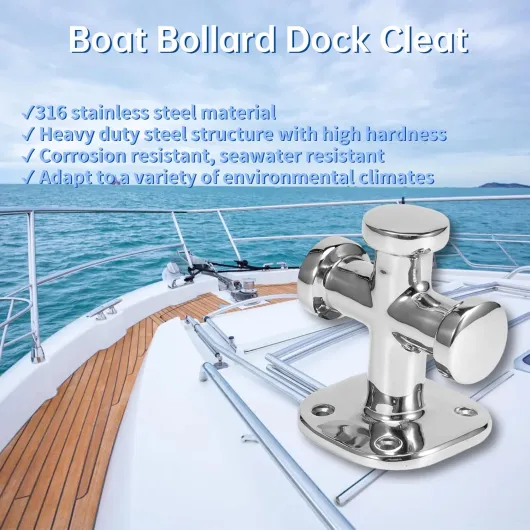
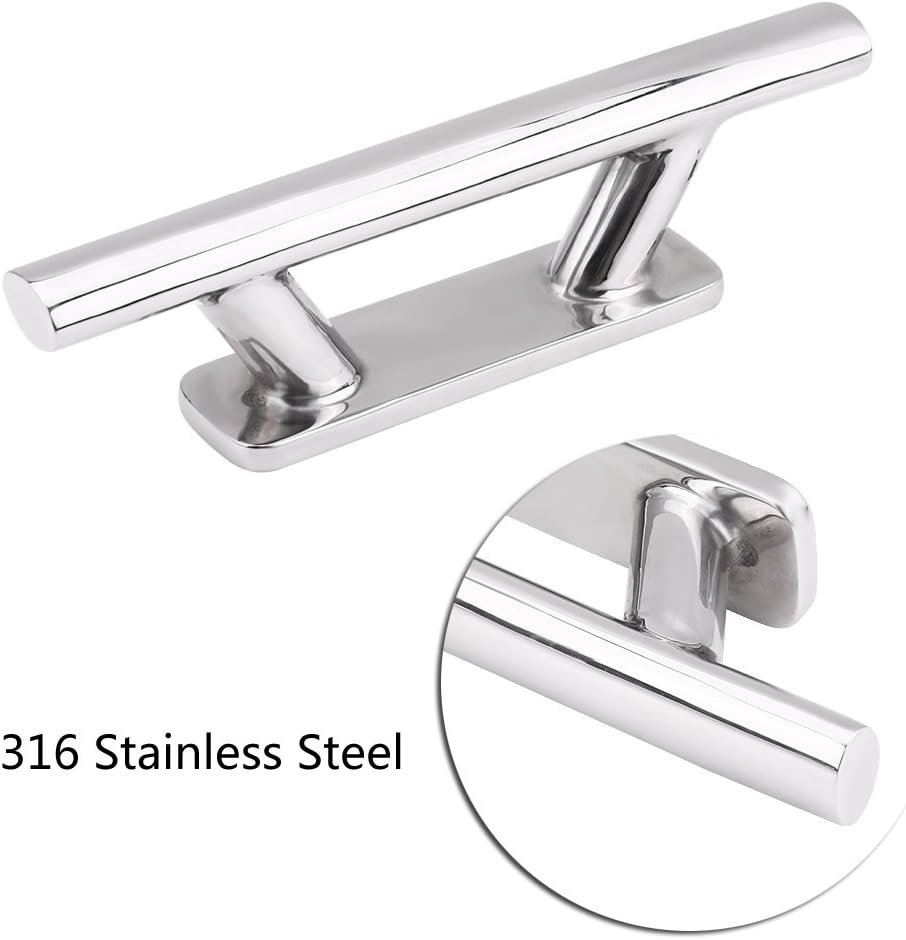
I put this Keenso 8 inch stainless steel cleat on a small fishing boat I’m slowly tidying up. I’m not a shipyard pro, just someone who spends weekends messing with boats and swearing at seized bolts. I wanted something in 316 stainless that didn’t look cheap, without paying chandlery boutique prices. On paper, this one ticks the boxes: 316, mirror finish, “heavy duty”, easy to install. The usual promises.
Once in hand, the first thing that stood out is that it looks nicer than I expected for the price. The finish is very shiny, no sharp edges, and it does feel reasonably solid in the hand. If you just want the boat to look a bit smarter at the dock, it does that job straight away. It looks closer to what you’d see on a small yacht than on a scruffy old fishing tub.
But when you actually start thinking about how you’re going to mount it and what loads you’re putting on it, the marketing talk starts to feel a bit optimistic. Calling it “heavy duty” is pushing it. It’s fine for light to medium use: mooring a small to mid-size boat in normal conditions, fenders, spring lines, that sort of thing. I personally wouldn’t rely on it as the main cleat on a heavier boat in a rough marina without a seriously good backing plate.
So overall, my first impression is: good for the price if you know what you’re buying, but not some miracle bit of hardware. It’s more of a cosmetic and light-duty upgrade than a hardcore workboat cleat. If you expect a bulletproof commercial-grade cleat just because it says 316 and “heavy duty”, you’ll probably be a bit underwhelmed.
Value for money: decent deal if your expectations are realistic
On the price side, this Keenso cleat sits in that middle ground: cheaper than the big marine brands, more expensive than the absolute bargain-bin stuff. For what you pay, you get a nice-looking, solid-feeling stainless cleat that works fine on small to mid-size boats. If you just want to replace a rusty old cleat or add a couple of tie-off points for fenders without blowing the budget, it’s a pretty reasonable option.
Where the value takes a small hit is all the corners they’ve cut around the product, not necessarily in the cleat itself. No mounting bolts, no backing plate, no tech sheet, no line size guidance, no clear bolt spacing info. By the time you’ve bought decent stainless bolts, big washers or a backing plate, and marine sealant, the total cost creeps up. At that point, you’re not that far off from some better-known brands that give you clearer specs and sometimes better support.
That said, if you already have hardware and sealant lying around, the cost argument swings back in its favor. You’re basically paying for a good-looking bit of stainless that does the basic job, and nothing extra. The Amazon rating around 4.1/5 with only a handful of reviews feels about right to me: not perfect, not junk, just okay value for what it is. The people expecting top-tier, fully documented 316 gear are the ones who seem less happy.
So in terms of value, I’d put it like this: for a small pleasure boat, occasional use, and an owner who doesn’t obsess over brand names, it’s a fair deal. If you’re outfitting a more serious boat that lives in harsh conditions, I’d probably spend more upfront and get hardware with better documentation and a beefier design. This Keenso cleat is a cost-effective compromise, not a high-end solution.
Design: nice to look at, but not the beefiest layout
Design-wise, this cleat is clearly aimed at people who care about looks as much as function. The mirror-polished finish is the first thing you notice. It’s smooth, reflective, and the curves are clean. No weird casting marks or rough grinding spots on mine. On a small yacht or a day boat, it definitely helps the deck look more modern compared to the old, dull galvanized cleats you see on older boats.
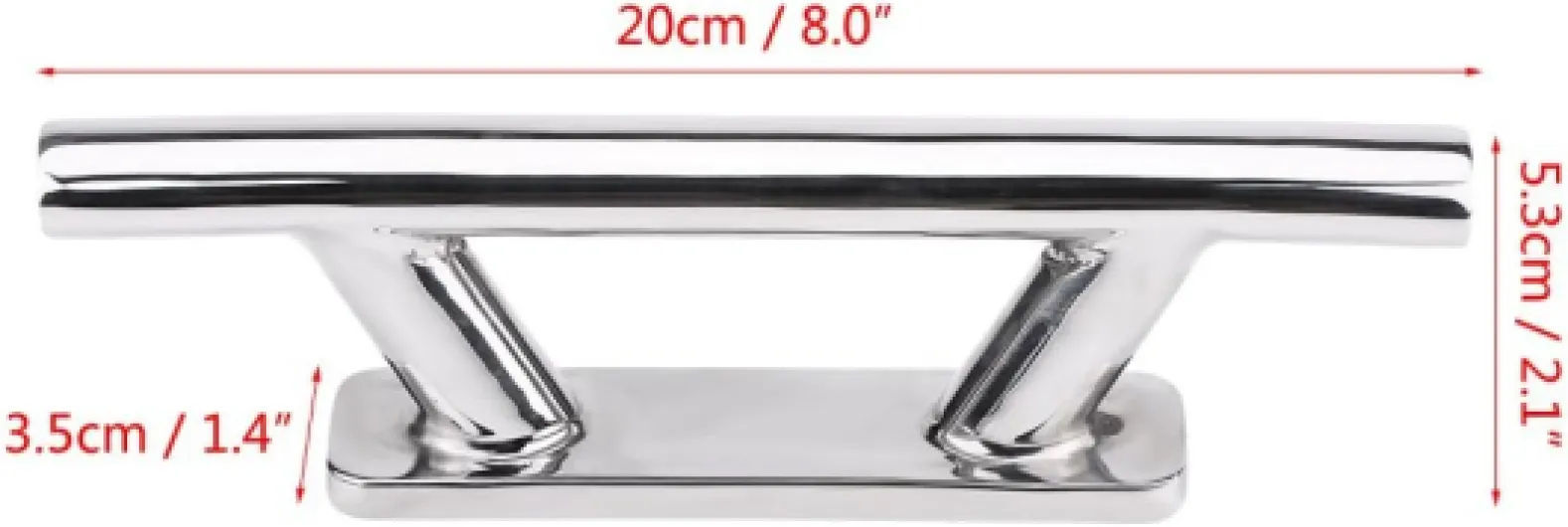
The body shape is fairly standard for an 8 inch cleat: two horns, decent height for looping a line, and enough clearance underneath to run a dock line or fender line through. For casual use, the ergonomics are fine. You can get a good grip to tie a cleat hitch, and there aren’t any sharp edges to chew up your hands or your rope. From that angle, the design does its job: it’s simple and familiar.
Where the design feels a bit compromised is the base size and overall footprint. One of the other reviewers nailed it: the base is on the small side. That matters because the smaller the base, the more stress you put on the deck and backing when the boat pulls on the line. On a solid, thick, well-reinforced deck with a proper backing plate, it’s probably fine for normal use. On a thin fiberglass or older wooden deck without good reinforcement, I wouldn’t call this a heavy-duty solution. You’re relying a lot on your backing hardware and deck structure, not the cleat itself.
Also, there’s no clever water management or built-in gasket groove around the bolt holes. It’s just a flat base. So you’ll have to be careful with sealant, otherwise it will squeeze out everywhere and look messy. Overall, the design is more about clean looks than maximum strength. For a day boat or light cruising, that’s okay. For a workboat or a mooring that takes a beating in storms, I’d personally go for a chunkier, more industrial cleat.
Materials and finish: looks like 316, but you’re taking their word for it
The big selling point here is 316 marine-grade stainless steel. That’s what they claim in the listing, and the finish and weight are consistent with that. The cleat feels solid in hand, no hollow sound, and the polish is high enough that it should resist surface corrosion fairly well, at least above the waterline. I’ve had it installed through a few wet weeks and there’s been no sign of tea staining or rust spots yet, which is encouraging, but that’s still short-term use.
The issue, like another buyer pointed out, is the lack of any actual marking or certification. There’s no small “316” stamp anywhere on the cleat, no branded packaging saying “316”, nothing. For basic dock hardware, that might not bother some people, but if you’re refitting a boat that lives in saltwater all year, you usually want a bit more reassurance. I’ve had “stainless” parts from cheap brands start rusting after one winter, so I’m always a little suspicious when there’s zero labeling.
That said, the polishing work is decent. The mirror finish isn’t just on the top; the sides and most visible areas are well finished. Under the base it’s not as pretty, but you don’t see that once it’s mounted. There are no burrs on the horns, and the rounding is good enough that it shouldn’t chew up lines quickly. For this price range, the finish is honestly better than I expected. It looks more like mid-range chandlery gear than bargain-bin stuff.
In practice, if you’re using this on a small to medium boat that’s hauled out in winter or not sitting full-time in harsh salt conditions, the material quality feels good enough. If you’re kitting out a boat that’s permanently in a salty marina and you’re very picky about corrosion, I’d personally go for a brand that clearly stamps 316 or has better documentation, just for peace of mind. This one feels fine, but you’re basically trusting the description.
Durability and corrosion: so far so good, but long-term is still a question mark
I haven’t had this cleat on the boat for years obviously, but I’ve given it a decent bit of exposure: rain, a few salty outings, and general dock grime. So far, no rust spots, no pitting, no discoloration. The mirror polish still looks good with just a quick wipe. For a budget-friendly 316 cleat, that’s a positive sign. Some cheap “stainless” stuff starts showing tea stains within weeks if it’s not true 316 or if the polish is bad; this one hasn’t done that yet.
Mechanically, the cleat still feels tight and solid under load. No flexing or weird noises when the boat pulls on it, but again, I’m using it in a fairly sheltered marina with a modest-sized boat. I’m not moored on an exposed river where the boat yanks on the lines all night. With a proper backing plate, I’d expect this to hold up fine for several seasons in similar conditions. It doesn’t feel fragile or hollow.
The long-term question is really about material honesty. Since there’s no 316 stamp, you won’t know for sure until it’s been through a couple of winters in saltwater. If it’s genuine 316 as claimed, it should handle that with just cosmetic cleaning. If it’s a cheaper stainless blend, you’ll start seeing it after a while around the bolt holes or on the underside. That’s the gamble with cheaper brands: it might be perfectly fine, but you’re testing it yourself instead of relying on a known track record.
For my use case—small boat, mostly summer season, hauled out in winter—I’m comfortable with it. If it starts showing rust in a year or two, I’ll know it wasn’t true 316 and I’ll swap it out. For someone leaving a boat in a salty marina all year, I’d be a bit more cautious and maybe spend more on a cleat from a brand with better documentation. As it stands, early durability is reassuring, but long-term reliability is still “wait and see”.
Performance on the dock: fine for everyday use, not for serious abuse
In actual use, the cleat does the job for normal mooring and fender lines. I’ve been using it on a 5.5 m (about 18 ft) open boat, mostly in a sheltered marina. It’s been handling a couple of 10–12 mm dock lines and some fender ropes without any drama. Tying and untying is straightforward, the horn spacing is decent, and the lines sit nicely without slipping off. For this kind of boat and this kind of use, I don’t have any real complaints.
Where I start to question the “heavy duty” label is when I imagine it on something heavier or more exposed. The cleat itself feels solid enough, but because of the smaller base, the real limiting factor is how it’s mounted. To make it feel remotely “heavy duty”, you need:
- A proper stainless backing plate (not just washers)
- Good quality stainless bolts and nuts
- Decent deck thickness or reinforcement
One practical annoyance is the lack of info on maximum line diameter. It would have been helpful to know what size lines they had in mind. From my use, 10–12 mm is comfortable, you can go a bit thicker but it starts to feel cramped if you’re stacking several turns. If you’re using chunky mooring lines, this isn’t the cleat for you. It’s more suited to the sort of lines that come with small pleasure boats, not the fat ropes on big cruisers.
In short, performance is perfectly acceptable for light to medium duty on smaller boats in normal conditions. If you’re honest about what you’re asking it to do, it works. If you read “heavy duty” and think “this will handle anything the sea throws at it”, that’s wishful thinking. It’s a decent cleat, not a commercial-grade workhorse.
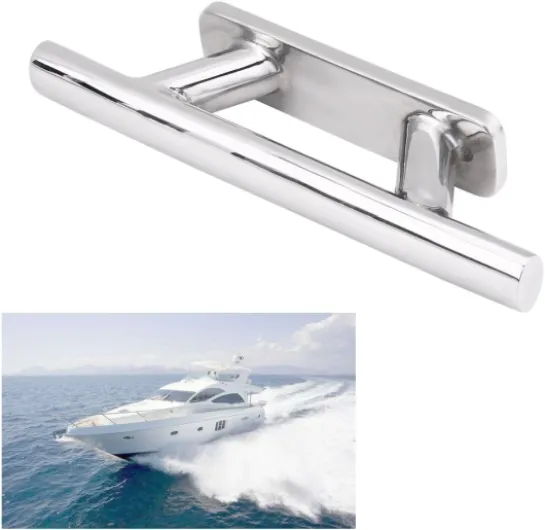
What you actually get in the box (and what you don’t)
Out of the packaging, the offer is pretty barebones: you get the cleat. That’s it. No mounting bolts, no backing plate, no gasket, no template, no spec sheet with bolt spacing or recommended line size. The listing talks about “direct replacement” and “easy to install, no drilling or welding required”, but in reality you need to already know what you’re doing and have your own hardware. If you expected a complete kit, you’ll be disappointed.
The lack of clear technical info is the main annoyance. There’s no label or engraving on the cleat itself that actually says “316”. So you’re basically trusting the listing. One Amazon reviewer mentioned this and I agree: for marine hardware, I’d like at least a small stamp or some documentation confirming the grade. With this, you only really know after a season in the water whether it was honest 316 or not. That’s not ideal if you’re picky about corrosion.
Physically, the cleat is an 8 inch open-base style with two fixing points. The base is not huge, so don’t expect something that spreads load like the big, elongated cleats you see on workboats. It’s more in line with what you see on smaller pleasure craft. If you’re replacing an existing cleat, there’s no guarantee the bolt pattern matches your old one, because they don’t provide the center-to-center distance in the description. I had to measure and re-drill on my deck, which makes the “no drilling required” claim a bit of a joke.
In short, presentation is minimalist: one nice-looking cleat in a basic package and you’re on your own for the rest. If you already have stainless bolts, backing plates, and sealant lying around, that might not bother you. If you expected a plug-and-play solution with clear instructions and specs, this feels a bit half-baked.
Pros
- Nice mirror-polished stainless finish that looks clean on the deck
- Feels solid and works well for light to medium duty on small to mid-size boats
- Reasonable price compared to big-name marine brands
Cons
- Base is relatively small, so it’s not as “heavy duty” as advertised
- No mounting hardware, backing plate, or clear technical specs included
- No visible 316 marking, so long-term corrosion resistance is basically taken on trust
Conclusion
Editor's rating
Overall, the Keenso 8 inch stainless boat cleat is a decent mid-range option if you keep your expectations in check. It looks good, feels reasonably solid, and handles everyday mooring and fender duties on small to mid-size boats without fuss. The mirror finish gives the deck a cleaner, more modern look, and short-term corrosion resistance has been fine in my use. For a simple cosmetic and functional upgrade on a modest boat, it gets the job done.
Where it falls short is on the big claims: “heavy duty” and perfectly plug-and-play. The base is on the small side, there’s no backing hardware included, and the product lacks clear technical info like bolt spacing, recommended line size, and any visible 316 marking. If you want something to anchor a heavy boat in a rough, exposed berth, or you’re very picky about proven 316 stainless, this is probably not the hardware you should bet on. You’ll want a chunkier, better-documented cleat from a more established marine brand.
If you’re a casual boater, handy enough to sort out your own bolts and backing plate, and you mainly care about a good-looking cleat that works fine in normal conditions, this Keenso model offers reasonable value. If you’re outfitting a serious cruising or work boat that lives in saltwater year-round, I’d say skip it and invest in something more robust and better specified.