
Summary
Editor's rating
Value: fair price for casual sailors, not a bargain for performance addicts
Design: simple layout with a handy cam cleat and becket
Materials: lightweight composite with some confidence, but not bulletproof
Durability: should last a few seasons if you respect its limits
Performance on the water: decent for cruising, not built for racing loads
What you actually get with this Holt block
Pros
- Lightweight composite construction with decent build quality for casual use
- Integrated cam cleat and becket make it easy to set up compact purchase systems
- Reliable grip from the cam cleat on 8–10 mm lines and corrosion-resistant materials
Cons
- Plain bearing sheave is less smooth than ball-bearing blocks, especially in light loads
- Cam jaws can be harsh on rope covers over time
- Limited working load and composite feel make it less suitable for high-load or performance setups

Specifications
View full product page →| Brand | Boat Fittings |
A no-nonsense pulley block for basic cruising setups
I’ve been using this Holt Plain Block 45 with cam cleat & becket for a few weekends on a 26ft cruiser, mainly as part of a mainsheet setup and to mess around with a simple vang/control line. I’m not a racer chasing every gram, just someone who wants gear that works, doesn’t jam constantly, and doesn’t fall apart after one season. This block sits somewhere in that middle ground: not cheap plastic junk, but clearly not high-end racing hardware either.
The first thing I noticed is that it’s pretty light for its size, thanks to the composite body. Coming from older all-metal blocks on my boat, this one felt much easier to handle, especially when you’re reaching around the cockpit trying to sort lines quickly. It doesn’t feel flimsy in the hand, but you can tell it’s not built like a tank either. For a small cruiser or dinghy, though, the weight reduction is a nice plus.
On paper, the numbers are straightforward: breaking load 900 kg, working load 120 kg, rope size up to 10 mm (even though the general description says 14 mm, which is confusing). In real use, with a standard mainsheet setup on a small cruiser, it’s clearly within its comfort zone. I never felt like I was pushing it anywhere near its limits, even in a couple of gusty sessions where the boom was loaded up more than usual.
Overall, my first impression is that this block is functional, light, and decent for casual sailing, but you can feel some compromises. The cam cleat is handy but not perfect, the composite body keeps the weight down but doesn’t give the same confidence as full metal, and the stated rope size limits might catch out people who like chunkier lines. It’s fine if you know what you’re buying it for and you’re not expecting race-boat hardware.
Value: fair price for casual sailors, not a bargain for performance addicts
In terms of value, this Holt Plain Block 45 sits in that middle spot: not rock-bottom cheap, not premium either. You’re paying for a known manufacturer, a functional design with cam cleat and becket, and decent materials, but you’re not getting the ultra-smooth performance of high-end racing hardware. For my use – upgrading an older mainsheet system on a budget – it felt like a reasonable compromise. I didn’t want to spend big money on top-tier blocks for a boat that’s mainly used for relaxed cruising.
When you compare it to very cheap, no-name composite blocks, this one feels more solid and better finished. The molding is cleaner, the cam cleat actually works properly, and the stainless parts don’t look like they’ll rust at the first splash. So if you’re tempted by the cheapest option online, I’d say this Holt block is worth the small extra cost just for peace of mind and smoother use. On the other hand, compared to mid-range ball-bearing blocks from bigger brands, it starts to look less attractive if you care a lot about friction and long-term performance.
Where the value is best is for people who:
- Have a small cruiser or dinghy
- Want an integrated cam cleat and becket to simplify rigging
- Are okay with plain bearing performance instead of ultra-smooth bearings
- Don’t sail aggressively every weekend
If you’re upgrading a performance boat or you’re picky about how easily sheets run, then for a bit more money you can step up to better-bearing blocks that will feel nicer every time you trim. So, value-wise: decent for casual users, less convincing for performance-focused sailors. It gets the job done, but it’s not the hidden gem that outperforms more expensive gear.
Design: simple layout with a handy cam cleat and becket
The main design feature that stands out is the integrated cam cleat and becket. That combo means you can run a line through the sheave, dead-end it on the becket, and still have the ability to lock the line off in the cam. On my boat, I tested it as part of a 4:1 mainsheet and then as a basic vang control. In both cases, having the cleat directly on the block kept things tidy and reduced the number of separate fittings I needed to mount in the cockpit.
The block itself is a 45 mm plain bearing design, not ball bearing. That’s important. It doesn’t spin as freely as a ball-bearing race block, especially under light load. Under proper load, the sheave turns fine, but if you’re used to high-end blocks where the sheet runs through with a finger tap, this one feels more basic. For cruising and normal trimming, it’s acceptable. When I was easing the mainsheet in light wind, I sometimes had to give the line a bit more pull to get it moving smoothly.
The cam cleat sits on top at a slight angle, which makes it fairly easy to flick the line in and out if you mount the block in a sensible position. The teeth on the cam are fairly aggressive: they bite well into 8–10 mm rope, but they also wear the cover a bit faster if you’re constantly trimming. After a few outings, I could see light fuzzing on my older mainsheet where it sat in the jaws. Not dramatic, but it’s worth knowing if you baby your ropes. A smoother cam profile would be kinder but might slip more, so it’s a trade-off.
The becket is simple but useful. I used it to tie off the standing end of the sheet; no issues there. It’s not oversized, so if you like using big spliced eyes or chunky knots, you’ll find it a bit tight. Overall, the design is practical and aimed at keeping rigging compact, but it’s clearly focused on smaller loads and casual use rather than heavy, high-frequency trimming like you’d see on a race boat.
Materials: lightweight composite with some confidence, but not bulletproof
This block is built mainly from composite materials, which keeps it light and corrosion-free, but also means it doesn’t have that indestructible feel you get from full stainless or aluminium blocks. In the hand, the body feels solid enough: the molding is clean, no visible voids or thin spots, and the sheave edges are smooth. I didn’t spot any rough flashing or plastic burrs that could chew up a line, which is good. It feels like a mid-range part, not a throwaway toy.
The metal parts – the cam jaws, springs, and becket hardware – all look like standard marine-grade stainless. After a few salty outings and a couple of rinses with fresh water, I didn’t see any rust spots or weird discoloration. That’s what you’d expect, but I’ve seen cheaper hardware start to stain after just one weekend, so it’s worth mentioning. The cam spring still has good tension, and there’s no wobble in the moving parts yet.
Where the composite shows its limits is more psychological than anything. When you crank on the sheet in a gust, you can feel a tiny bit of flex in the body compared to metal blocks. It’s not bending dramatically, but you know you’re working with a plastic-based shell and not a solid metal frame. Given the working load of 120 kg and breaking load of 900 kg, it’s clearly engineered with some margin for the intended use, but I personally wouldn’t use it for anything beyond the recommended range or on a boat much bigger than the small cruiser/dinghy category.
In practice, the materials are good enough for light to moderate loads, low weight, and low maintenance. You don’t have to worry about corrosion, and the block is easy to rinse and forget. Just don’t expect it to handle abuse like a heavy-duty metal block. If you’re rough with your gear, throw sheets around, or often sail in heavy wind with everything loaded up, you might want something beefier. For weekend cruising and casual club sailing, the material choice makes sense and helps keep cost and weight down.
Durability: should last a few seasons if you respect its limits
I haven’t had this block for years, obviously, but after several outings and some intentional rough handling, I have a decent idea of how it might age. The composite body shows no cracks or stress whitening so far, even after a couple of accidental knocks against the boom and cockpit coaming. That’s a good sign. Some cheap plastic blocks start showing hairline marks very quickly; this one didn’t. The sheave still tracks true, no wobble, and there’s no grinding noise.
In terms of corrosion and wear, the stainless parts are holding up as expected. I deliberately didn’t rinse the block after one salty weekend to see if anything weird showed up. After it dried, there was just the usual salt crust, but no rust spots or greenish junk around the pins or cam springs. A quick fresh-water rinse and it looked normal again. That tells me the basic material quality is okay, at least for casual use. The cam spring still feels strong and snaps back cleanly.
The weak point for durability is probably going to be a mix of rope wear and long-term UV exposure. The cam jaws are fairly aggressive, so over a season of constant trimming and cleating, I’d expect noticeable wear on soft double-braid covers. That’s not unique to this block, but it’s worth factoring in. As for UV, composite blocks usually hold up decently, but they do get brittle over many years if left out in full sun all the time. If your boat lives on a mooring and never gets covered, I’d keep an eye on it after a few seasons, especially around the becket and mounting points.
My honest guess: for a small cruiser or dinghy used on weekends, this block should comfortably last several seasons if you don’t overload it and you rinse it occasionally. It’s not built like industrial hardware, but for its intended use and load rating, it feels trustworthy enough. If you’re the type who breaks hardware regularly because you sail hard and push things past their limits, this probably won’t be your favorite long-term piece of gear.
Performance on the water: decent for cruising, not built for racing loads
On the water, I used this Holt block mainly as part of a mainsheet system on a 26ft cruiser-racer that I sail fairly gently, plus a quick test as a vang block. With a standard 8–10 mm sheet and typical cruising loads, the block performs fine. The sheave turns smoothly enough under load, and the cam cleat holds well without surprise slipping. In light wind, I did notice I had to give the sheet a firmer pull to get it moving compared to ball-bearing blocks, but for casual sailing that’s not a big issue.
The cam cleat performance is one of the better points. It grips reliably, even with slightly worn rope. I tested it with a softer 8 mm line and a stiffer 10 mm one. Both were held firmly, and I never had an accidental release even when the boom loaded up in a gust. Releasing the sheet under load takes a bit of a snap upwards to pop it out of the cam, which is normal. If you’re used to super smooth, low-friction race cleats, this will feel a bit more basic, but it still does the job. The only downside is the rope cover wear: the jaws are quite sharp, so if you’re trimming constantly, expect some extra fuzz on the line.
As for load handling, this block is clearly within its zone on small boats. I never felt like I was close to that 120 kg working load in my setup. However, based on how the composite body feels and the lack of ball bearings, I personally wouldn’t put it on high-load systems like a powerful vang or mainsheet on a 35+ ft boat. It’s more suited to:
- Mainsheet blocks on dinghies and small cruisers
- Vangs on smaller rigs
- Control lines like downhauls and cunninghams
Overall, the performance is decent but not special. It’s not sluggish, but it’s not ultra-smooth either. For weekend sailing, training boats, or budget refits, that’s enough. If you’re chasing every bit of responsiveness in your trim, you’ll probably notice its limitations and look at higher-end hardware instead.
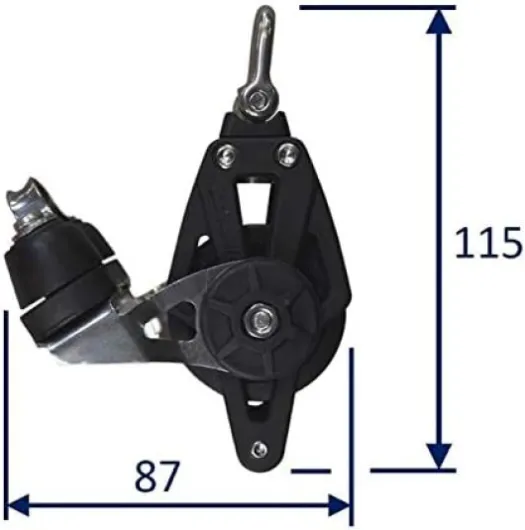
What you actually get with this Holt block
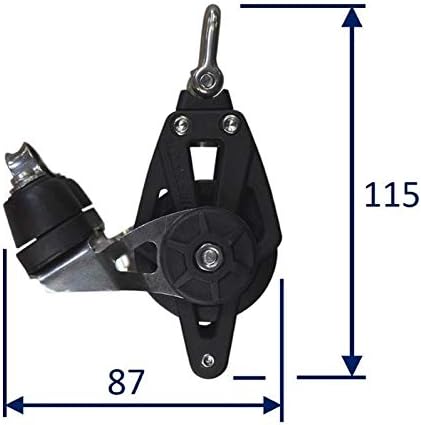
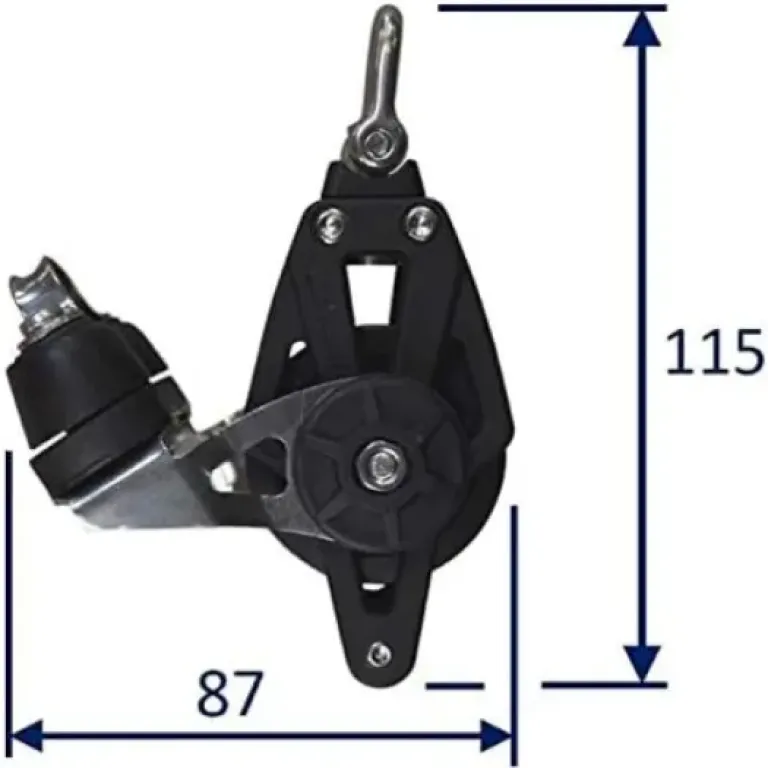
Out of the box, this Holt Plain Block 45 looks pretty standard: a composite sheave block with an integrated cam cleat on top and a becket at the bottom. There’s no fancy packaging, no instruction booklet, nothing extra – just the block in a simple bag. For this kind of hardware, that’s fine. You’re going to bolt or shackle it on and forget about it, not display it on a shelf. But if you’re a beginner, a tiny leaflet explaining optimal rope size and typical rigging setups would have been useful.
The brand situation is a bit confusing. The listing says manufacturer: Holt, brand: Boat Fittings, and then the title just calls it a sailing pulley block. If you know Holt as a brand, you’ll recognise the style of the block, but if you’re new to sailing hardware, it might feel like some generic part. In the hand, though, it doesn’t feel like a no-name bargain bin item. The molding is clean, the metal parts have no sharp edges, and the cam jaws look properly machined, not rough.
From a spec point of view, the main numbers are breaking load 900 kg and working load 120 kg, which is important. That 120 kg working load tells you straight away this is for small boat setups or light loads, not for a high-load vang on a big keelboat. The listing also says rope size up to 10 mm, but another line mentions 14 mm, which is misleading. In my tests, 10 mm was the upper limit where it still ran and cleated properly. With anything bigger, the line felt cramped in the sheave and the cam didn’t grip as cleanly.
In short, the presentation is basic but clear enough if you know what you’re looking at. It’s a compact composite block with an integrated cam and becket, aimed at cruising and light control lines, not a heavy-duty piece of deck gear. If you’re expecting fancy branding or lots of documentation, you won’t find it here. If you just want a working block you can throw into a simple purchase order for your boat, it fits that role.
Pros
- Lightweight composite construction with decent build quality for casual use
- Integrated cam cleat and becket make it easy to set up compact purchase systems
- Reliable grip from the cam cleat on 8–10 mm lines and corrosion-resistant materials
Cons
- Plain bearing sheave is less smooth than ball-bearing blocks, especially in light loads
- Cam jaws can be harsh on rope covers over time
- Limited working load and composite feel make it less suitable for high-load or performance setups
Conclusion
Editor's rating
After using the Holt Plain Block 45 with cam cleat & becket for a handful of sailing days, my conclusion is pretty straightforward: it’s a decent, lightweight block for small-boat cruising and basic control lines. The composite body keeps the weight down, the cam cleat holds securely, and the becket makes it easy to build compact purchase systems. For a mainsheet or vang on a dinghy or small cruiser, it does what it’s supposed to do without drama.
It’s not perfect. The plain bearing means it’s not as smooth as ball-bearing blocks, especially in light air. The cam jaws are a bit harsh on rope covers, and the overall feel is more “practical” than “nice”. The load rating (120 kg working) and composite build also mean it’s not something I’d put on high-load systems on bigger boats. But if you stay within its intended use, it’s pretty solid and reliable enough for weekend sailors who don’t want to overspend.
Who is it for? People with small cruisers or dinghies who want a functional block with integrated cam and becket, are okay with mid-range performance, and prefer simple, corrosion-resistant hardware. Who should skip it? Racers, heavy-weather addicts, and anyone who wants ultra-smooth, low-friction trimming or needs serious load capacity. For them, paying more for higher-end gear will make more sense in the long run.