
Summary
Editor's rating
Value: worth it if you actually use the full length
Design: long, foldable, and a bit bulky but practical
Materials: foam blocks and tough vinyl that feel ready for abuse
Durability: built to take scrapes without falling apart
Performance on the water and at the dock
What this Hull Hugger actually is (and isn’t)
Effectiveness: protects a long stretch of hull without babysitting it
Pros
- Covers a long section of hull (9 ft x 26 in) so you need fewer separate fenders
- Durable closed‑cell foam and tri‑laminate shell handle rough docks without tearing
- Folding design rolls up for storage and is easy to deploy once you get the hang of it
Cons
- Bulkier and more awkward to handle than individual round fenders
- Less flexible around pilings or tight corners, so you still may need extra fenders

Specifications
View full product page →| Brand | Hull Hugr |
A big fender for when regular bumpers aren’t enough
I’ve been using the Kwik Tek Large Hull Hugger (the 9 ft x 26 in blue one) on a mid‑size motorboat that sticks out a fair bit at the dock. Standard round fenders were always leaving gaps, so the hull would still kiss the pontoon in between them, especially when there was some chop or a wake. I picked up this long fender mainly out of frustration, just to see if a full strip along the side would finally stop the random scuffs.
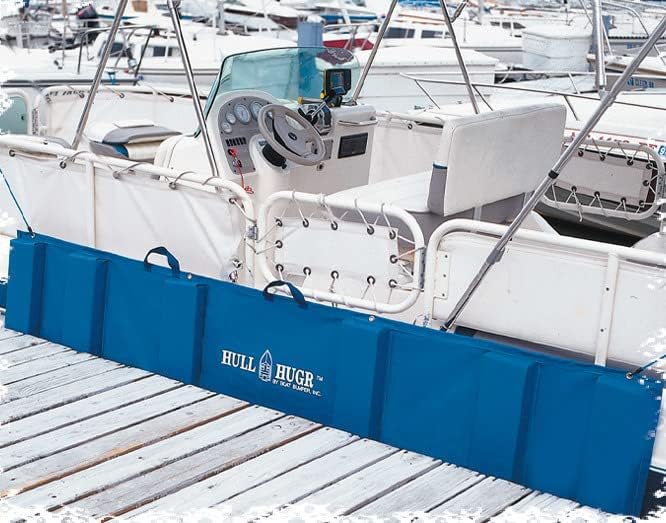
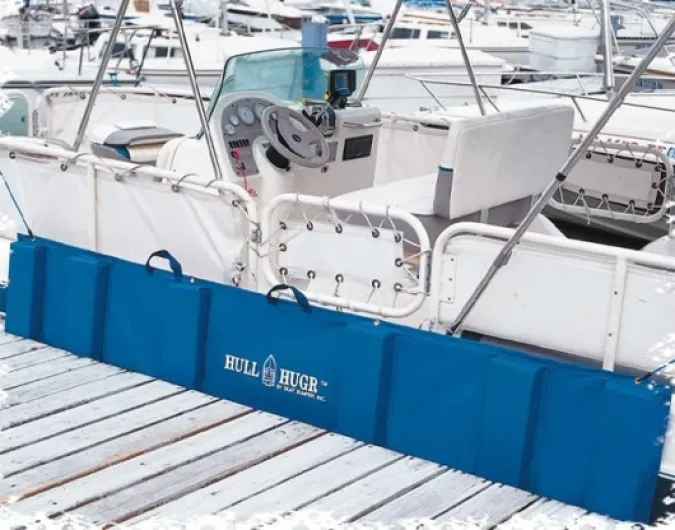
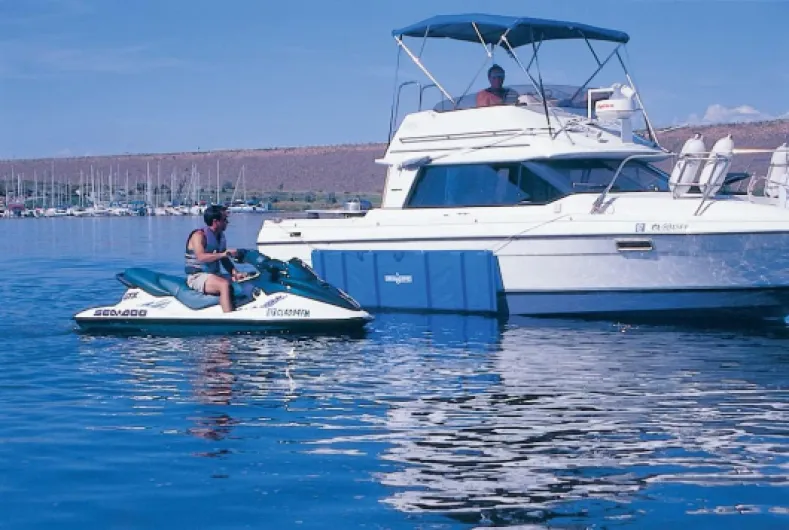
In practice, this thing is more like a padded wall than a classic fender. Laid out flat, it covers a long stretch of hull and the six foam blocks spread the pressure across a wide area. You don’t get that “point load” you have with a single round bumper. First impression when I unrolled it: it’s big, a bit awkward, but clearly built to take a beating. It’s not pretty, but that’s not why you buy it.
I used it mostly for side‑tie docking along a rough concrete pontoon and a wooden dock with a few nasty bolts sticking out. With normal fenders, I’m always fiddling with height and spacing. With this Hull Hugger, I just clipped it along the cleats, adjusted once, and it basically stayed where it needed to be. The boat rode up and down against it without me constantly moving things around.
So far, my feeling is simple: it’s not magic, but it does what I wanted – cover a long area and keep the hull away from hard edges. If you expect something compact and discreet, this isn’t it. If you want a solid strip of protection you can roll up when you’re done, it starts to make sense.
Value: worth it if you actually use the full length
In terms of value, this Hull Hugger sits in a different category than basic tube fenders. You’re paying for length and coverage, not just a single bumper. Price‑wise, it’s roughly in the range of buying several mid‑range fenders, maybe three or four, depending on the brand. So the real question is: do you need a long continuous pad, or are separate fenders enough for how and where you dock?
For me, docking along rough pontoons and older docks, it made sense. Instead of constantly buying and juggling multiple fenders, I get one solid strip that just works for long side‑ties. If you only do quick stops at clean marinas with nice rubber edging, this might feel like overkill and not the best use of your budget. A couple of standard fenders would be cheaper and good enough.
What bumps the value up in my eyes is the durability. If it holds up for several seasons – and the materials suggest it will – then the cost spread over time is pretty reasonable. You’re not replacing cheap fenders every year. Also, the fact that it rolls up and stores fairly compactly for its size is a plus; you’re not sacrificing a huge chunk of locker space for the level of protection you get.
Overall, I’d call the value good but not mind‑blowing. It’s a smart buy if you regularly side‑tie, have a longer hull to protect, or deal with nasty docks. If you’re a casual boater who mostly uses finger pontoons and padded slips, you can probably save money and stick with simpler gear. It really comes down to how often you’ll take advantage of that full 9 ft of protection.
Design: long, foldable, and a bit bulky but practical
The main design idea is simple: instead of juggling three or four round fenders, you hang one long strip that covers everything. The Hull Hugger folds up like an accordion thanks to the six foam blocks, so you can roll it when not in use. That folding design is the key feature. When I’m done docking, I just roll it from one end, secure it with a short bungee, and it tucks against the inside of the rail. It’s still bulkier than a couple of tubular fenders, but not crazy for something 9 ft long.
In use, the shape works well against both flat and slightly curved hulls. On my boat, which has a moderate flare, all six blocks still made decent contact with the dock. Because each foam segment is only 2.5 in thick, it doesn’t push the boat too far off the dock, which I like – you stay close enough to step on easily, but there’s enough cushion to avoid scraping. For rougher docks with bolts or ridges, the 26 in height is handy; you don’t have to be super precise with vertical placement.
One thing to point out: there are no fancy contour cuts or special curves – it’s basically a straight padded strip. That’s fine for most boats, but if you have very pronounced chines or weird hull shapes, there might be small gaps at the ends. I noticed a slight gap at the bow end where the hull narrows, but nothing dramatic. For side‑tie situations, it’s still a lot better coverage than four fenders spaced apart.
On the downside, when it’s wet it can be a bit slippery to handle, and because of the length, it’s slightly awkward for one person to move around in a tight slip, especially in wind. It’s manageable, but not as quick to reposition as a single round fender. Overall, the design is pretty no‑nonsense: big, foldable, made to cover a lot of hull. Not stylish, just practical dock armor.
Materials: foam blocks and tough vinyl that feel ready for abuse
The construction is based on six blocks of sealed, closed‑cell foam wrapped in a UV and puncture‑resistant marine‑grade vinyl/polyester tri‑laminate. In plain language: dense foam on the inside, thick plastic skin on the outside. Closed‑cell foam is a good choice here because it doesn’t soak up water. After a full day rubbing against a wet dock, I didn’t notice any extra weight or soggy feel. You wipe it down, it dries, and that’s it.
The outer shell feels thicker and tougher than the cheap white fenders you find in bargain bins. I dragged it deliberately along a rough concrete edge to see how it would handle abuse. It picked up some cosmetic scuffs, but no cuts, no punctures, and the foam underneath didn’t deform permanently. That’s where the tri‑laminate part seems to pay off – it doesn’t feel like it’ll tear the first time it meets a bolt or splinter.
The UV resistance is harder to judge long term, but after a couple of weeks of on‑and‑off use in sun and saltwater, there was no chalking or color fade. The blue stayed blue. I’ve had cheaper fenders start to get sticky or faded in the same time frame, so this looks more solid. The seams and edges are welded or bonded pretty cleanly. I checked along the length for weak spots and didn’t find any obvious thin areas or loose corners.
My only minor gripe is that the surface is fairly smooth, so when it’s wet against a painted hull, it can squeak a bit and slide more than a softer, rubbery fender. It still protects, but if you hate that rubbing noise, you’ll notice it. Overall though, for a boat fender in this price range, the materials feel pretty robust and ready for regular use in marinas that are not exactly gentle on hulls.
Durability: built to take scrapes without falling apart
Durability was one of my main concerns, because a 9 ft fender isn’t cheap, and it’s going to spend its life being abused by docks, bolts, and concrete. The combination of closed‑cell foam and tri‑laminate vinyl/polyester feels like it’s up to the task. After several docking sessions against rough concrete and a wooden dock with metal brackets, the fender shows normal cosmetic marks but no real damage. No cuts through the outer skin, no exposed foam, and no crushed blocks.
The foam itself has held its shape well. I was half expecting some permanent flat spots where the boat leaned on it for hours, but it bounced back each time. That’s important, because once foam starts to stay compressed, protection drops off fast. Here, even after a full day pressing against the same dock edge, the blocks returned to their original thickness by the next morning.
The UV resistance claim is always something you can only judge over months or years, but early signs are good. No chalking, cracking, or sticky feel yet. I’ve had cheaper PVC fenders start to look tired after a season; this one feels like it’ll outlast those. The seams and edges don’t show any peeling or separation either, which is usually the first thing to fail on gear like this.
Of course, if you ram it full speed into a sharp metal corner, nothing is indestructible. But for regular marina abuse, I’d say the durability is above average. You can throw it around, drag it over the dock, and it just shrugs it off. For a practical boater who doesn’t baby their gear, that’s exactly what you want: something you don’t have to worry about every time you dock a bit harder than planned.
Performance on the water and at the dock
In day‑to‑day use, the performance is mostly about stability, coverage, and ease of handling. Once it’s tied on properly, the Hull Hugger doesn’t twist around like some round fenders do. The flat face sits against the hull, and the dock rests on the foam blocks. In moderate swell and wake, it stayed in position without me constantly running around adjusting lines. The 26 in height gives enough vertical margin that normal tide changes and wake movement don’t instantly make it useless.
Where it really helped was during longer side‑ties in a busy marina. Boats coming and going were throwing wakes all afternoon. With my old setup, I’d hear the hull tap the dock or feel a sharper jolt every now and then. With this fender, the hits felt more cushioned and spread out. The boat still moved, but it was more of a controlled slide along a padded wall, instead of random hard knocks on bare concrete.
Deploying it is slightly more effort than clipping on a single round fender, simply because of the length. I found it easiest to attach the middle first, then adjust the ends. Once I figured out that routine, I could put it on in a minute or two, which is acceptable for the level of coverage you get. When I didn’t need it, rolling it up and stowing it along the rail took another minute. Not lightning fast, but not a big chore either.
The only performance downside I noticed is in tight slips with pilings: because it’s one long piece, it’s less flexible around corners or posts. In those situations, I still prefer individual round fenders. So for me, this isn’t a total replacement; it’s more of a main side‑tie solution, with traditional fenders as backup for weird angles or posts. Used that way, its performance is honestly pretty solid.
What this Hull Hugger actually is (and isn’t)
The official size is 9 ft long and 26 in high when it’s fully opened, with each foam bumper block measuring about 24 in x 6 in x 2.5 in. So you’re basically getting six padded segments linked together in a flexible strip. It’s not an inflatable fender – it’s six closed‑cell foam blocks sealed inside a vinyl/polyester tri‑laminate shell. That’s important, because it means there’s no valve to mess with and nothing to pump up. You just unroll it, hang it, and you’re done.
In terms of how it behaves on the boat, think of it as a long, folding mat that hugs the hull. The outer material is a marine‑grade plastic/vinyl that feels tougher than standard cheap fenders. It’s rated as UV and puncture‑resistant. I had it sitting in direct sun for a few days at a time and didn’t notice any fading or softening. The blue color is pretty standard boat‑gear blue, nothing fancy. The item weight is about 2.7 kg, so it’s not feather‑light, but that’s what keeps it from flapping around too much in the wind.
Out of the box, there’s not much in terms of extras. You get the fender and that’s it – no rope, no bag, no instructions beyond the basics. Honestly, you don’t need much explanation: clip or tie the top edge to your rail or cleats, adjust height so it lines up with the dock or other boat, and you’re set. I used regular fender lines I already had, and that worked fine.
If you’re expecting a super polished brand experience with fancy packaging and accessories, this feels more like a straightforward tool: here’s the pad, use it. From a practical point of view, I’m okay with that. I’d rather they spend the cost on the materials than on a nice box I’ll throw away. But it’s worth knowing: this is basic, functional gear, not some premium, over‑accessorized toy.
Effectiveness: protects a long stretch of hull without babysitting it
This is where the Hull Hugger actually shines: it protects a long section of hull with minimal fuss. Instead of hanging three or four standard fenders and constantly adjusting them, I hung this one strip along the side and left it. In choppy conditions and with boat wakes rolling through the marina, the hull stayed on the padded surface with no random spots touching bare dock. That’s the big win here – fewer surprises and fewer new scuff marks.
On a side‑tie against a rough concrete pontoon, the six foam blocks spread the load nicely. When the boat moved in and out with the water, I could see the blocks compressing slightly but then bouncing back. No hard impacts, just controlled contact. Compared to my usual setup of four cylindrical fenders, the difference was clear: with the round ones, the boat sometimes slipped between them and hit the dock; with this, there was always padding wherever the hull met the edge.
I also tried it between two boats rafted together. In that scenario, it was a bit more awkward to place because of the curves of both hulls, but once I found the right height, it worked fine. It reduced that annoying rolling and clunking you get when two boats rub against each other. It’s not perfect – if there’s a big height difference between the boats, you still need a couple of extra fenders at the ends – but as the main barrier, it did the job well.
If you only do quick stops at nice, well‑padded docks, this might feel like overkill. But for rougher pontoons, long side‑ties, or older docks with metal parts sticking out, the effectiveness is clear. It’s not fancy technology, just a long, firm cushion that actually stays where you need it most of the time. For me, that’s enough to call it solid and reliable in real‑world use.
Pros
- Covers a long section of hull (9 ft x 26 in) so you need fewer separate fenders
- Durable closed‑cell foam and tri‑laminate shell handle rough docks without tearing
- Folding design rolls up for storage and is easy to deploy once you get the hang of it
Cons
- Bulkier and more awkward to handle than individual round fenders
- Less flexible around pilings or tight corners, so you still may need extra fenders
Conclusion
Editor's rating
The Kwik Tek Large Hull Hugger is basically a long, foldable wall of padding for your boat. It’s not fancy, it’s not stylish, but it covers a big chunk of hull and does it reliably. The six foam blocks and tough vinyl/polyester shell feel ready for real‑world abuse: rough docks, concrete edges, random bolts. In my use, it clearly reduced scuffs and hard knocks compared to juggling several round fenders. You hang it once, adjust the height, and it quietly does its job.
It’s not perfect. It’s bulky to handle compared to a single fender, and it’s less flexible around pilings or tight corners. You’ll probably still keep a couple of standard fenders on board for odd situations. And if you mostly dock at clean, well‑fendered marinas, this might be more protection than you really need, which makes the price harder to justify.
If you often side‑tie along rough pontoons, older docks, or spend time rafted up to other boats, this Hull Hugger makes sense. It’s for people who care more about protecting gelcoat than about having the neatest, most compact gear. If you want simple, hard‑wearing hull protection and don’t mind a bit of bulk, it’s a pretty solid choice. If you’re a casual weekend boater on cushy docks, you can probably skip it and stick to cheaper, standard fenders.