
Summary
Editor's rating
Value for money: bright budget option if you’re handy
Design: practical but a bit cheap‑looking
Materials and build: fine for the price, not premium
Durability after some use: promising but with a few weak spots
Brightness and performance: lots of light for little power
What you actually get in the box
Pros
- Very bright white light with wide coverage when modules are spread out
- Low power consumption, suitable for 12V van/RV/boat batteries
- Flexible modular design that can be cut and arranged to fit your layout
Cons
- Weak self‑adhesive backing, often needs extra tape or screws
- Cheap inline switch and no dimming or extra mounting hardware included

Specifications
View full product page →| Brand | Linkstyle |
Cheap way to actually see inside your van
I put this Linkstyle 12V LED kit in a small panel van I’m converting, and overall it does what I wanted: it lights the back properly without costing a fortune. I was tired of the factory dome light where you can barely see your tools or boxes at night. With this kit, the first thing you notice is the sheer amount of light. It’s not subtle, it’s just bright white light everywhere. If you’re looking for mood lighting, this is not it. If you just want to see what you’re doing, it’s pretty solid.
I wired it directly to the van’s 12V system, no relay, no extra fuse block, just an inline fuse I added myself. The kit really is “plug and play” in the sense that the LEDs work as soon as you connect + and –. The reality, though, is that the installation still takes time: measuring, sticking modules, routing the 5 m extension wires, and hiding everything so it doesn’t look like a mess. So yes, simple electrically, but not a 10‑minute job if you want a clean result.
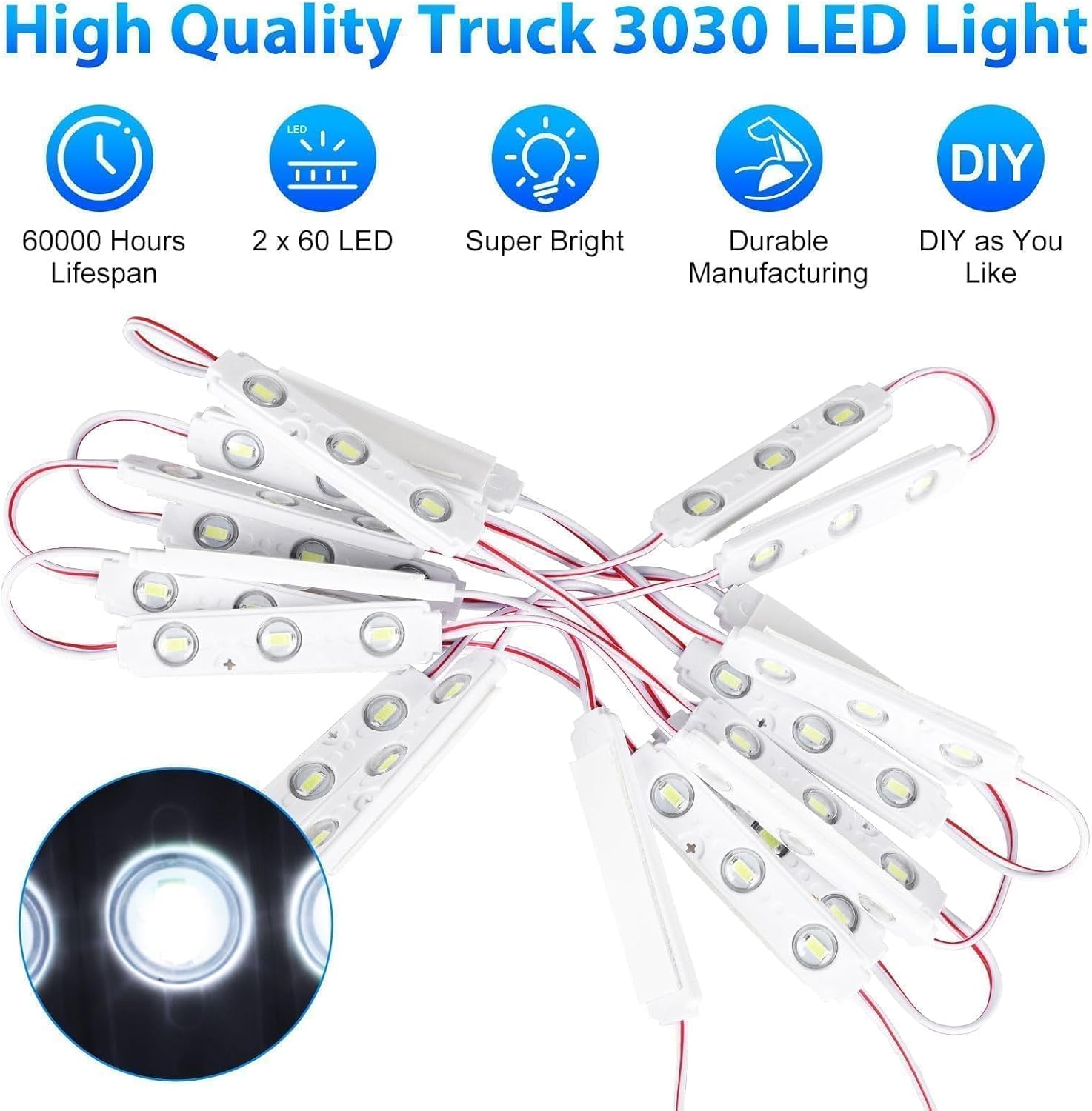
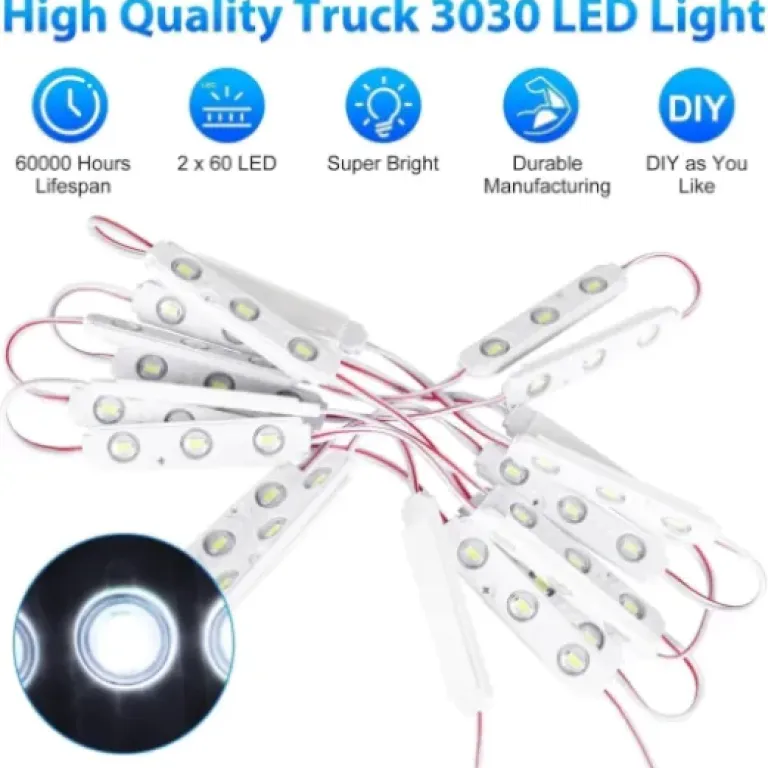
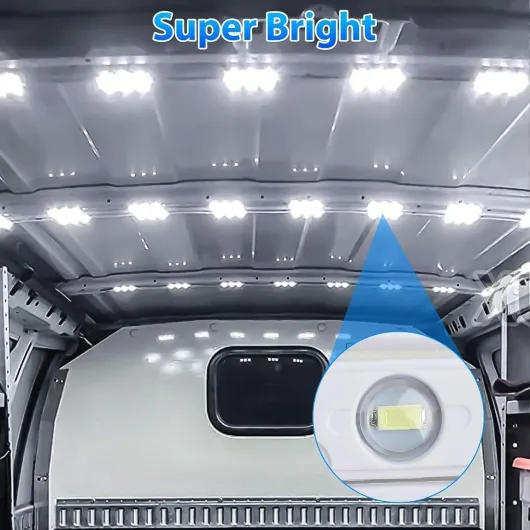
What surprised me is how small each module is. You get 40 modules for 120 LEDs, so 3 LEDs per little plastic square. Spread out, they cover a good area, but you have to think a bit about where to place them. I did two rows along the roof, roughly above the sliding door and the opposite side. After that, the whole rear of the van is evenly lit, and you don’t get a single blinding spot like with a classic dome lamp.
It’s not perfect, though. The self‑adhesive backing is decent but not great on rough or dusty metal, the little switch feels cheap, and there’s no real mounting hardware if you want something permanent. But for the price and the amount of light you get, it’s hard to complain too much. If you’re handy and not afraid of a bit of DIY, it gets the job done.
Value for money: bright budget option if you’re handy
For what it costs, this kit offers a lot of light. You get 120 LEDs spread across 40 modules, enough to light a medium‑sized van, a small camper, or the inside of a trailer without buying multiple products. If you compare the price to dedicated “van interior LED panels” from big brands, you’re paying quite a bit less here. So in terms of raw lumen per euro, it’s good value for money.
That said, you do “pay” in other ways: you have to invest time in installation, add your own small parts (screws, better tape, connectors, maybe a dimmer), and accept that the finish is more DIY than factory. If you’re the type who expects a complete plug‑and‑forget kit with perfect mounting hardware and a solid switch, this will feel a bit cheap and incomplete. But if you already have a toolbox and don’t mind tinkering, it’s a cost‑effective way to get proper lighting.
Compared to other cheap LED strips I’ve used (the flexible tape style), I prefer this modular format for vehicles. The modules are less fragile than LED tape, especially in a van where the roof might get hot or a bit damp. The waterproof aspect is also a plus for boats or slightly humid environments. From that angle, I think the price is justified: you’re not just paying for light, but for something a bit more suited to automotive use than generic indoor LED strips.
So, in practice: if you’re on a budget, want strong lighting, and you’re okay doing a slightly rough DIY install, this kit is a good deal. If you’re picky about aesthetics, want a clean integrated look, or hate messing with wiring, you might be better off saving up for a more polished product with proper housings and mounts, even if it costs more.
Design: practical but a bit cheap‑looking
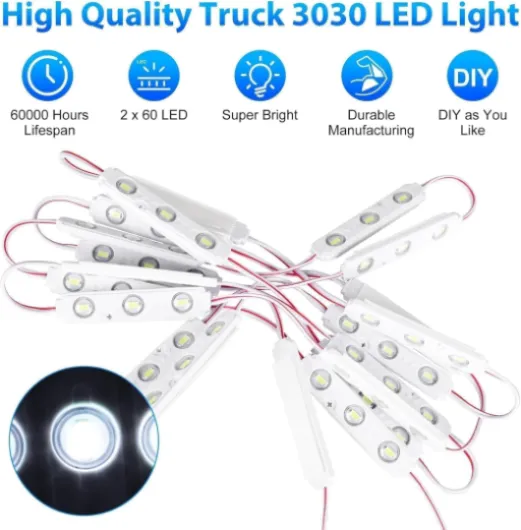
Design‑wise, this kit screams “utility” more than “nice finish”. Each module is a small white plastic rectangle with three exposed LEDs under a clear lens. They’re linked together with thin red and black wires, so once installed you basically have a chain of little squares running along your roof or wherever you stick them. It does not look fancy. In a work van or cargo area, I don’t care, but in a camper where you care about aesthetics, you’ll probably want to hide them behind a panel or diffuser.
The main advantage of this design is flexibility. Because there are so many modules, you can spread them out exactly where you need light: above a workbench, over the rear doors, around the side door, etc. You can cut the chain and reconnect sections if you’re comfortable with basic wiring. I cut one strip in half to have one line at the front of the cargo area and one at the back. With a bit of solder and heat shrink, it worked fine.
On the flip side, all these little modules and wires mean more potential snag points. If you don’t secure the cables properly, you can catch them with boxes or tools. The modules themselves are quite low profile, but the cables between them hang a bit if you don’t tape or clip them down. So you need to plan some cable management: zip ties, clips, or at least extra tape.
The small inline switch is honestly the weakest design element. It’s a tiny plastic bump on the cable, very light, with a basic click. It works, but it feels like something that costs a few cents. For a permanent installation in a van or RV, I wouldn’t rely on it long term. Better to mount a proper rocker switch on a panel and wire the LEDs through that. So in short: good functional design, cheap finish, and visually more suited to hidden or work use than to show it off.
Materials and build: fine for the price, not premium
The kit uses a mix of plastic, acrylic, and silicone. The modules themselves are hard plastic with a transparent lens on top, and the wires feel like standard low‑voltage cable, nothing special. The manufacturer mentions waterproofing, and the modules do look reasonably sealed on the top side. I wouldn’t submerge them, but for a van interior or inside a boat cabin, it’s more than enough. I also tried wiping them with a damp cloth after a dusty day, and they handled that without any issue.
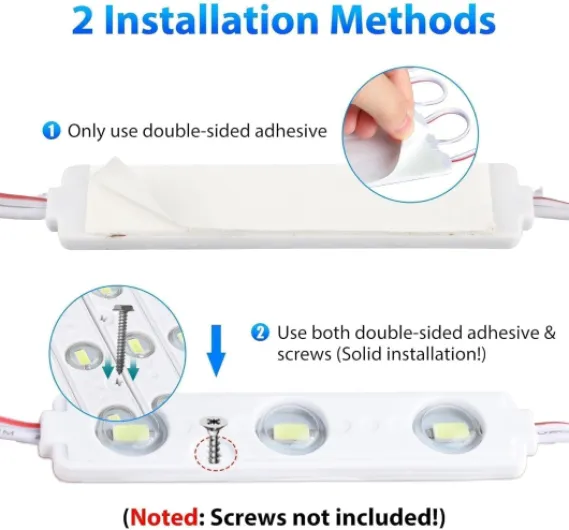
The self‑adhesive backing is where the materials show their limits. It’s just standard double‑sided tape pre‑applied on each module. On clean, degreased metal, it sticks okay, but on slightly textured or dusty surfaces, several modules started peeling off after a couple of days. In my case, I cleaned the roof with alcohol wipes first, and even then I had two modules come loose after a hot afternoon in the sun. I ended up following the advice in the description: adding extra adhesive and a couple of small screws on the critical ones.
The cables are thin but adequate for the low current these LEDs draw. I didn’t notice any overheating or softening of insulation after leaving the lights on for a few hours. The solder points on the modules look a bit rough, but they held up when I gently bent the chain to follow the roof curve. Just don’t pull too hard: this is not heavy‑duty wiring like you’d see in industrial equipment.
Overall, the materials feel aligned with the price. It’s not junk, but it’s clearly budget gear. If you treat it as a permanent but protected install, it should last. If you expect to move it around often, yank on the cables, or use it in a very rough environment, you’ll probably run into broken wires or unstuck modules sooner or later. For a van interior that you set up once and leave alone, I think it’s acceptable.
Durability after some use: promising but with a few weak spots
I’ve had the kit running in my van for a few weeks, with almost daily use in the evenings. So far, no LED failures, no modules going dim, and no burnt smell or weird behavior. I’ve done a couple of long sessions with the lights on for 2–3 hours straight while working in the back, and everything stayed stable. The modules get a bit warm but nowhere near hot, so I’m not worried about heat damage on the LEDs themselves.
Where durability is more questionable is the mounting and the cables. As I mentioned earlier, the double‑sided tape is not great if the surface isn’t perfectly clean or if the roof gets very hot. In my case, two modules started to peel off after a sunny day. I caught them before they fell and added a dab of strong adhesive. If you install this in a van you use a lot, I’d plan from the start to reinforce the mounting: either better tape, small screws, or clips. Once screwed in, they don’t move at all, so the problem is really just the stock adhesive.
The cables have held up, but I’m being careful not to snag them with big boxes or long pieces of wood. In a work van where stuff slides around, I’d strongly recommend adding cable clips or trunking to protect the wires. The solder joints between modules don’t look super robust, so a hard yank could easily break one and kill a section of the chain. If you install it cleanly and then don’t touch it, it should be fine. If your van is chaotic with a lot of heavy cargo moving around, you’ll need to protect it properly.
Overall, I’d say durability is good enough for a budget kit, with the condition that you take the time to install it properly and reinforce the weak points. I wouldn’t use it as an exposed, frequently handled light strip, but as a fixed ceiling light in a van, RV, or boat cabin, it looks like it can last several years without much trouble.
Brightness and performance: lots of light for little power
In terms of performance, the main point is simple: it’s bright The power consumption is low enough that I’m not worried about running it off a leisure battery. After keeping the lights on for over an hour while sorting tools, my 12 V battery voltage barely moved. The brand claims long lifespan and low consumption, and so far it lines up with what I see. No flickering, no noticeable dimming, and the modules only get slightly warm to the touch after extended use, nothing alarming. The light distribution is decent if you spread the modules out properly. You don’t get perfect uniformity, but no big dark holes either. I put more modules near the doors and fewer in the middle, and that gave me a nice practical layout. The fact that each module is independent means you can really customize where the brightness goes. Just be ready to cut and reconnect wires if you want something more complex than a straight line. The only performance downside is the lack of dimming or control options. It’s either full blast or off. In a camper setting, that can be a bit much at night when your eyes are tired. I’ll probably add a cheap dimmer later in the circuit to soften the light in the evenings. But out of the box, for work or loading the van, it does the job without any drama: you flip the switch and everything lights up.
What you actually get in the box
Out of the box, you get 2 strips of 20 modules each, so 40 modules total, which equals 120 LEDs. Each module is a small white plastic piece with 3 LEDs on it and a bit of wiring between modules. The chain is already pre‑wired, so you don’t have to solder each one individually, which is nice. You also get two 5 m extension cables and a small inline on/off switch. That’s pretty much it, no screws, no extra connectors, no fuse, nothing fancy.
The LEDs are rated for 12 V, so they’re made for vehicle electrical systems: vans, RVs, trailers, boats, whatever. The light color is cold white, not warm. Think workshop light rather than living room lamp. Personally, I prefer that in a van because you see dirt, labels, and tools more clearly. But if you want a cozy camper vibe, you might find the light a bit harsh and clinical, especially at night.
There’s no remote, no dimmer, no color change. It’s either on or off via the tiny switch they include, or you wire it to your own switch or existing circuit. The switch is just a small plastic inline toggle, nothing special. I ended up using mine for testing only, then I wired the kit to a better switch on my van wall, because the supplied one doesn’t inspire a lot of confidence for long‑term daily use.
Overall, in terms of features, it’s basic but clear: lots of light modules, some cable to reach your power source, and one simple switch. No bells and whistles. If you’re expecting a full kit with mounting brackets, cable clips, and proper connectors, you’ll be disappointed. But if you’re okay digging into your box of electrical bits and adding your own fuse, terminals, and maybe a better switch, you have a decent base to work with.
Pros
- Very bright white light with wide coverage when modules are spread out
- Low power consumption, suitable for 12V van/RV/boat batteries
- Flexible modular design that can be cut and arranged to fit your layout
Cons
- Weak self‑adhesive backing, often needs extra tape or screws
- Cheap inline switch and no dimming or extra mounting hardware included
Conclusion
Editor's rating
After using the Linkstyle 12V LED kit in my van for a few weeks, my opinion is pretty clear: it’s a bright, budget‑friendly solution that does the job if you’re willing to put in a bit of work. The light output is strong, the coverage is good once you spread the modules out, and power consumption stays low enough for use on a leisure battery. For a work van, a small camper, or the inside of a trailer, it’s very practical. You flip the switch and you can actually see what you’re doing, which is all I really wanted.
On the downside, the finish is basic. The self‑adhesive tape is mediocre, the inline switch feels cheap, and there’s no dimmer or extra hardware in the box. You need to clean the surface well, probably reinforce the mounting with screws or better tape, and ideally wire it to a proper switch. If you enjoy DIY, that’s not a big problem. If you hate fiddling with wiring and mounting, it may annoy you.
So, who is this for? It’s for people who want a lot of light for not much money and are comfortable doing a simple but hands‑on installation. Work van owners, basic camper conversions, small trailers, or boat cabins fit that profile. Who should skip it? Those looking for a polished, design‑focused lighting system with neat housings, built‑in dimming, and a solid switch right out of the box. For me, considering the price and what I got out of it, I’d say it’s a solid purchase, just not perfect.