
Summary
Editor's rating
Is it good value for money?
Simple design that works, with a few small caveats
316 stainless and teak: good combo if you’re ready to maintain it
Early signs on durability and what to expect long term
On-water performance and behavior over several outings
What you actually get in the box
Does it actually make getting in the water easier?
Pros
- Sturdy 316 stainless frame and real teak wood suitable for marine use
- Simple, functional design that makes boarding and swimming easier
- Good value compared to big-brand equivalents with similar specs
Cons
- No built-in non-slip surface; can get a bit slick when very wet
- Hardware is decent but some users may want to upgrade bolts/backing plates for heavy use

Specifications
View full product page →| Brand | MiDMarine |
A no-nonsense swim platform for small to medium boats
I mounted this 500 mm stainless steel and teak swim platform on the stern of a small motorboat that we use on a lake and occasionally in saltwater. I’m not a boatbuilder, just a regular boat owner who’s decent with tools, so I approached it like any DIY job: check the hardware, measure three times, and see if it survives a few weekends of abuse. The platform is listed as 316 stainless steel and treated teak, so on paper it’s built for marine use. My goal was simple: make getting in and out of the water less of a circus and have a place to sit or step on when we’re moored.
First impression out of the box: it’s pretty compact, more suited to small and medium boats than big cruisers. The size (about 500 mm wide by 450 mm deep) is enough for one adult to stand or sit, but you’re not hosting a party on it. It arrived with the promised bolts and attachments, which is good because chasing down marine-grade hardware separately is annoying and usually adds to the cost.
I installed it as a single platform on the starboard side. The description says you can mount a pair for a wider stern area, and I can see that working well on a slightly bigger boat. On mine, one platform is enough to give swimmers a clear entry/exit point. During the first weekend, we used it mostly as a step from the ladder and a place to sit with feet in the water. It handled that without any drama, no flex, no weird noises.
Overall, my first takeaway is this: it’s a simple, functional swim platform that does what it’s supposed to do. No fancy brand name, no extra features, just a stainless frame with teak slats. It’s not perfect – there are some details I’d tweak, especially around finishing and grip – but for a straightforward way to extend the stern and make swimming easier, it gets the job done pretty well.
Is it good value for money?
Value-wise, this platform sits in a reasonable spot. You’re getting proper 316 stainless and real teak, which usually bumps the price up compared to plastic or light alloy options. At the same time, it’s from a relatively low-profile brand, so you’re not paying for a big logo. For a single platform of this size with included hardware, the price feels fair. It’s not dirt cheap, but it’s also not in the "premium brand" territory where you pay a lot more for something very similar in function.
What you’re really paying for here is a mix of materials and simplicity. There are cheaper platforms made of plastic or with lighter stainless that might save you some money upfront, but they often look worse after a couple of seasons and can flex more under load. On the other hand, some big-name marine brands will charge quite a bit more for almost the same setup: stainless frame, teak top, similar dimensions. Unless you’re matching a specific brand look on a high-end boat, this one from MiDMarine is a sensible middle ground.
One thing to keep in mind for value: you might end up spending a bit extra on better mounting hardware or backing plates, depending on your boat. I don’t really count that against the product, because that’s true for almost any aftermarket platform. Also, if you’re picky about grip, you may add non-slip tape or pads, which is a small extra cost. Even with those tweaks, the total bill stays reasonable compared to buying a fancier integrated platform or doing a custom build.
So in terms of value for a regular boat owner: it’s good, not mind-blowing, but solid. You get reliable materials, decent build quality, and a noticeable improvement in how usable your stern is. If your budget is super tight and you just need something temporary, you might look at cheaper plastic options. But if you want something that looks decent, lasts, and doesn’t cost the earth, this is a pretty sensible buy.
Simple design that works, with a few small caveats
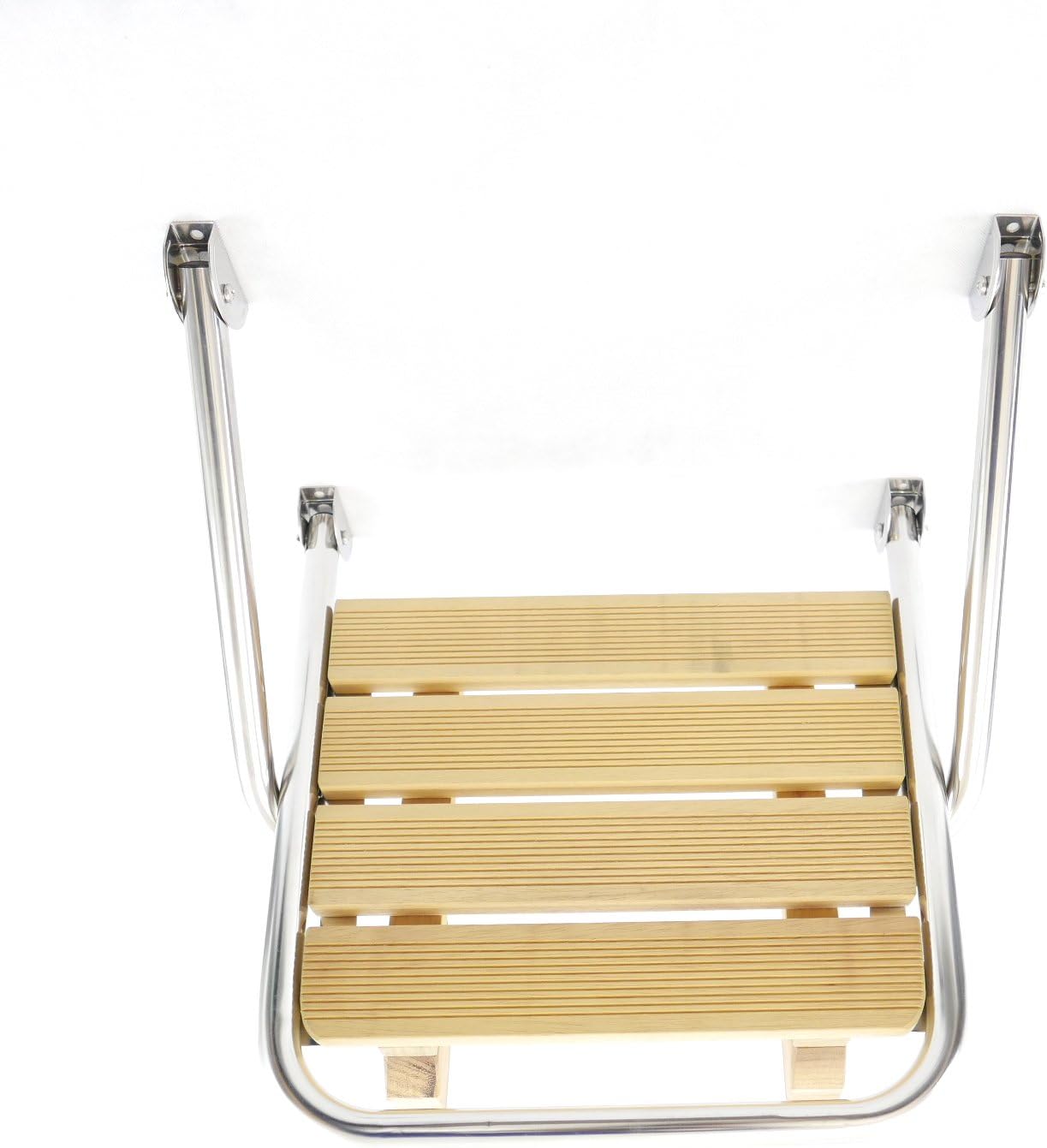
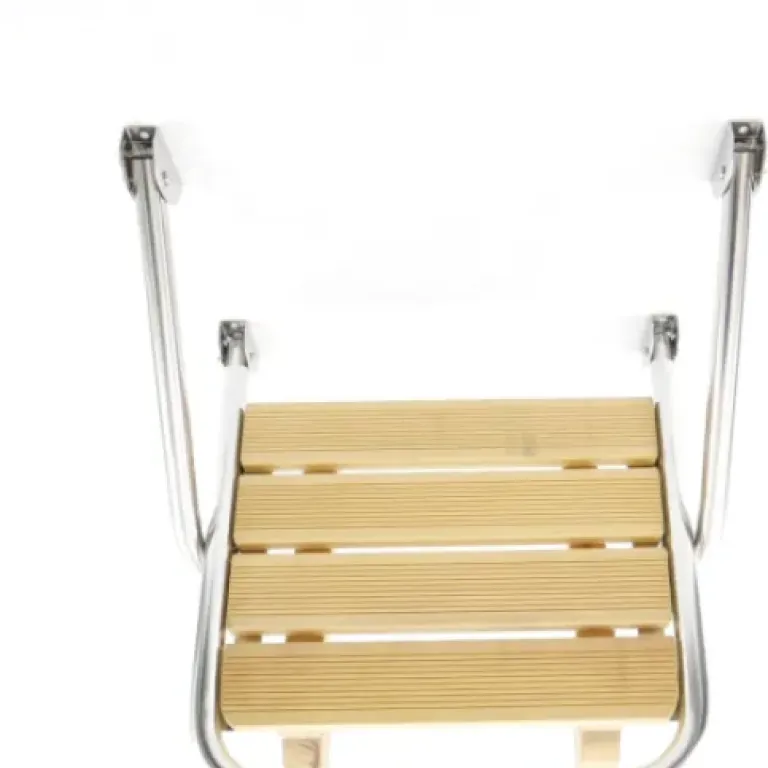
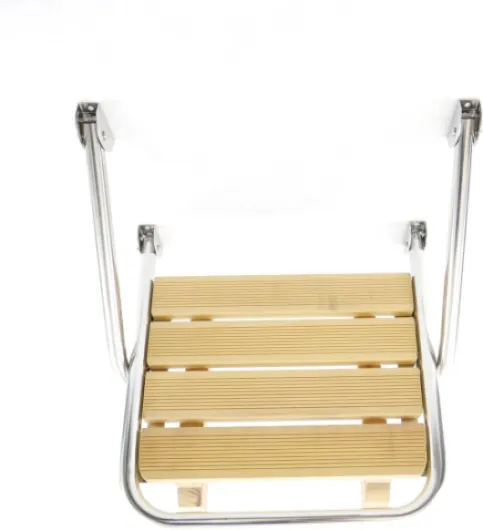
The design is basic: a rectangular-ish teak platform supported by a U-shaped stainless steel frame that bolts to the transom. There’s no folding mechanism or adjustable angle; once you mount it, it stays fixed. For my use, that’s actually a plus – fewer moving parts means fewer things to rust or loosen. The 500 mm width is enough for one adult to stand comfortably or two kids to sit side by side. The 450 mm length gives you enough depth to step from a ladder and stand before stepping into the cockpit.
One thing I liked is the clean, open frame. There aren’t random extra bars in the way, so when you’re in the water holding onto it, your hands find the tube easily. The 25 mm pipe diameter feels decent in the hand, similar to a standard boat rail. The corners of the frame are rounded, so you’re not dealing with sharp angles that can catch ropes or wetsuits. That said, there are a couple of welds that are more functional than pretty – they’re solid, but you can see where they ground them. For me that’s fine; this is gear, not furniture.
The teak slats are spaced so water drains through easily. That’s good for grip and avoids puddles forming on top. However, there’s no added non-slip strip or rubber inserts. Wet teak has decent grip barefoot, but if you’re wearing smooth-soled water shoes or if sunscreen has dripped everywhere, it can get a bit slick. I ended up lightly sanding the surface and I’m considering adding a couple of non-slip strips along the outer edge. It’s not unusable as is, but if you have older people or kids who rush around, it’s something to keep in mind.
Visually, it’s pretty neutral – stainless and teak look fine on most boats, whether older fiberglass or newer hulls. It doesn’t scream for attention, and that’s probably what most people want on a small boat. In terms of design choices, it’s all about simplicity and function. No clever tricks, no hidden storage, just a platform. If you want something that folds up, integrates a ladder, or has custom shapes, this isn’t it. But if you just want a straightforward extension at the stern that looks tidy and works, the design does the job.
316 stainless and teak: good combo if you’re ready to maintain it
The big selling point here is the materials: 316 stainless steel frame and treated teak wood. For marine use, that’s a solid combo. 316 stainless is better against corrosion than 304, especially in saltwater. On my unit, the stainless parts were non-magnetic (good sign for real 316), and after several outings including one in brackish water, I didn’t see any rust spots or tea staining. I still rinse it with fresh water after each trip, which I’d recommend to anyone, because no stainless is magic if you leave salt on it for weeks.
The teak top looks and behaves like real teak, not some cheap hardwood pretending to be. It has that slightly oily feel and the typical grain. Out of the box, it had a light to medium brown color. After a few weeks in the sun, it started to fade slightly, as expected. If you want it to stay pretty, you’ll need to oil it or use a teak sealer once or twice a season. If you don’t care and just want it to go grey, you can pretty much leave it; the wood will still be fine structurally for a long time, as long as you don’t let mold build up.
The screws and fixings included are listed as stainless as well. They look like it, but I can’t guarantee they’re all 316. For critical mounting points, I personally like to use known 316 A4 marine hardware, especially near the waterline. So I replaced the main bolts with ones I already had in the workshop and used the supplied screws for less critical spots. It’s not mandatory, but if you’re in full saltwater use and plan to keep the boat for years, it’s worth considering.
Overall, materials are one of the stronger points of this platform. It’s not some chrome-plated mild steel or painted alloy that will flake in a season. You’re getting proper marine-grade stainless and a classic marine wood that can handle wet/dry cycles. The flip side is that teak needs occasional care if you care about looks, and stainless still benefits from rinsing and the odd polish. If you accept that basic maintenance, you’re getting a pretty solid build for the money.
Early signs on durability and what to expect long term
I haven’t had this platform for years, but after a decent period of use and a close look at the build, I can give a fair idea of how it should age. The 316 stainless frame is the main durability factor. The welds are not showroom-pretty, but they are robust. No hairline cracks, no discoloration from poor welding. After exposure to sun, water, and a bit of salt, there’s no rust or pitting so far. If you rinse it after saltwater trips and occasionally give it a quick clean with a stainless cleaner, I’d expect it to last many seasons without structural issues.
The teak is the part that will visually change the most. Like all teak, it will go from brown to silver-grey if you leave it alone. That’s not a problem structurally, but some people hate the look. I gave it a light clean and a coat of teak oil after a few weeks, and it came back to a nice warm color. There were no signs of splitting or warping. The slats are reasonably thick, not paper-thin, so they should handle the usual wet/dry cycles. Just avoid letting standing water sit for ages and clean off any mold or algae if you leave the boat in the water for long periods.
Attachment points are another durability concern. The supplied hardware is okay, but the long-term life also depends on your installation. If you mount it straight into thin fiberglass without backing plates, you’re asking for trouble down the line, no matter how good the platform is. I added backing washers inside the transom to spread the load, which I’d recommend to anyone. Done properly, the platform should stay tight and solid for years. If you hear creaking or see movement, that’s an installation issue, not the platform suddenly going weak.
Overall, durability looks promising for the price range. This is not a disposable item you’ll replace every season. With basic care – rinse, occasional teak maintenance, and a yearly check of bolts – I don’t see why it wouldn’t last a long time on a typical recreational boat. Of course, if you’re running a commercial charter in saltwater every day, you’ll wear anything out faster, but for weekend and holiday use, it feels more than up to the task.
On-water performance and behavior over several outings
Performance for a swim platform is mostly about how it behaves under load and in real boating conditions. After several weekends, including choppy water and a bit of wake from passing boats, the platform stayed put. No loosening of bolts, no weird vibrations or rattling when underway. At speed, you don’t really notice it, apart from a small spray pattern change behind the boat, which is normal when you add anything at the stern. It didn’t create any obvious drag or handling issue on my small motorboat.
Under load, it feels sturdy enough for typical family use. One adult plus one kid sitting on it is fine. I wouldn’t have three big adults jump on it at the same time, but that’s more common sense than a product flaw. The 25 mm stainless tubing doesn’t flex noticeably when you stand near the outer edge. Most of the movement you feel is actually the boat itself rocking, not the platform bending. That’s reassuring when you’re climbing back onboard with fins or gear.
In terms of day-to-day performance, we used it for: boarding from the ladder, putting on fins, sitting and dangling feet in the water, and occasionally as a spot to secure a bucket for rinsing gear. It handled all that without any issues. The teak didn’t splinter, and the screws holding the wood to the frame stayed tight. I checked them after a few outings and didn’t find any that had worked loose. I’d still recommend a quick inspection every few trips, which is standard boat practice anyway.
The only thing that slightly affects performance is the lack of built-in non-slip. In calm conditions it’s fine; in choppy water with a bit of fuel slick or sunscreen residue, you just need to be mindful. I wouldn’t say it’s dangerous, but it could be better out of the box. Apart from that, performance is solid and predictable. It does what a platform should do and doesn’t introduce new headaches while you’re underway or at anchor.
What you actually get in the box
When you unpack this platform, you get exactly what the listing says: one 500 mm wide swim platform with a stainless steel tubular frame, teak wood top, and a bag of screws/fixing bolts. No ladder, no fancy hinges, no instructions booklet full of glossy photos. The product dimensions listed (around 47 x 47 x 9 cm, 3.7 kg) are pretty close to reality; it’s light enough to handle alone but heavy enough to feel solid in the hand. The frame is made from 25 mm diameter stainless pipe, which is fairly standard for small marine platforms.
The teak section comes already assembled on the frame, so you don’t need to align slats or anything. The wood is treated, so it has that slightly oily feel and a mid-brown color, not super dark, not super pale. There were no big knots or cracks on mine. The edges are rounded enough that you don’t feel like you’re going to catch your leg on them, which is always nice when kids are climbing in and out of the water.
The hardware bag included stainless screws and basic fittings. I wouldn’t say it’s "professional shipyard level" hardware, but for a small private boat, it’s fine. I did swap two washers for bigger ones because my transom fiberglass is not super thick and I wanted a wider load spread, but that’s more about my boat than the product. If you’re fussy about hardware, you might spend a few extra euros at the chandlery to upgrade bolts and backing plates.
Overall, presentation is very straightforward: no fancy packaging, no extras, just the platform and the screws. For this kind of product, I don’t need more. What matters is that everything is there to mount it and that the parts look consistent with the advertised materials. On that front, it’s pretty solid: the stainless looks like 316 (non-magnetic, decent finish), the teak seems properly treated, and nothing felt flimsy or cheap right out of the box.
Does it actually make getting in the water easier?
I mounted this mainly to make swimming and boarding less annoying, and on that front it works as intended. Before, we only had a ladder bolted to the transom, so you’d climb straight into the cockpit, which was awkward and not super stable, especially with wet feet. With the platform, you climb the ladder, step onto a flat, stable surface, then step into the boat. That extra step makes a big difference in comfort and safety, especially for kids and older family members.
In practice, the 500 mm width is enough for one person at a time to work on the ladder without feeling cramped. Two adults standing there would be tight, but that’s not really the point. My kids used it as a mini diving platform – sit on the edge, push off into the water – and it held up fine. No flex in the frame, no worrying creaks from the transom. I weigh around 85 kg, and even when I bounced a bit on it to test, it stayed solid. Of course, the final stability also depends on how well you mount it and what your hull is like.
As a gear platform, it’s handy too. We used it to clip fins on and off, rinse masks, and put a small dry bag down while adjusting life jackets. The open slats mean water drains instantly, so you’re not standing in a puddle. The only minor annoyance is the previously mentioned grip issue when it’s very wet and soapy – it’s not like ice, but you do feel you need to be a bit careful. A couple of non-slip stickers would fix that easily.
So from a purely functional perspective, it does the job very well: it extends the usable area of the stern, makes boarding easier, and adds a nice spot to sit with your feet in the water. It doesn’t try to do more than that. If you want an integrated ladder or a huge bathing platform, this is too small and too simple. But if your boat currently has nothing or just a tiny step, this is a very noticeable upgrade in day-to-day use.
Pros
- Sturdy 316 stainless frame and real teak wood suitable for marine use
- Simple, functional design that makes boarding and swimming easier
- Good value compared to big-brand equivalents with similar specs
Cons
- No built-in non-slip surface; can get a bit slick when very wet
- Hardware is decent but some users may want to upgrade bolts/backing plates for heavy use
Conclusion
Editor's rating
Overall, this 316 stainless and teak swim platform from MiDMarine does exactly what it’s supposed to do: it gives you a solid step at the stern, makes boarding easier, and adds a small, usable area for swimming and sitting. The materials are decent, the frame feels sturdy, and installation is straightforward if you’re comfortable drilling a few holes and thinking about backing plates. It’s not packed with features, but for a simple fixed platform, that’s not really a problem.
I’d recommend it to owners of small to medium motorboats who currently have either nothing or a tiny step at the stern and want a practical upgrade without blowing the budget. It suits people who don’t mind a bit of basic maintenance on teak and who value straightforward, functional gear over fancy branding. If you pair two of them on a wider stern, you can create a pretty generous bathing area without going full custom build.
On the other hand, if you’re looking for something with an integrated ladder, folding mechanism, or a very specific design to match a high-end yacht, this is probably too simple for you. Also, if you hate doing any maintenance at all, the teak might annoy you over time. But for most regular boat owners who just want a solid, no-drama swim platform that uses proper marine materials, it’s a good, sensible choice.