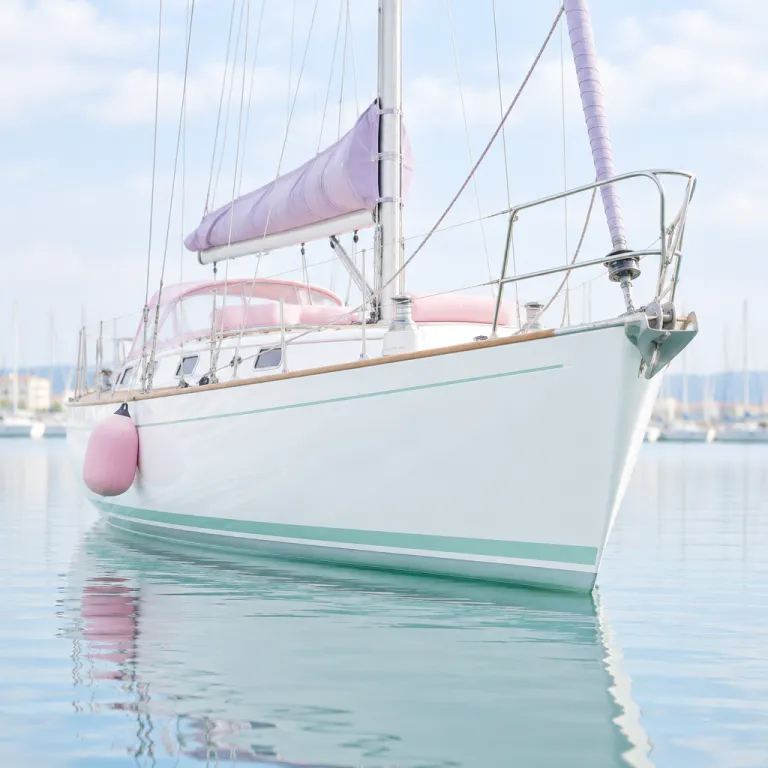
Why certain yachts from the mid‑2000s still look quietly perfect
Walk the quay in Monaco or Palm Beach and you will still see mid‑2000s yachts holding their own beside the latest glass heavy motor yacht concepts. Those boats were drawn before the current obsession with architectural superstructures, yet their exterior design still feels calm, balanced and strangely current. That is the essence of a truly timeless yacht and the clearest expression of a serious timeless yacht design philosophy.
Look at a well kept 40 metre yacht built by Feadship, Benetti or Sanlorenzo in that era and study the hull first, not the toys. The waterline length, the gentle sheer line and the measured deck camber create a silhouette that reads as one continuous gesture rather than a stack of competing terraces. Naval architecture in those yachts was not trying to shout ; it was trying to carry guests safely and efficiently through water while leaving a wake of quiet authority.
Those yachts were often semi displacement or full displacement hulls with moderate beam and honest superstructure height. The displacement numbers were not headline grabbing, but they were appropriate to the length and to the intended range and power package. When a naval architect is allowed to balance power, hull volume and weight instead of chasing fashion, the result is a yacht design that ages as gracefully as a well tailored jacket. That is why many of these yachts built around that time still command strong prices on the yachts sale market.
Owners who commissioned those projects usually came from sailing or from smaller motor yachts, and they respected seakeeping more than Instagram angles. They asked their design yacht teams to create exterior design that framed the sea rather than competing with it, and they accepted that some interior spaces would be slightly smaller to preserve proportion. That restraint gave naval architecture the room it needed to work, and it is exactly the restraint missing from many custom yacht projects launched in the last few seasons.
When you compare those earlier yachts timeless profiles with some of today’s more aggressive concepts, the difference is not nostalgia. It is the difference between a design philosophy built around functionality aesthetics and one driven by render friendly spectacle. A timeless yacht is not afraid of a little tumblehome, a softer bow entry or a slightly lower full beam sky lounge if that keeps the hull reading as one coherent line.
For a yacht passionate reader, the lesson is simple yet demanding. Before falling for a radical reverse bow or a monolithic glass flank, stand back and squint at the whole composition from stem to stern. If the hull, superstructure and mast feel like they were drawn in one breath, you are probably looking at a yacht that will still feel right when today’s fashion has moved on.
Proportion, not gimmicks: what mid‑2000s hulls teach today’s designers
The most enduring yachts from that mid‑2000s generation share three quiet disciplines : proportion, restraint and honest material use. Their naval architecture teams started with the hull and displacement targets, then wrapped the living space around those constraints instead of bullying physics into submission. That is the opposite of many current projects where interior wish lists drive swollen profiles and awkward exterior design compromises.
Take the way those earlier yachts handled glass and superstructure mass. Instead of full height glazing from bow to stern, designers used carefully placed windows to create rhythm along the hull and to protect interior spaces from heat and glare. The result is a yacht design that still looks crisp in profile while delivering enough natural light for guests without turning the saloon into a greenhouse.
On board, the best examples used full beam master suites sparingly and with care. A full beam owner suite on the main deck was balanced by slimmer upper structures aft, keeping weight low and preserving stability and comfort in rough water. That balance between interior ambition and naval architecture reality is a cornerstone of any serious timeless yacht design philosophy.
Material choices also played a role in why these yachts timeless lines endure. Teak, painted aluminium and carefully detailed stainless steel were treated almost as maritime art, not as surfaces to be hidden behind dark glass or cladding. When a yacht is built with that kind of respect for craft, the patina that develops over time enhances the design rather than dating it.
There is a useful parallel with the new generation of explorer and crossover yachts, where yards are again forced to prioritise hull efficiency and range over pure styling. The analysis of how builders are blurring the line between cruiser and expedition yacht in the explorer crossover at 30 metres shows how a clear design philosophy can still yield adventurous silhouettes without sacrificing proportion. The same thinking should be applied to every motor yacht, whether it is a compact 24 metre or a 90 metre flagship.
When you next walk past a monaco yacht with acres of glass and a plumb bow, ask yourself which elements are structural improvements and which are simply fashion. Longer waterline length and a finer entry can absolutely improve efficiency and comfort, but only if the naval architect is free to balance them against displacement and centre of gravity. If those decisions are made to chase a render trend rather than sea keeping, the yacht will date quickly no matter how dramatic the profile.
Thoughtful owners and founder CEO figures at serious yards in the United Kingdom, Italy and the Netherlands know this instinctively. They brief their design yacht teams to create motor yachts where functionality aesthetics come first, and they accept that some state of the art features may be edited out to preserve the whole. That kind of leadership is why certain award winning yachts from that era still look fresh while some younger neighbours already feel tired.
Inside the line: how interior spaces support a timeless exterior
Timeless exterior lines are only half the story ; the interior has to cooperate. Many of the most enduring yachts built in the mid‑2000s made deliberate sacrifices inside to protect the hull form and superstructure proportion outside. That quiet discipline is where a truly timeless yacht design philosophy becomes real rather than rhetorical.
Instead of chasing maximum cabin count, those yachts often limited guests to a comfortable number for the length and volume. A four cabin layout with a generous owner suite and three well sized guest cabins allowed circulation, storage and technical space to breathe. When interior spaces are not crammed to the last centimetre, the yacht feels more relaxed and the naval architecture can keep weight where it belongs.
Look at how these yachts handled staircases, lobbies and crew routes. Rather than carving up the hull with convoluted corridors, designers created simple, legible paths that respected structural bulkheads and weight distribution. That clarity not only improves life on board for guests and crew, it also keeps the yacht design honest to its underlying engineering.
Furniture and finishes followed the same logic of restraint. Instead of sculptural pieces that fight the hull geometry, many interior designers used low, linear sofas and cabinetry that emphasised the yacht’s length and the sweep of the windows. When the interior reads as an extension of the exterior design rather than a separate world, the whole yacht feels more coherent and more timeless.
There is a lesson here even for something as playful as a scale model or construction set. Building a detailed brick model of a classic hull, such as the intricate set presented as a ghost pirate ship construction toy, forces you to think about how volume, sheer and deck camber interact. The same discipline applies when you create a real custom yacht interior ; every extra curve or bulkhead has a structural and aesthetic cost.
For owners commissioning new yachts today, the most radical move might be to specify fewer cabins and more shared space. A generous main deck saloon, a single full beam master suite and two or three flexible guest cabins will feel luxurious without bloating the superstructure. That approach respects the hull, keeps displacement under control and leaves room for technical areas that make the yacht quieter, cooler and more reliable.
When you tour yachts for sale, pay attention to how the interior aligns with the exterior promise. If the profile suggests a lean, purposeful motor yacht but the interior is a maze of small rooms, something has been compromised. A truly timeless yacht keeps its promises from dockside silhouette to the last joinery detail below deck.
Reading the waterline: how to choose a yacht that will age well
For a buyer or charterer standing on the dock, the question is practical : how do you spot a yacht that will still look right in twenty years. Start with the hull and superstructure relationship, not the beach club or the pool. If the hull carries a clean sheer line, a measured bow rake and a superstructure that sits comfortably within its length, you are on the right track.
Next, look at how the design handles full beam elements such as sky lounges and master suites. A yacht that pushes full beam volumes too far forward or too high will often feel top heavy in profile and may ride less comfortably in a seaway. When naval architecture and exterior design work together, those volumes are stepped and tapered so that the yacht still reads as a single, confident gesture.
Pay attention to the technical story as well as the styling. Ask about displacement, hull material, power package and range, and listen for whether the naval architect had real authority in those decisions. A yacht where engineering led and styling followed is far more likely to embody a genuine timeless yacht design philosophy than one where the render came first.
Residual value data from major brokerage houses consistently shows that well proportioned yachts from respected yards hold value better than fashion forward experiments. Buyers trust yachts built by shipyards with a strong founder CEO culture and a track record of collaborating with serious naval architecture studios. Those yachts timeless qualities translate directly into fewer days on the market and stronger offers when it is time to move on.
There is also a geographic pattern worth noting. Many of the most enduring custom yachts come from yards in the United Kingdom, the Netherlands and northern Italy, where conservative hull forms and seakeeping are still prized. That does not mean every monaco yacht with a radical profile is flawed, but it does mean you should ask harder questions about how the design will feel after a decade of hard use.
For designers and young naval architects, the message is both humbling and liberating. Fashion will move on from today’s plumb bows, reverse sheer lines and glass cliffs, but a well judged hull, honest superstructure and disciplined interior will always feel right. In the end, what matters is not the length overall, but the wake she leaves.
Key figures that illuminate timeless yacht value
- According to data from major brokerage firms such as Fraser and Burgess, quality Northern European motor yachts between 30 and 50 metres that were launched around the mid‑2000s have retained on average 60 to 70 percent of their original asking price in inflation adjusted terms, significantly outperforming more experimental designs from the same period.
- Analysis of brokerage listings shows that well proportioned displacement yachts from established yards typically spend 20 to 30 percent fewer days on the market than comparable length yachts with highly fashion driven styling, indicating that buyers recognise and pay for timeless design.
- Technical surveys compiled by classification societies such as Lloyd’s Register and ABS report that yachts with moderate displacement hulls and conservative superstructure heights experience lower long term structural stress, which contributes to longer refit cycles and better cosmetic condition after more than a decade in service.
- Charter market data from leading central agencies indicates that classic looking yachts with strong naval architecture and restrained exterior design achieve repeat booking rates up to 15 percent higher than trend driven vessels, suggesting that guests value comfort and coherence over novelty.
References
- Fraser Yachts global brokerage and charter market reports
- Burgess superyacht market intelligence publications
- Lloyd’s Register and ABS technical guidance on yacht hull design and structural performance