
Summary
Editor's rating
Value for money: fun toy if priced low, weak deal if priced like branded boards
Design: more practical than pretty
Battery and autonomy: acceptable but not impressive
Materials and build: solid shell, budget finish
Durability and safety: decent for casual use, with some doubts long term
Performance: more assisted float than real surf
What you actually get out of the box
Pros
- Stable and buoyant board that’s reassuring for beginners and weaker swimmers
- Simple controls with dual modes and 4 speed levels, easy to understand after a short learning phase
- Enough power for relaxed cruising in calm water without much physical effort
Cons
- Modest performance: speed and acceleration are limited compared to branded electric surfboards
- Battery life only around 25–40 minutes in real use, with slow recharge and no spare battery option
- Generic brand with basic finish and uncertain long-term support or spare parts

Specifications
View full product page →| Brand | Generic |
A motorized board that looks fun on paper
I took this generic electric wakeboard out over a couple of weekends on a calm lake, mostly to see if a no-name board at this price could realistically replace renting proper electric surfboards. I’m around 82 kg, average fitness, and reasonably comfortable in the water, but not some pro surfer. I used it for roughly 6–7 sessions of 30–40 minutes each, mixing standard and sport mode to see what it really had in the tank. I also let two friends try it: one good swimmer, one more hesitant in the water.
On paper, the specs look decent: around 10 kg, supports up to 100 kg, speed announced between 5–15 km/h, and a lithium battery with an LCD screen to show remaining charge and a few safety bits. It’s more of an assisted floatboard than a real high-power e-surf, and that becomes very clear in the first 10 minutes. You’re not going to be flying over the water like the promo pictures of high-end boards; it’s more like a powered bodyboard that helps you cruise along without kicking your legs the whole time.
After a few sessions, I’d say it’s a mixed bag. There are some things I genuinely liked: it’s fairly intuitive, the buoyancy is reassuring, and the motor does help you move around without much effort. But there are also some weak points: the power is limited, the finishing feels a bit cheap, and the brand support is basically a big question mark since it’s just labeled “Generic.” If you go in with realistic expectations, it’s kind of fun. If you expect high-end e-surf vibes, you’ll probably be disappointed.
So this review is from that angle: someone who wanted a simple powered board for calm water fun, not a pro toy. I’ll go through design, performance, battery, comfort, durability, and value, with the good and the bad laid out plainly. No marketing spin here, just what actually happened on the water and what annoyed me or pleasantly surprised me.
Value for money: fun toy if priced low, weak deal if priced like branded boards
Value-wise, everything depends on what price you find it at. Since it’s a generic product, the price can fluctuate a lot between sellers. If it’s positioned clearly below the big-name electric boards, then it can make sense as a casual fun gadget. You get a motorized float that helps you cruise, some basic safety functions, and enough power to make swimming more playful without killing your legs. For families with a lake house or someone who goes to calm beaches often, that can be worth it.
However, you have to compare it with alternatives. There are now several well-known brands offering compact sea scooters or underwater scooters in a similar price range, sometimes cheaper. Those don’t give you a floatboard, but they offer similar or better propulsion, more compact form factor, and often better support and spare parts. If you already have a decent bodyboard, adding a sea scooter might be a more flexible setup than buying this integrated electric board.
Also, for not much more money (depending on sales), you can find entry-level boards from actual watersports brands, with better documentation, clearer warranty, and probably better long-term reliability. This generic model is clearly trying to sit in the middle: more than a simple toy, less than a pro board. In practice, I think it’s good value only if the price is clearly on the lower side of that middle zone. If you see it priced close to name-brand boards, I’d skip it without hesitation.
Personally, if I imagine buying it with my own money, I’d be okay with it at a budget-friendly price as a shared toy for the family. I’d accept the rough edges, the unknown brand, and the limited battery life. But if I wanted something I rely on every weekend, or something to really progress in water sports, I’d save up for a more serious option. So, decent value in the right context and at the right price, but definitely not a no-brainer deal.
Design: more practical than pretty
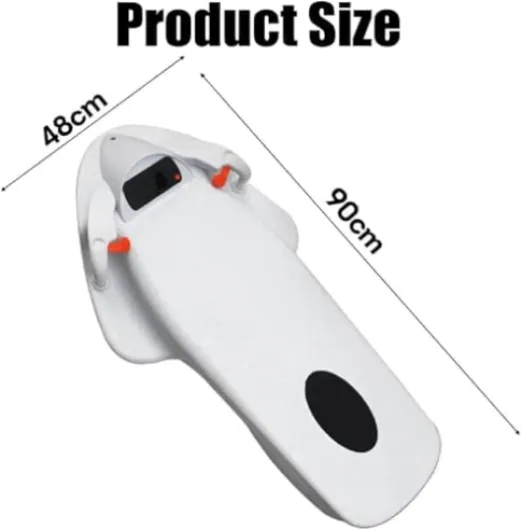
Design-wise, this board is pretty plain. It’s a white ABS shell, fairly chunky, with rounded edges and a general look that screams “utility” more than style. If you’re hoping to look cool showing up with this at a crowded beach, don’t. It looks like a big powered pool toy more than a sleek surf gadget. That said, the shape is fairly stable: wide enough for decent balance when you lie on it, and thick enough for good buoyancy up to its claimed 100 kg limit.
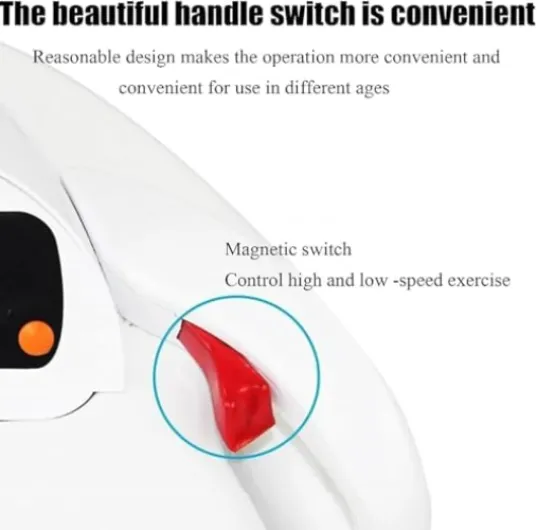
The layout is simple: LCD screen on top, a couple of basic buttons, and the motor assembly at the back. There are some grips molded into the sides that help you hold on, especially when the water gets a bit choppy. I liked the fact that the hand positions are intuitive; you don’t spend ages wondering where to grab. There are no fancy foot straps or anything for standing, which matches what the product really is: a powered floatboard, not a stand-up electric surfboard.
In practice, the design feels more thought-out for beginners and casual use than for performance. The front has enough volume that you can rest your chest comfortably without burying the nose in the water all the time. However, the balance point is a bit sensitive: if you shift too far back, the nose lifts and the prop has to work harder; too far forward, you start plowing water and lose speed. After a couple of sessions, I got used to where my body should be, but the learning curve is there.
One thing I didn’t love: the white color gets dirty fast. After two weekends, there were clear marks from sand, shoes, and the dock. ABS is easy enough to wipe down, but it still ends up looking used quickly. Also, the design doesn’t include any smart handle or strap for carrying; at 10 kg it’s not crazy heavy, but it’s bulky and a bit awkward to move from car to water if you’re on your own. So overall, functional design, but clearly built more for basic fun and safety than for style or performance tricks.
Battery and autonomy: acceptable but not impressive
The battery is a standard rechargeable lithium pack integrated into the board. The brand doesn’t clearly state the capacity in the materials I saw, which is already a small red flag. In real use, here’s what I got: in mixed usage (a bit of standard mode, a bit of sport mode), I managed around 35–40 minutes before the battery level dropped low enough that the power noticeably decreased. Pushing it hard in sport mode level 4 almost all the time, I was closer to 25–30 minutes of useful ride before it started to feel sluggish.
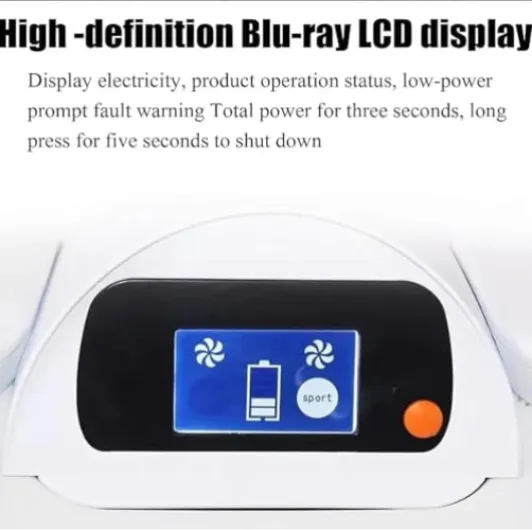
The LCD display for battery life is handy, but not ultra precise. You get a bar or segment-style indicator, and it tends to drop quite quickly in the second half. So you think you still have half left, then you suddenly go from 50% to nearly empty in what feels like 10–15 minutes of intense use. For safety, I started heading back to shore once it showed around 30–40% remaining, just to avoid ending up crawling back with a dead motor.
Charging time with the included charger is on the slow side. From almost empty to full took me a bit over 3 hours on a standard household outlet. The charger itself is basic, with a small indicator light, nothing fancy. It didn’t get excessively hot, which is good, but I would have liked more detailed feedback than just a red/green LED. Also, no mention of fast-charging or removable battery, so if you drain it at the lake, you’re basically done for the day unless you have power nearby and a lot of time.
In short, battery life is enough for short sessions: a few 20–30 minute outings in a day if you’re moderate with sport mode, or one longish session. It’s okay for casual users but will frustrate anyone who wants to ride for hours. And because the official info is vague, long-term battery health is a bit of a gamble. I’d treat it gently: avoid fully draining it often, store it with some charge, and don’t leave it baking in the sun. It’s fine, but nothing more than that.
Materials and build: solid shell, budget finish
The board is made from ABS, and you can feel it right away: it’s a rigid plastic shell, fairly thick, with a slightly glossy finish. On the plus side, ABS is tough and handles knocks pretty well. I bumped it a couple of times against the dock ladder and some rocks near the shore, and it only left small scuffs, no cracks. For a product that will inevitably get dragged in and out of the water by non-experts, that’s reassuring.
Where you feel the budget side is in the finishing. The joints around the motor housing and the LCD screen are not very refined. There are small gaps and slightly uneven plastic edges, nothing dramatic, but it doesn’t give the impression of high-end manufacturing. The rubber seals around the compartments look okay, but they don’t inspire huge confidence for long-term heavy use in saltwater. For my tests in freshwater, no leaks or fogging, but I’d be more cautious if I used it often in the sea.
The propeller and its mount look like mid-range components. The prop itself is plastic, not metal, which is fine for safety and weight but more prone to damage if you hit debris. I didn’t smash it into anything hard, but I did feel some light contacts with floating branches. No visible damage after that, so for now I’d say it’s holding up. The screws and visible metal parts are basic stainless steel; again, fine for occasional use, but long-term corrosion resistance in saltwater is a question mark.
The remote is the weakest part material-wise. The plastic feels cheap, the buttons are a bit mushy, and the wrist strap is basic. It worked during my tests, but it doesn’t give the impression it will last for years if you use it every weekend. In short, materials are decent for the price bracket, but clearly not on the same level as bigger brands in the watersports world. If you plan to abuse it or use it commercially (rentals, etc.), I’d look at something more robust. For casual personal use, it’s acceptable as long as you don’t expect premium quality.
Durability and safety: decent for casual use, with some doubts long term
After a couple of weekends of use, the board itself still looked structurally fine. No cracks, no serious dents, just cosmetic scratches on the underside and some marks on the sides from the dock. So in terms of short-term durability, I’d say it holds up. ABS is known to be fairly tough, and you feel that in practice. You can bump it a bit without panicking. The propeller also survived light contact with floating branches without chipping.
The question is more about long-term durability and water resistance. The seals around the motor and battery compartments did their job during my tests: no water inside, no fogging on the display. But the finishing doesn’t scream long-term reliability, especially if you use it a lot in saltwater. I’d definitely rinse it thoroughly with fresh water after each use and store it dry. The manual doesn’t say much about maintenance beyond basic common sense, which is not very reassuring for a device mixing electricity and water.
On the safety side, there is some built-in protection: the motor shuts off if you pull the safety cord on the remote, and it also seems to cut automatically when the board is not properly in the water, which is good to avoid the prop spinning freely. The buoyancy is strong enough that even if the motor died, you can just lie on it and float back slowly. For less confident swimmers, that’s a big plus. I tested a simulated “dead battery” situation about 50 meters from shore; it was annoying but not stressful, just paddling and using it as a big float.
My main concern is the generic branding and unknown support. If something fails after a few months (battery, motor, seals), you’re at the mercy of a random seller and vague warranty terms. With a known watersports brand, I’d be more relaxed about spare parts and repairs. Here, I’d treat it as a product that might last a few seasons if you’re lucky and careful, but I wouldn’t count on a long service life with heavy use. For occasional lake trips, it’s probably fine. For intensive weekly sessions or rental use, I’d look for something more proven.
Performance: more assisted float than real surf
Let’s be clear: performance here is modest. The advertised 5–15 km/h speed range is technically true, but you only feel close to the top of that range in the best conditions: calm water, sport mode, max speed, and a reasonably light rider. At my 82 kg, in sport mode level 4 on flat water, I’d say it felt more like 10–12 km/h most of the time, not 15. You move, you feel the motor, but you’re not planing on top of the water like with a powerful e-surf. It’s more like a strong assisted swim than a real ride.
The four speed levels are useful though. For total beginners or people who are not very comfortable in the water, level 1–2 in standard mode is gentle and reassuring. You just glide slowly without needing to kick. My less confident friend actually liked that a lot: she could move away from the shore without stress and come back easily. In sport mode, the ramp-up is quicker and the top speed is higher, but the board still remains controllable. You don’t feel like it’s going to throw you off; it’s just pushing you along more firmly.
Acceleration is okay but not impressive. From standstill to max speed, you get a steady push, not a violent kick. For cruising around a lake, that’s fine. For surfing actual waves, forget it; the motor doesn’t have the punch to pick up and ride a wave properly. In small chop, the board stays relatively stable, but once the water gets rougher, you start bouncing and losing efficiency. The propeller doesn’t cavitate too much if you keep your weight centered, but if you move too far back, you’ll get some loss of grip and noise.
Overall, I’d say performance is good enough for relaxed fun and assisted swimming, but not for thrill-seekers. If you’re expecting something that replaces a jet-ski-style board, this isn’t it. If your goal is to explore a bit further from the beach or give a boost to weaker swimmers in calm water, it does the job. Just go in knowing it’s basically a motorized float rather than a proper power-surf machine.
What you actually get out of the box
When you unpack this thing, you immediately see it’s not pretending to be a premium product. The box is basic, the branding is almost nonexistent, and everything screams “generic factory product” more than a known watersports brand. In the package I had: the board itself, a basic charger, a short manual with shaky English, and a simple wrist remote with a safety cord. No carry bag, no spare parts, and no real guidance about maintenance beyond a few lines.
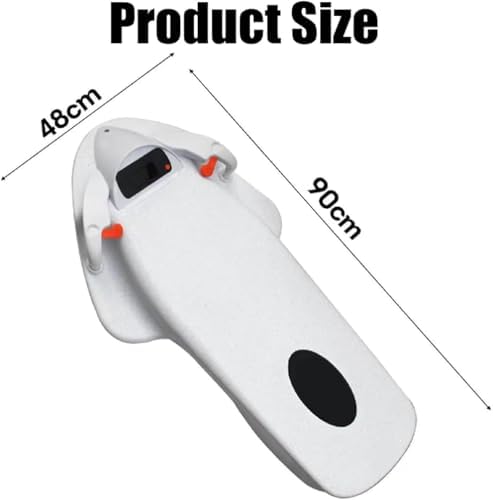
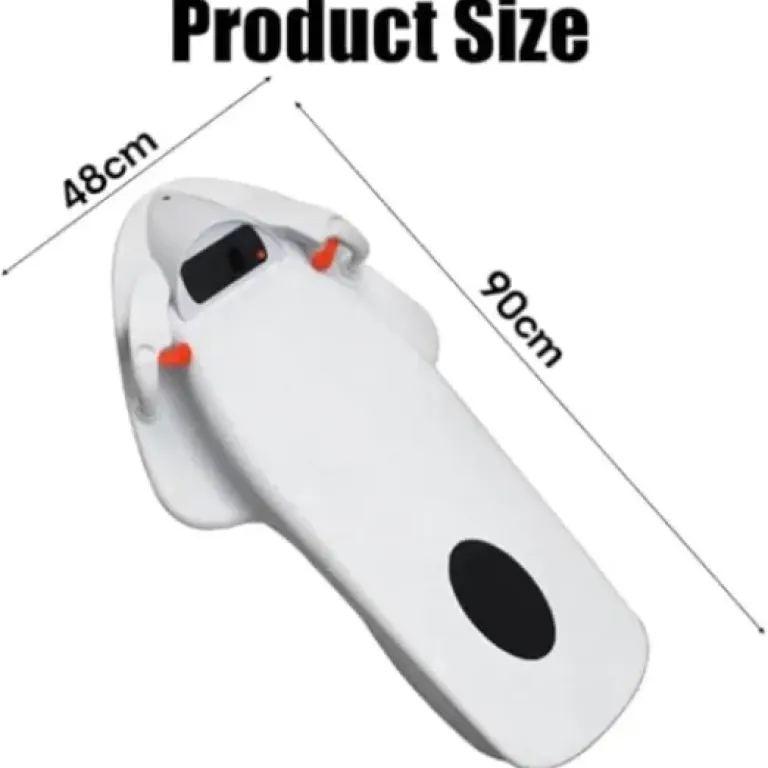
The board size (around 90 x 48 x 27 cm) makes it closer to a bulky bodyboard than a full surfboard. You don’t stand on it like a classic surfboard; you mostly lie on it or half-kneel with your chest on the front. The propeller is mounted at the back with what they call an “independent suspension” system, which in practice just means it has a bit of play and is protected, so you don’t smash it at the first contact with something. It feels reasonably safe: the prop is set back and slightly shielded, but I still wouldn’t let small kids mess around it without strict supervision.
The LCD screen is on top, near where your chest goes. It shows battery level and some basic status icons. It’s bright enough under cloudy weather; in full sun, you need to shade it with your hand to read it clearly. Control-wise, you get dual modes (standard and sport) and four speed levels, but these are controlled through the remote, not directly on the board. Once you’ve played with it for 10 minutes, it’s straightforward, but the manual doesn’t explain things very clearly, so you basically end up learning by trial and error.
Overall, the presentation feels very “it gets the job done but nothing more.” If you’re used to branded gear with nice packaging, clear documentation, and accessories, this will feel cheap. If you just want a powered floatboard and don’t care about the fancy stuff, you’ll probably shrug and move on. Personally, I would have liked at least a proper quick-start guide and some clearer safety instructions, especially around the propeller and battery use.
Pros
- Stable and buoyant board that’s reassuring for beginners and weaker swimmers
- Simple controls with dual modes and 4 speed levels, easy to understand after a short learning phase
- Enough power for relaxed cruising in calm water without much physical effort
Cons
- Modest performance: speed and acceleration are limited compared to branded electric surfboards
- Battery life only around 25–40 minutes in real use, with slow recharge and no spare battery option
- Generic brand with basic finish and uncertain long-term support or spare parts
Conclusion
Editor's rating
After several sessions with this generic electric wakeboard, my conclusion is simple: it’s a powered floatboard for relaxed fun, not a real performance surf device. The motor helps you cruise around without much effort, the buoyancy is reassuring, and the controls are simple enough for beginners. For calm lakes, sheltered bays, and people who just want to play in the water or support weaker swimmers a bit further from shore, it does the job. You just lie on it, press the trigger, and let it pull you along at a moderate pace.
On the other hand, there are clear limits. The power is modest, the battery life is okay but not great, the finish is basic, and the brand support is uncertain. If you expect something that will give you high-speed rides or serious surfing sensations, you’ll be disappointed. It’s more of a fun gadget than real sports equipment. I’d recommend it to casual users who find it at a good price, don’t care about brand prestige, and are ready to take care of it properly. People who should skip it: anyone looking for strong performance, heavy saltwater use, rental or intensive use, or those who want solid after-sales support and clear warranty terms.