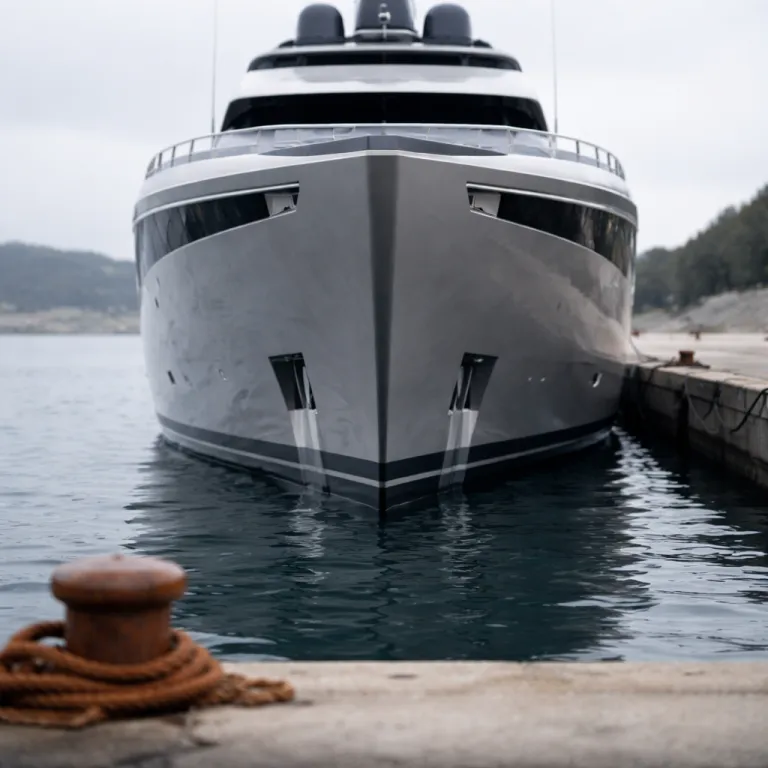
Why modern superyacht plumb bow design changed the game
Walk along any serious marina and the first thing you notice is how many yachts now carry a near vertical bow instead of the old sweeping clipper profile. That contemporary straight-stemmed look is not a styling whim; it is a deliberate naval architecture choice that stretches the waterline, boosts efficiency and quietly unlocks extra interior space in the forward sections. For a first time yacht owner weighing custom builds, understanding what that near-plumb stem actually does for you is more useful than any glossy brochure.
On a displacement yacht, a longer waterline generally means a higher potential hull speed for the same overall length. Designers often quote the classic rule of thumb: hull speed in knots ≈ 1.34 × √(LWL in feet). Push the stem forward into a true vertical bow and a 40 metre yacht can gain roughly a metre of waterline length without changing the registered LOA, which nudges up that theoretical speed and improves efficiency at typical cruising speeds. The same hull length on paper can therefore carry more volume, more luxury accommodation and more light airy interior areas without paying a penalty in fuel burn, which matters whether you cruise privately or plan occasional charter. When you see several yachts moored side by side, the ones with upright stems often hide an extra half cabin or a larger foredeck lounge in that vertical wedge of space.
There is also a sea keeping story behind the modern vertical bow that rarely makes it into marketing news or broker blurbs. A well designed plumb stem slices into moderate head seas instead of hobby horsing, which can reduce bow impact loads and keep the foredeck drier than you might expect from such a sharp profile. Captains of recent Feadship and Heesen deliveries routinely report that these fine entries feel calmer at 10–12 knots in a short Mediterranean chop than older clipper-bow yachts of similar size. The key phrase there is well designed, because a careless interpretation of vertical bows can pound, so you want a yard with serious yacht design experience rather than a styling exercise.
Plumb bow versus raked bow: what you gain and what you trade
When you compare a modern superyacht with a plumb bow to a traditional raked stem, you are really comparing how the hull uses its length. A raked bow sacrifices some waterline for a softer entry and a classic style, while a vertical stem pushes volume and buoyancy as far forward as the rules allow. For an aspiring owner who values both comfort and range, the question is not which looks better but which bow geometry matches the way you plan to use your yacht.
With a near-vertical stem, the main deck can run further forward, so the interior gains a larger owner suite or a more generous crew area in the bow without stretching the registered length. On several 50 metre custom projects, that has translated into an extra 8–12 square metres of usable interior space forward compared with earlier raked-bow sisters. That extra space can also become a proper yacht support zone for toys, tenders or even a compact helipad, which transforms how you use the foredeck at your favourite charter destinations. On a raked bow yacht, the same area often becomes dead volume or anchor gear storage, so the lifestyle return on length is lower.
Sea keeping is more nuanced, and this is where naval architects earn their fees. A raked bow with plenty of flare can keep spray down and soften bow impact in steep chop, while a plumb bow relies on careful hull shaping and reserve buoyancy to avoid burying into waves. If you study serious passagemakers like the Heesen 55m Steel series, optimised for shallow draft cruising in the Mediterranean, you will see how designers balance vertical stems, fine entries and fuller sterns to keep the yacht comfortable at a range of speeds.
Range and fuel efficiency also shift subtly between the two approaches. Because a plumb bow extends the waterline, the hull can run at a slightly higher cruising speed for the same power, which matters on long legs between remote charter destinations where fuel quality is variable. On recent sea trials, several 50 metre yachts with straight stems have shown 3–5% lower fuel burn at 12 knots than comparable raked-bow predecessors, simply because they sit on a longer effective waterline. A more traditional bow can still be efficient, but you are giving away potential hull speed and interior volume that a contemporary vertical-stemmed profile quietly captures.
For a buyer, the practical test is simple; stand on the quay and look at where the main deck ends relative to the waterline and the bow. If the deckhouse pushes close to a vertical stem, you are looking at a yacht designed to maximise space and luxury amenities forward, often with large windows cut into the hull sides. If the bow sweeps back and the foredeck feels long and empty, you are trading that interior volume for a more timeless profile and perhaps a slightly softer motion in certain sea states.
To see how this plays out in practice, study real world projects such as Feadship’s sharp-stemmed 93m Lady S or the way some 50 metre yachts now integrate axe bow influences into their plumb bows. These are not experimental concepts; they are the result of decades of commercial and sailing vessel research applied to luxury superyacht design. When you next read brokerage news about a new launch, pay attention to whether the bow is doing real work or simply adding drama to the profile.
For a deeper sense of how hull form and cruising purpose interact, it is worth looking at serious bluewater cruisers like the Swan 58, a yacht that shaped modern ocean sailing and shows how bow geometry, stern shape and rig all work together. That kind of reference point helps you read superyacht silhouettes with more confidence, because you start to see the same hydrodynamic logic behind the styling. Once you understand that logic, the choice between a plumb bow and a raked bow becomes a strategic decision rather than a purely emotional one.
From axe bows to scoop sterns: how working hulls reshaped leisure yachts
The story of today’s straight-stemmed superyachts really begins with commercial and offshore vessels that needed to keep working when the weather turned ugly. Axe bows, with their fine vertical stems and deep forefoot, were developed to cut through steep head seas, reduce bow impact and keep crew safer on long transits. Naval architects then adapted those axe bow principles for superyacht hulls, softening the lines and integrating them into more luxurious styling.
On a custom yacht, you will often see a hybrid approach where the forward sections borrow from axe bow geometry while the visible stem reads as a clean plumb bow. That gives the designer the sea keeping benefits of a fine entry and controlled bow impact, while the owner enjoys a sharp, modern profile that feels both purposeful and timeless. The result is a yacht that looks sleek at anchor yet feels composed when you are pushing into a mistral on the way to your next charter destinations.
At the opposite end, scoop sterns and beach clubs have transformed how the aft sections of yachts are designed. Where older yachts carried high transoms and narrow swim platforms, modern superyachts carve out wide, low scoop sterns that open directly onto the sea, turning the last few metres of hull into a private waterfront. That change in silhouette signals a lifestyle shift from formal aft decks to relaxed, water level living that suits both private cruising and high end charter.
Those scoop sterns also interact with the plumb bow in subtle ways. By pushing volume forward with a vertical stem and opening the stern into a beach club, designers can keep the yacht’s length overall in check while still delivering generous interior space and storage for toys. On several recent 60 metre projects, this bow-to-stern balance has allowed designers to add a full wellness area aft without increasing LOA, simply by reclaiming volume in the forward sections. The hull becomes a carefully balanced volume, with the bow, midships and stern each designed to serve a specific role in the way you and your guests actually live on board.
Inside, that balance continues with interiors that are ergonomically designed to work at sea rather than just in renderings. If you want a sense of how serious designers think about circulation, handholds and sightlines, look at detailed guides on how to design a sailboat interior that actually works at sea, then apply the same critical eye to any superyacht you tour. You will start to notice whether the interior has been designed around the hull form or forced into it, which is a crucial distinction on yachts with extreme plumb bows and expansive beach clubs.
Glass and aluminium superstructures have also become part of this new language of silhouettes. Large windows and light airy saloons are now expected on a luxury superyacht, but they demand careful weight and stability calculations when combined with a fine bow and open stern. When you see a yacht with floor to ceiling windows, a sharp vertical stem and a huge beach club, you are looking at a complex engineering puzzle that only a handful of yards solve gracefully.
For a buyer, the lesson is that every curve and angle on the profile tells a story about priorities. Axe bow influences suggest a focus on offshore capability, scoop sterns hint at lifestyle and water access, while the exact shape of the plumb bow reveals how aggressively the designer has chased volume and speed. Read those signals together, and you will understand far more about a yacht than any one page specification sheet can convey.
Reading glass, aluminium and windows: what the superstructure reveals
Once you have decoded the bow shape, your eye naturally travels aft to the superstructure. The ratio of glass to aluminium, the height of the decks and the rhythm of the windows all reveal how the yacht balances stability, privacy and that coveted light airy feeling inside. A thoughtful buyer learns to read these cues as carefully as they read an engine room specification.
Large, continuous windows along the main deck suggest a strong emphasis on panoramic views and a seamless connection between interior and exterior space. When combined with a plumb bow and generous beam, those windows usually mean the saloon and owner suite have been designed as full beam spaces, which can feel extraordinary at anchor but demand careful attention to weight distribution. Naval architects use aluminium and sometimes composite superstructures to keep that glass-heavy volume as light as possible, preserving stability margins even when the yacht carries tall decks.
Look closely at how the superstructure steps back as it rises. A well resolved profile will taper the upper decks to keep the centre of gravity low, which is especially important on yachts with vertical stems that already push volume forward. If the upper decks feel stacked and top heavy above a fine bow, you should be asking detailed questions about stability calculations, tank arrangements and how the yacht behaves in quartering seas.
Inside, the way the interior is designed around those windows tells you a lot about the yard’s priorities. An interior that is ergonomically designed will place seating, handholds and traffic routes where they work underway, not just where they look good in a brochure. When you walk through, notice whether you can move from the bow lounge to the scoop stern beach club without awkward steps or blind corners, because that flow is what makes a yacht feel safe and effortless for both guests and crew.
Privacy is another dimension that the silhouette quietly signals. Deep overhangs, carefully placed mullions and shaded terraces allow you to enjoy the benefits of large windows without feeling exposed in busy marinas or popular charter destinations. If you see a yacht with sheer glass walls from bow to stern and minimal overhangs, understand that you are trading some privacy and heat control for the drama of uninterrupted views.
From a regulatory and operational perspective, the superstructure also intersects with less glamorous topics like the privacy policy of onboard data systems and the way crew manage guest technology. Modern yachts are floating networks, and the same glass rich spaces that feel so open visually are often saturated with connectivity and entertainment systems. When you evaluate a design, ask how those systems are integrated, cooled and maintained, because a truly modern plumb-bow superyacht is only as refined as the infrastructure that supports life on board.
Ultimately, the superstructure is where the promises of the hull meet the realities of daily use. A well balanced combination of vertical stem, glass, aluminium and interior planning produces a yacht that feels calm, bright and secure in all conditions. When those elements are out of sync, the silhouette may still turn heads at the dock, but the experience underway will never quite match the image.
How to read a yacht at the quay: a practical buyer’s exercise
Next time you walk past a line of yachts, pause in front of one that catches your eye and give yourself a structured minute to read it. Start at the bow and note whether it is a true plumb bow, a softer raked stem or something closer to an axe bow, then imagine how that shape will meet a short Mediterranean chop. Move your gaze along the waterline, counting the number of full height windows and changes in sheer, because each of those breaks usually marks a shift in interior space or function.
Then look up at the superstructure and trace the decks from bow to stern. Ask yourself where the main saloon sits, where the owner suite might be and how the crew could move from the galley to the exterior decks without crossing guest areas, because good yacht design hides those working routes in plain sight. Notice whether the stern is a high transom or a scoop stern with a beach club, and imagine how you would board from a tender in a slight swell.
As you do this, keep a mental checklist of questions for any designer or broker you speak with. How does the plumb bow influence trim at different fuel loads, and what measures have the naval architects taken to control bow impact at your typical cruising speeds? How are the interiors ergonomically designed to work underway, especially in narrow passages and stairways where guests and crew inevitably cross paths?
Remember that silhouettes also have limits as predictors. You cannot see noise levels, vibration, build quality behind the panels or the way systems are installed just by looking at the profile from the quay. A yacht with a flawless vertical-stemmed profile and elegant styling can still disappoint if the engineering and craftsmanship behind the scenes do not match the promise of the lines.
That is why serious buyers pair this visual reading exercise with sea trials, yard visits and conversations with captains who have lived with similar yachts. They know that the bow, stern and superstructure tell a story, but not the whole story, and they treat the silhouette as a starting point rather than a verdict. In the end, what matters is not just how your yacht looks at anchor, but how confidently she carries you between those quiet anchorages.
For many owners, the most satisfying yachts are those where the exterior style, hull form and interior layout feel like one coherent thought. The modern plumb-bow approach can absolutely be part of that harmony when it is used to serve comfort, range and space rather than fashion alone. Get that balance right, and you will find that what really defines your yacht is not the length overall, but the wake she leaves.
FAQ
Does a plumb bow make a yacht less comfortable in rough seas ?
A well executed plumb bow does not automatically make a yacht less comfortable, because comfort depends on the entire hull form, weight distribution and speed profile. Naval architects use fine entries, careful flare and reserve buoyancy to control how a vertical stem meets waves and to manage bow impact. The only reliable way to judge comfort is to combine the silhouette with sea trial experience and feedback from captains who run similar yachts.
Is a modern superyacht plumb bow design always more efficient than a raked bow ?
A plumb bow usually gives a longer waterline for the same length overall, which can improve potential hull speed and fuel efficiency. However, overall efficiency also depends on displacement, propulsion, appendages and how the yacht is actually driven. Some raked bow yachts with optimised hulls and moderate speeds can match or beat less refined vertical-stemmed designs in real world use.
What should I look for inside a yacht with large windows and a plumb bow ?
Inside such yachts, focus on how the interior layout supports movement at sea and not just at anchor. Check that the spaces are ergonomically designed, with secure handholds, sensible stair angles and clear routes for crew to work without disturbing guests. Also ask about glass specifications, shading and climate control, because large windows and a fine bow can increase solar gain and require robust systems.
Are scoop stern beach clubs practical for regular cruising and charter ?
Scoop stern beach clubs are highly practical when they are well engineered, with strong platforms, safe access and good storage for toys. They transform the way guests use the stern, making water access easier and more social during both private cruising and charter. The key is to ensure that the beach club does not compromise tender operations, crew workflow or the yacht’s trim when loaded with equipment.
Can I judge build quality from a yacht’s exterior silhouette alone ?
You can infer design priorities from the silhouette, but you cannot reliably judge build quality from the exterior alone. High quality construction reveals itself in details like fairing, joinery, systems installation and noise control, which require close inspection and sea trials. Use the silhouette as a guide to ask better questions, then rely on surveys, yard reputation and real world experience to assess quality.