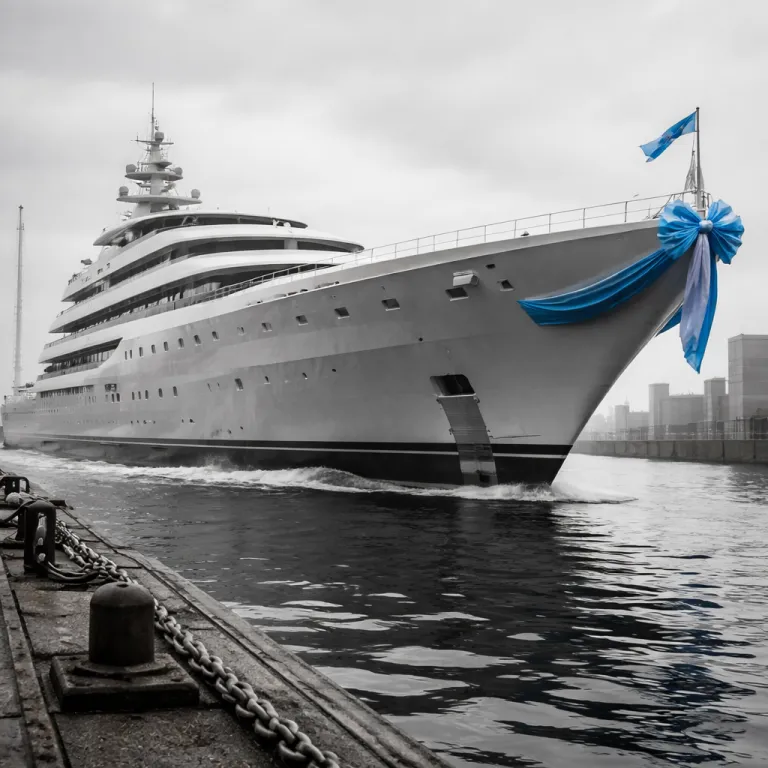
RWD’s quiet power on a 101 metre Feadship canvas
Feadship Project 1014, a 101.2 metre full custom motor yacht with a steel hull and aluminium superstructure, slipped into the water at the Makkum Dutch shipyard in April 2024 as a study in restraint rather than spectacle. On this 101.2 metre Feadship, RWD stretches the familiar Feadship yachts language into something longer, lower and calmer, with a steel hull and aluminium superstructure that read as one continuous gesture. For an experienced yacht owner used to sharper profiles, the way the hull superstructure blend softens the sheer line while preserving a commanding view from every deck.
Walk the profile from bow to beach club and the design intent becomes clear. The naval architects have pulled volume aft, stacking an expansive upper deck and bridge deck over a generous main deck without the usual visual bulk that plagues the largest superyachts. That balance between interior volume and exterior poise is where this Feadship project quietly rewrites what a 100 metre superyacht can look like when the builder Feadship and a single naval architect team stay ruthlessly focused on proportion.
RWD’s exterior design on Feadship Project 1014 feels closer to a long range motor yacht than a floating palace. The superstructure steps are subtle, the hull windows are disciplined, and the decks are layered to prioritise usable terraces over theatrical overhangs. Owners who have lived with earlier custom yachts from the same Dutch shipyard will recognise the DNA, yet this project shows how far naval architecture and yacht build discipline have come since Feadship first nudged past the 90 metre mark.
Life at 101 metres: volume, berths and the real cost of scale
Once a yacht crosses the 100 metre threshold, every operational decision changes. Feadship Project 1014 sits squarely in that band, joining the largest superyachts where beam, draft and air draft start to dictate which harbours, refit yards and cruising grounds remain practical. For an owner planning a new yacht build, the message is blunt; you gain extraordinary interior volume and deck real estate, but you also commit to a different class of infrastructure and cost.
On board, that extra length translates into a main saloon that can finally breathe, a true beach club at water level and the space for a proper swimming pool without compromising tender garages or technical spaces. Multiple exterior deck zones stack above, from a sheltered aft main deck to an expansive upper deck and sun deck, each large enough to function as its own outdoor room on this motor yacht. The result is a custom interior design canvas where guest circulation, crew flow and service routes can be separated cleanly, something smaller yachts struggle to achieve.
Off the water, the scale of this Feadship project pushes it into a narrow circle of facilities that can handle a steel hull of this displacement and a hull aluminium superstructure of this height. Refit cycles will likely centre on Northern European yards with deep water access and the right naval architecture and outfitting expertise, such as Feadship’s own Amsterdam and Makkum facilities or comparable large yacht specialists, which concentrates both opportunity and risk for owners. In practical terms, any future listed sale of Feadship Project 1014 will speak to a tiny pool of buyers who understand that the largest yachts demand not just capital, but a long term operational strategy shaped with top tier naval architects.
Hybrid propulsion, Dutch custom momentum and what owners should read next
Feadship’s recent work on hybrid systems, highlighted by the hydrogen fuel cell flagship Project 821 (formerly known as concept Breakthrough), hangs over every new project at this scale. In Feadship’s 2024 press material, the group confirms that lessons from Project 821’s fuel cell and energy management architecture are being fed back into the wider custom fleet. While Feadship Project 1014 has not been publicly detailed in propulsion terms, its place in the build schedule shows how the builder Feadship is normalising advanced power and hotel load management on large custom motor yachts. For owners, the real news is that hybrid ready architecture is becoming the default conversation at contract stage, not an exotic option reserved for concept yachts.
The Dutch custom market’s acceleration above 100 metres, even as midsize customs slow, reflects a shift in how ultra high net worth clients view time, privacy and long range capability. A yacht of this size can carry more toys, more tenders and more specialist crew while still offering a quieter interior thanks to better isolation between the steel hull, machinery spaces and guest areas. That is where naval architecture, interior design and technical outfitting converge; the naval architects can now shape hull forms and machinery layouts that support both efficiency and comfort without forcing owners to choose.
For a seasoned owner reading yachts news and tracking every new Feadship project, 1014 is less about headline length and more about a maturing design language. The project confirms that future Feadship yachts in this bracket will lean toward calmer lines, larger beach clubs, more layered decks and propulsion systems ready for evolving regulations and fuels. In a market where every new launch is framed as the largest or most radical, Feadship Project 1014 quietly reminds us that what matters is not the length overall, but the wake she leaves.
Key figures behind Feadship Project 1014
- Feadship Project 1014 measures 101.2 metres in length overall, placing it among the largest Feadship launches to date in the global superyacht fleet.
- The yacht features a steel hull combined with an aluminium superstructure, a configuration that balances strength, weight and stability for long range cruising.
- Project 1014 was floated out on her lines at Feadship’s Makkum facility, one of the few Dutch yards optimised for 100 metre plus custom yachts.
- The exterior design is by RWD, extending their collaboration with Feadship on large custom motor yachts in the 90 to 100 metre segment and beyond.
Questions yacht owners ask about Feadship Project 1014
How does Feadship Project 1014 differ from earlier 90 metre class Feadship yachts ?
Compared with earlier 90 metre class Feadship yachts, Project 1014 offers a noticeable step up in interior volume, deck area and technical spaces without a corresponding increase in visual bulk. The hull and superstructure have been sculpted to keep the profile calm and elongated, which helps the yacht sit more gracefully in port despite its length. Operationally, the extra metres allow for a more generous beach club, a larger swimming pool and improved crew circulation, all of which seasoned owners will feel on board rather than just see on a spec sheet.
What should an experienced owner consider before moving into the 100 metre plus segment ?
Stepping into the 100 metre plus segment with a yacht like Feadship Project 1014 means accepting new constraints on berthing, refit yard choice and seasonal routing. Not every marina, shipyard or cruising ground can comfortably accommodate the draft, beam and air draft of the largest superyachts, so itinerary planning becomes more strategic. Owners should work early with their naval architect, captain and management team to map out likely home ports, refit facilities and support infrastructure before signing a yacht build contract.
Where does Feadship stand on hybrid propulsion after projects like Breakthrough ?
Feadship’s work on the hydrogen fuel cell yacht Project 821, presented publicly as the evolution of the Breakthrough concept, has positioned the group at the forefront of hybrid and alternative propulsion in the custom superyacht space. While each project, including Feadship Project 1014, is tailored to its owner’s brief, the yard now routinely integrates hybrid ready architecture, advanced energy management and future fuel flexibility into early naval architecture studies. For owners, this means that conversations about emissions, noise, range and regulatory resilience are now embedded in the design phase rather than treated as late stage add ons.
How does a steel hull with an aluminium superstructure affect performance and comfort ?
A steel hull paired with an aluminium superstructure, as seen on Feadship Project 1014, is a proven combination for large custom motor yachts. The steel hull provides strength, impact resistance and a stable platform for long passages, while the lighter aluminium superstructure helps keep weight lower and improves stability and fuel efficiency. When naval architects and engineers manage the hull superstructure interface carefully, owners benefit from a quieter interior, better seakeeping and more flexible deck layouts.
What signals does Project 1014 send about the future of Dutch custom yacht building ?
Project 1014 underlines that Dutch custom yards, and Feadship in particular, are doubling down on the 100 metre plus tier even as demand softens in some midsize segments. The yacht’s scale, design language and likely technical specification show that clients are asking for more volume, calmer exterior lines and advanced propulsion options rather than simply chasing record lengths. For experienced owners, this float out is a clear signal that the next generation of Dutch custom yachts will prioritise liveability, efficiency and long term regulatory resilience over short term marketing superlatives.