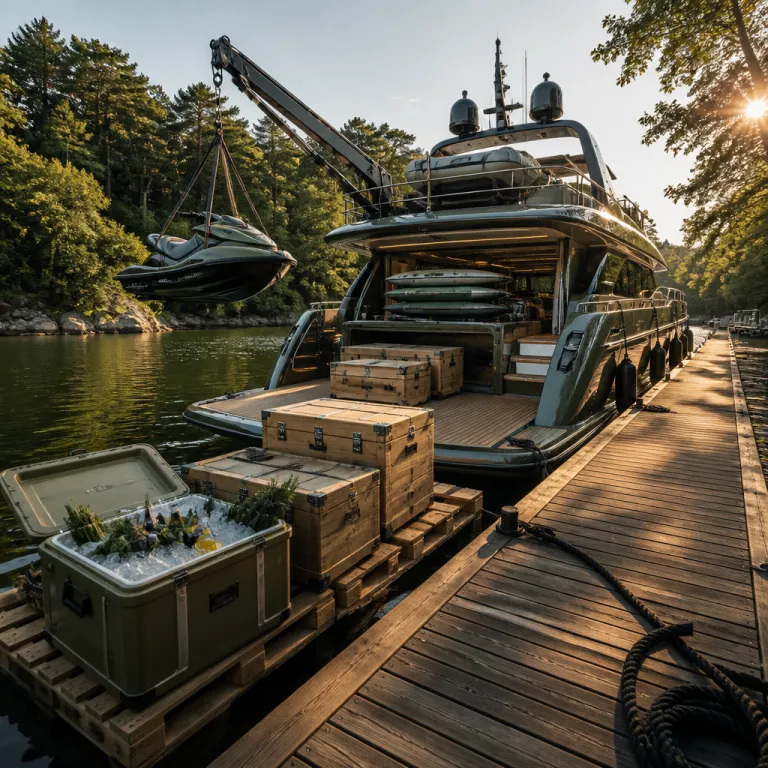
Why the headline weekly rate is only the start of your real bill
The glossy brochure shows a weekly rate and a gleaming hull at anchor. That headline base rate for a yacht charter feels clear, yet it hides a layered structure of charter costs that only becomes obvious when the first pro forma invoice lands. To read any yacht charter cost guide intelligently, you need to separate what the base charter includes from every extra cost that quietly inflates the final price.
On a typical luxury yacht between 30 and 45 metres in yacht size, the base charter rate usually covers the vessel itself, the permanent crew and standard insurance. That base charter amount is the starting point for the charter fee, but it rarely includes fuel, harbour fees, local taxes such as VAT or the provisioning allowance that funds your food and drinks. Owners of motor yachts often set higher base rates than owners of comparable sailing yachts, because the motor yacht engineering, systems and crewed yacht payroll drive higher fixed costs.
Think of the base rate as the right to use the yacht and her équipe, not a fully inclusive holiday package. The charter rate you see on a listing for a luxury yacht in the Caribbean or the Mediterranean will usually be quoted as “plus expenses”, which is where the APA and other charter costs enter the picture. A serious yacht charter cost guide therefore always distinguishes between the base charter price, the variable cost charter elements and the optional off menu extras such as helicopter transfers or specialist water toys.
The APA explained: how your floating expense account really works
The Advance Provisioning Allowance, or APA, is the beating heart of any serious yacht charter cost guide. In practice, the APA is a pre paid onboard expense account that covers fuel, food, drinks, harbour fees, local taxes and many of the running costs that sit on top of the base charter rate. For most charter yachts, brokers estimate the APA at 30 to 40 percent of the base rate for sailing yachts and 35 to 55 percent for motor yachts, with the higher end common on fast planing hulls.
When you wire the APA before your week on board, the captain and chef use that provisioning allowance to stock the yacht according to your preference sheet. During the week, every cost that is not already included in the base charter — from marina fees in Porto Cervo to jet fuel for the tender and water toys — is charged against the APA. A transparent captain will send you daily or mid week APA reports, so you can see how fuel, harbour costs and any extra charter fee items are tracking against the original cost charter estimate.
On a 35 metre motor yacht with a weekly base rate of 120 000 euros, a realistic APA for a high season Mediterranean charter will often sit between 50 000 and 65 000 euros. That APA has to absorb fuel for the main engines and generators, berthing fees, local VAT where applicable, plus every bottle of wine and every kilo of fresh fish the crew sources for you. If you want a deeper dive into what it really costs to charter a yacht like those seen on Below Deck, specialist breakdowns of the real cost of chartering a yacht can be a useful cross check against any single yacht charter cost guide.
What the base charter does not include: taxes, fees and the quiet line items
Once you understand the APA, the next step in any honest yacht charter cost guide is to map the taxes and statutory fees that sit outside both the base rate and the onboard expenses. In Europe, the most visible of these is VAT, which can add between 10 and 22 percent to the charter fee depending on the flag, itinerary and how much time the yacht spends in international waters. That VAT is calculated on the base charter and sometimes on certain charter costs, so a small change in itinerary can shift the total cost charter more than you expect.
Harbour and pilotage fees are another quiet category that can swell the final price of yacht charters, especially for larger motor yachts that require prime berths in Saint Tropez, Capri or Porto Montenegro. Each port charges its own mix of mooring fees, electricity, garbage and water, and these costs are usually paid from the APA rather than being included in the base charter rate. A careful captain will steer you toward anchorages and secondary marinas when appropriate, trimming charter costs without compromising the luxury yacht experience.
Then there are the specialist extras that rarely appear in a simple yacht charter listing but matter in a serious yacht charter cost guide. Helicopter operations, chase boat hire, premium water toys such as electric surfboards and seabobs, or a private security équipe for sensitive itineraries all sit outside the standard charter rate. For readers curious about what it really costs to charter a yacht like those seen on Below Deck, detailed case studies of real charter yachts show how these off menu items can add 20 to 30 percent to the weekly bill on top of the base rate, APA and VAT.
Relocation, delivery and off-menu extras: when the yacht moves, the bill moves
Relocation and delivery fees are where many first time clients realise why a yacht charter cost guide matters more than a glossy brochure. If your chosen charter yacht is based in the South of France but you insist on starting in Corsica or Sardinia, the owner may charge a delivery fee to reposition the yacht before your week begins. That fee usually reflects the fuel, crew time and port costs for the deadhead leg, and it can equal several days of the base charter rate for large motor yachts.
In the Caribbean, relocation fees often appear when a client wants to begin a charter in a quieter island far from the yacht’s normal base, or when a yacht moves between the Leewards and the Windwards for a one off itinerary. A smart charterer will ask the broker to propose alternative charter yachts already close to the desired embarkation port, which can eliminate or sharply reduce delivery costs without sacrificing yacht size or luxury. When you read any yacht charter cost guide, pay attention to how clearly it explains the trade off between paying a higher base rate for the ideal motor yacht in the right harbour versus paying lower rates but absorbing hefty relocation fees.
Off menu extras are the other place where charter costs creep. Think of last minute requests for a Michelin level private chef, a live band flown in for one night, or a full suite of new water toys sourced just for your charter week. None of these are covered by the base charter or the standard APA estimate, yet they are part of the real cost charter picture that separates a superficial brochure from a genuinely useful yacht charter cost guide.
Crew gratuity, salaries and how human service shapes the final cost
Behind every polished charter yacht sits a crew whose work quietly defines the value of your week on board. While the base charter rate covers crew salaries, insurance and training, it does not include crew gratuity, which is customary on most yacht charters and can materially affect the total cost. In the Mediterranean, a crew gratuity of 10 percent of the base rate is typical, while in the Caribbean many clients budget 15 to 20 percent for exceptional service on a luxury yacht.
Because crew gratuity is calculated on the base charter rather than on the APA or other charter costs, choosing a slightly smaller yacht size or a more efficient size type of motor yacht can reduce this line item without diminishing the quality of service. A well run crewed yacht with a seasoned captain, a strong chief stew and a thoughtful chef will often deliver a richer experience than a larger but understaffed vessel. For readers who want to understand how crew pay structures intersect with charter rate expectations, in depth analyses of what yacht captains really earn and which factors influence their salaries provide useful context beyond any single yacht charter cost guide.
Remember that gratuity is discretionary, not an automatic fee, yet it is deeply embedded in the culture of yacht charters. Clear communication with your broker about regional norms, your expectations of service and your budget will help align the crew’s efforts with your priorities from the first day of the week. When you evaluate charter yachts, ask how long the core équipe has been together, because a stable crew often delivers smoother service, better cost control on the APA and a more relaxed, genuinely luxury rhythm on board.
Charter vs buy: a one-week 35 m motor yacht scenario that clarifies the numbers
To make the abstract numbers in any yacht charter cost guide tangible, walk through a realistic one week scenario on a 35 metre motor yacht in the Western Mediterranean. Assume a high season weekly base rate of 120 000 euros for a modern Italian built motor yacht with five cabins, a beach club and a solid selection of water toys. This base charter covers the yacht, her permanent crew of six to eight and standard insurance, but nothing else.
Your broker proposes an APA of 55 percent of the base rate, or 66 000 euros, because you plan to cruise between Nice, Corsica and Sardinia with several long passages at 14 to 16 knots. From that provisioning allowance, the captain expects fuel costs of 25 000 to 30 000 euros, harbour fees of 8 000 to 10 000 euros and the balance for food, drinks and incidentals. On top of the base charter and APA, you face VAT of around 20 percent on the charter fee portion that is deemed to be in European waters, which might add roughly 18 000 to 22 000 euros depending on the exact itinerary and how much time you spend offshore.
Add a crew gratuity of 10 to 15 percent of the base rate, or 12 000 to 18 000 euros, and your one week charter costs now sit in the 216 000 to 226 000 euro range before any off menu extras. Compare that to the annual ownership costs of a similar motor yacht — often 10 percent of the yacht price per year when you include maintenance, insurance, permanent crew and berthing — and the logic of charter versus buy becomes clearer. For many high net worth professionals who want two or three intense weeks of luxury yacht time per year, a carefully planned yacht charter with transparent charter costs offers more flexibility and less long term financial gravity than full ownership, proving that in yachting it is not the length overall, but the wake she leaves.
Clauses to insist on and levers that quietly protect your budget
A sophisticated yacht charter cost guide does not stop at listing costs, it teaches you where to negotiate and which clauses to insist on. Start with a clear definition of what the base charter includes, what falls under the APA and which items are explicitly excluded, such as helicopter operations, specialist water toys or premium wines. Insist that the charter agreement specifies fuel pricing assumptions, standard cruising speed for the motor yacht and how any major deviation in fuel costs will be handled.
Next, address delivery and relocation fees in writing, including the exact ports where the charter starts and ends, and whether any weather related changes will alter the agreed price. Ask for a mid week APA statement as a contractual expectation, not just a courtesy, so you can adjust your itinerary, harbour choices and provisioning allowance before costs run away. For charters in the Caribbean or other regions with complex tax regimes, request a written explanation of how VAT or local taxes will be calculated on the charter fee, the base rate and any additional charter costs.
Finally, treat crew gratuity, cancellation terms and insurance with the same precision you apply to the yacht size or size type you choose. Clarify the recommended gratuity range for your specific charter yacht and region, and ensure the contract states that gratuity remains at your discretion based on service. When you combine these contractual safeguards with a realistic understanding of base charter, APA, fees and off menu extras, you transform a simple yacht charter cost guide into a practical tool that lets you enjoy the luxury of yacht charters with the calm confidence of a seasoned owner.
Key figures that shape real-world yacht charter costs
- For yachts between 24 and 37 metres, typical weekly base charter rates range from roughly 30 000 to 120 000 US dollars, with motor yachts at the upper end due to higher fuel consumption and crew costs compared with sailing yachts.
- Industry data from leading brokerage houses shows that the APA for fully crewed yacht charters usually runs between 30 and 40 percent of the base rate for sailing yachts and 35 to 55 percent for motor yachts, reflecting the heavier fuel and systems load of motor vessels.
- Analyses of Mediterranean charters indicate that VAT and other local taxes can add 10 to 22 percent to the charter fee, meaning that tax alone can equal or exceed the entire fuel bill on a one week itinerary for a mid size luxury yacht.
- Surveys of charter clients in the Caribbean and Mediterranean report that customary crew gratuity falls between 10 and 20 percent of the base charter rate, which means gratuity can represent the third largest single line item after the base rate and APA on many charters.
- Comparative ownership studies suggest that annual running costs for a private motor yacht often reach around 10 percent of the yacht’s capital value, so a 10 million euro yacht may require close to 1 million euros per year in operating expenditure, making charter a financially efficient alternative for clients who use yachts only a few weeks per year.
FAQ about yacht charter costs and the APA
How much should I budget on top of the base charter rate?
For a standard one week luxury yacht charter, a realistic budget is the base rate plus 35 to 55 percent for the APA, plus any applicable VAT and a crew gratuity of 10 to 20 percent of the base charter. Motor yachts at higher speeds, complex itineraries and peak season berths can push the total charter costs toward double the base rate. Sailing yachts on relaxed routes with more time at anchor often sit closer to 50 to 70 percent above the base charter once all costs are tallied.
What exactly does the APA pay for during my charter week?
The APA, or Advance Provisioning Allowance, pays for variable expenses such as fuel for the main engines and generators, harbour and pilotage fees, food, drinks, local taxes that are not charged on the base charter, and many incidentals. The captain and crew use this provisioning allowance to manage day to day spending and will provide statements so you can see how the funds are used. Any unused APA is refunded at the end of the week, while any overspend is settled before disembarkation.
Are water toys and tenders included in the charter fee?
Most charter yachts include a standard selection of water toys and at least one tender within the base charter rate, and these are listed in the yacht’s specification. Fuel for tenders and powered toys, however, is usually charged to the APA, and special requests such as additional toys or chase boats are treated as extra charter costs. Always confirm in writing which toys are included and which will incur additional fees before you sign the charter agreement.
How do relocation and delivery fees work in practice?
Relocation or delivery fees are charged when the yacht must travel empty to reach your chosen embarkation port or to return to its home base after your charter. These fees typically reflect fuel, crew time and port charges for the repositioning legs and are often calculated as a daily fraction of the base charter rate. You can often reduce or eliminate delivery costs by choosing embarkation and disembarkation ports close to the yacht’s normal cruising area or by selecting a different charter yacht already positioned where you want to start.
Is chartering more cost effective than buying a yacht?
For clients who plan to spend only a few weeks per year on the water, chartering is usually more cost effective than buying, because you avoid the year round burden of crew salaries, maintenance, insurance and berthing. A single week on a 35 metre motor yacht may cost a few hundred thousand euros all in, but owning a similar yacht can require close to 10 percent of its value every year in running costs. Many aspiring owners therefore use several seasons of charter, guided by a detailed yacht charter cost guide, to refine their preferences before deciding whether full ownership makes sense.